

The city awakens to the slow lift of kiosk shutters against a morning sky; newspapers stacked in towers, headlines brisk; trams gliding past; and cyclists tracing routes first drawn for carriages. By the time office goers queue for coffee—coats buttoned, orders in order—the day’s tempo is set. Vienna is often described in superlatives—imperial, cultivated, grand—but, at street level, it reveals itself in smaller, more telling gestures.
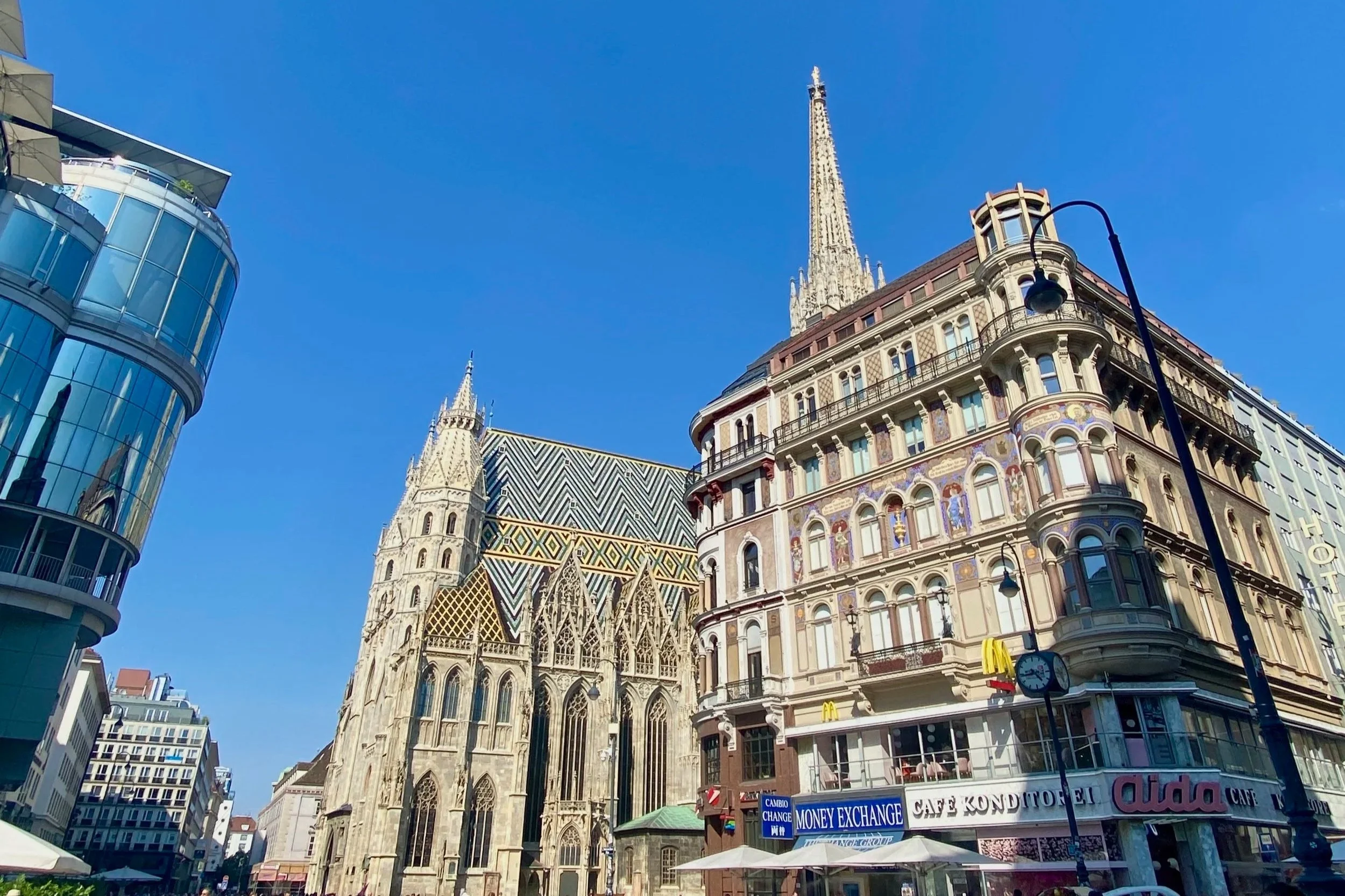
A morning flight from Florence to Vienna—just over an hour in the air, scarcely enough time for the Alps to gather and dissolve beneath the wing—felt like a measured shift in temperament. With no map to guide me, I let my feet follow the city’s broad pavements until they led me to Café Sperl, where porcelain chimed, newspapers lay opened across tables, and coffee arrived dense and dark, carrying the lingering aftertaste of history and tobacco-laced conversations long concluded. Light fell across bentwood chairs polished by a century of elbows and banquettes gently faded at the seams. I ordered a Wiener Melange, its foam settling into a delicate cloud, alongside an Apfelstrudel whose crisp pastry gave way to apples glossed with cinnamon and sweetness. Founded in 1880, the cafe has remained remarkably intact, weathering wars and decades of changing fashions with its interiors largely untouched. Writers, officers and actors are said to have once claimed these tables as their extended offices, and there remains something of that old Viennese ritual in the room: a sense that time here is not measured by the hour, but by the slow emptying of a coffee cup.
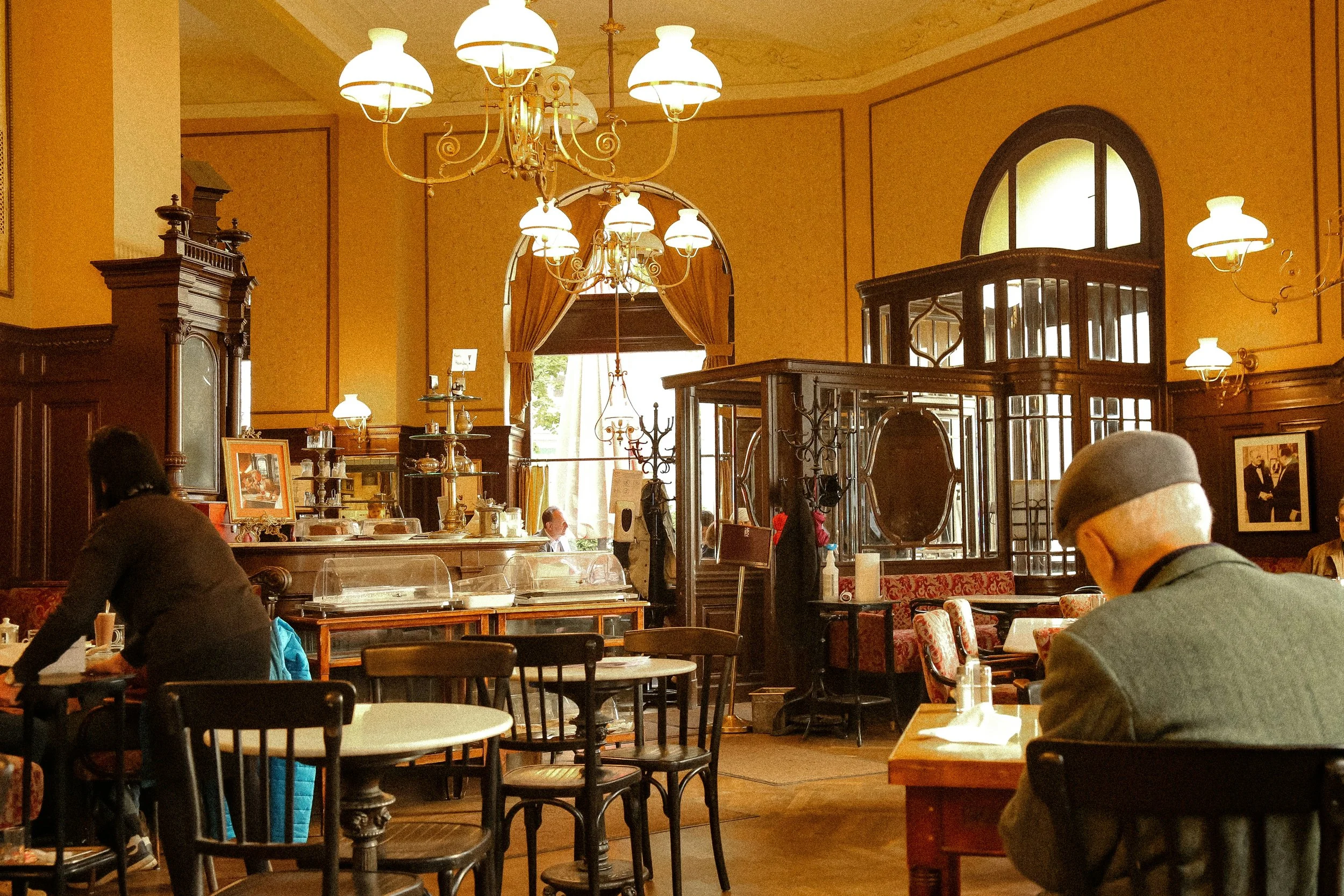
Café Sperl. Image credit: Rick Govic, Unsplash.
After coffee and dessert—breakfast for the day—noon had softened into gold, the light draping itself over stone and cobblestone alike. I wandered towards Karlsplatz, where the Karlskirche, the 18th-century Baroque church and one of Vienna’s defining landmarks, rose against the sky, its green-copper dome catching the light and its monumental columns spiralling upwards like stories carved in stone. From there, I followed the curve of the Ringstrasse, Vienna’s grand boulevard, a 19th-century artery of imperial ambition lined with palaces, theatres and museums, where history seems to parade in stone and wrought iron.
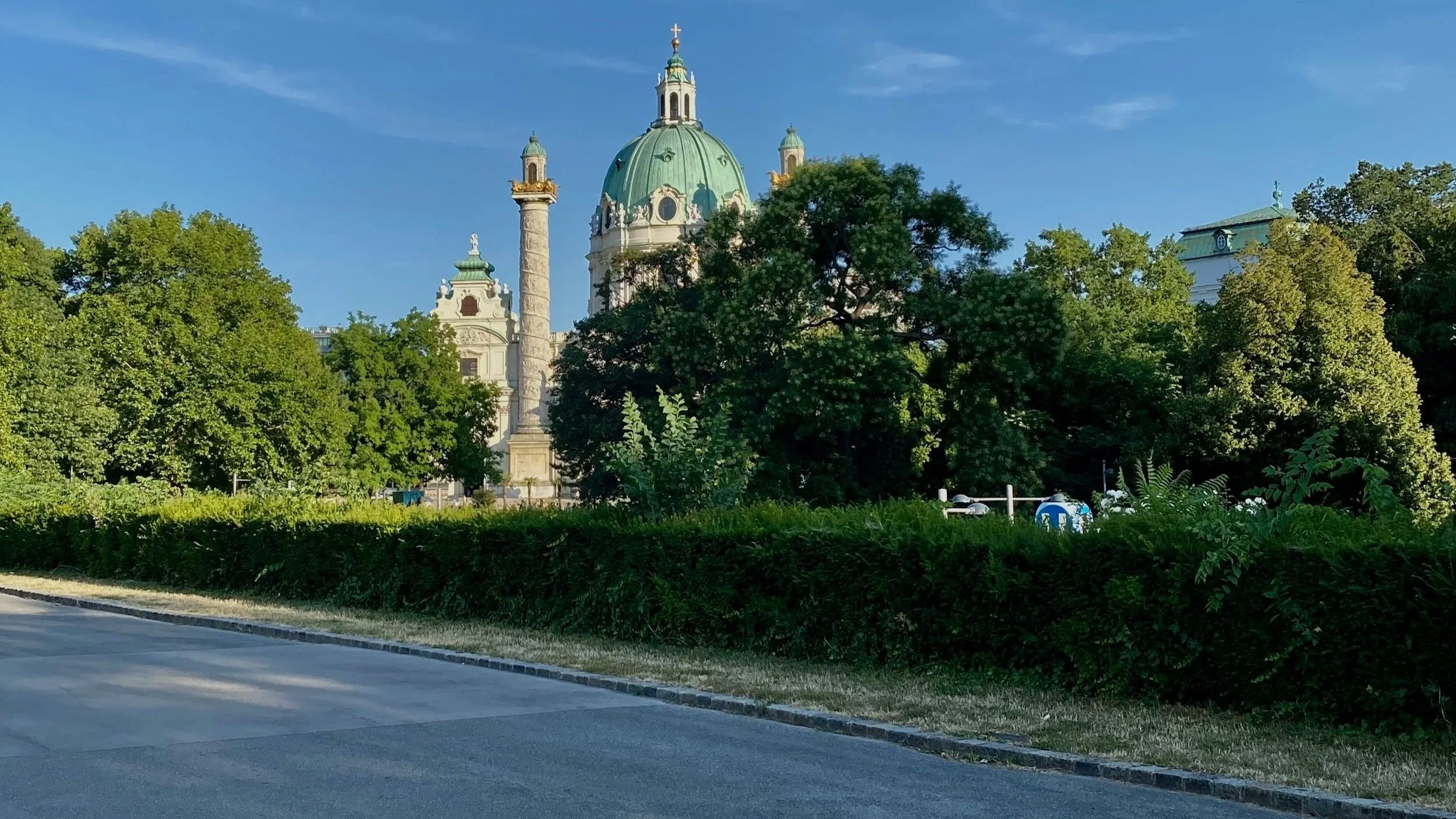
Karlsplatz, commissioned by Emperor Charles VI.
Coffee
On cold Viennese mornings, when the streets still echoed with the clatter of hooves and smelled of coal and wet stone, coffee claimed its place at the heart of the day. Inside the Kaffeehäuser—the city’s celebrated coffee houses—it arrived on marble tables beside folded newspapers and layered thoughts, its bitter Turkish origins softened with milk and sugar into something more companionable, as the Viennese preferred. Yet it was the city’s coachmen, reins in hand and minutes fleeting between fares, who turned one particular drink into legend: the Einspänner. Strong black coffee is served in a tall glass, crowned with a cloud of whipped cream that helped keep it warm while remaining steady in the hand. Its name is a nod to the one-horse carriages that once threaded through Vienna’s streets. As carriages gave way to trams, coal smoke thinned and the city’s mornings found a different rhythm, the Einspänner endured. It is best paired with Sachertorte at Café Sacher or Café Demel: a dense chocolate torte layered with apricot jam and finished with a glossy dark icing, its richness made for slow afternoons and Viennese coffee-house ritual.
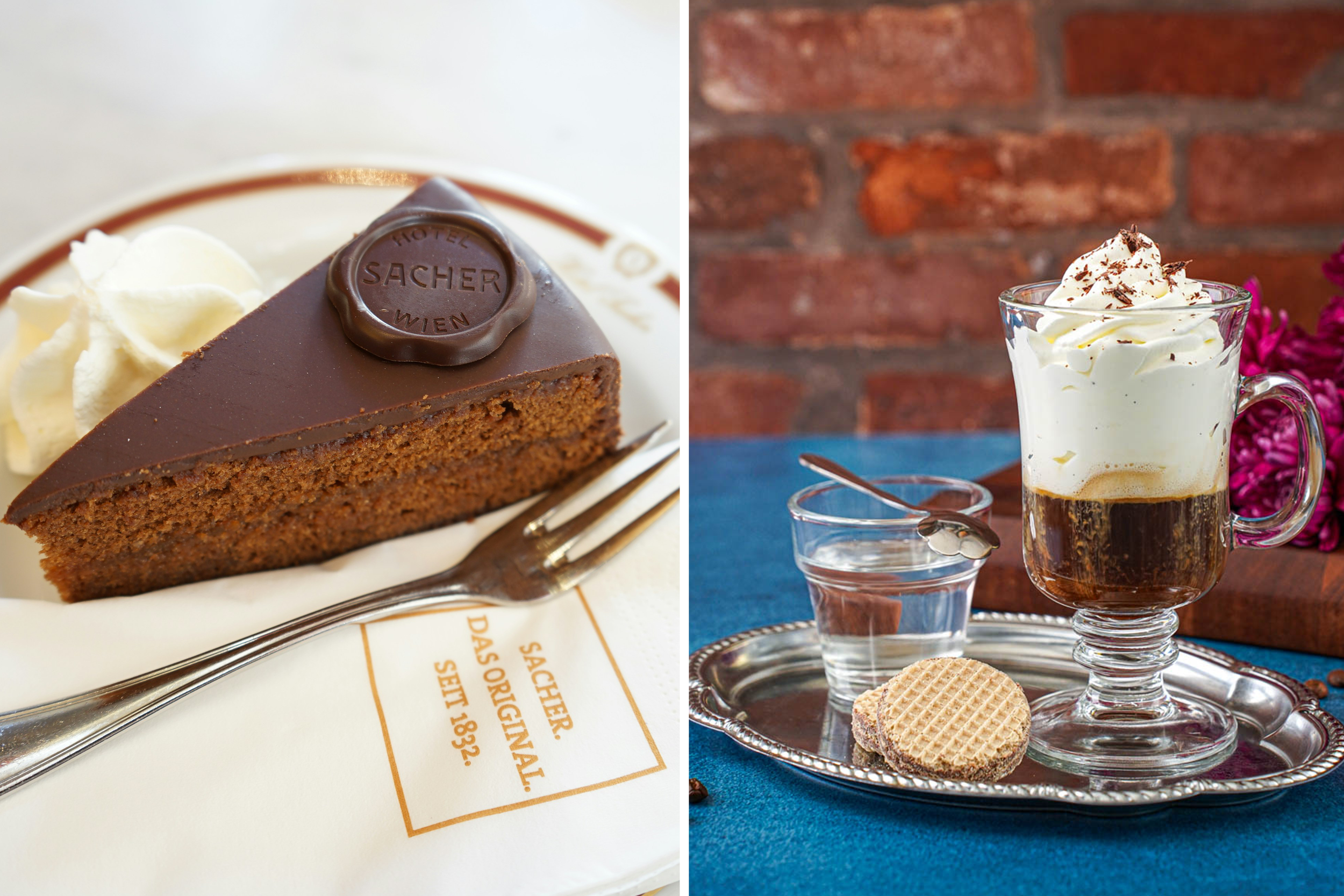
Sachertorte, and Einspänner. Image credits: Luke Wang via Unsplash, and Tara’s Multicultural Table.
Food
Traditional Viennese eateries centre their menus on sausages, schnitzels and dumplings, often accompanied by local wines, while contemporary kitchens revisit these classics with a lighter touch, drawing on international influences without losing sight of regional produce. At the heart of the city’s food culture is the Naschmarkt, Vienna’s largest and most established open-air market, stretching for roughly 1.5 kilometres. Originating as a milk market in the 16th century and taking its present form in the late 19th century, it is now home to more than a hundred stalls and restaurants. Beneath its distinctive Jugendstil, or Art Nouveau, pavilions, vendors offer cheeses and charcuterie alongside olives, spices and fresh produce, reflecting the culinary influences of Vienna’s Turkish, Balkan and Middle Eastern communities. On Saturdays, a popular flea market unfolds alongside the food stalls. More than a marketplace, the Naschmarkt remains a daily meeting point—a lively cross-section of Vienna’s layered tastes, histories and communities.
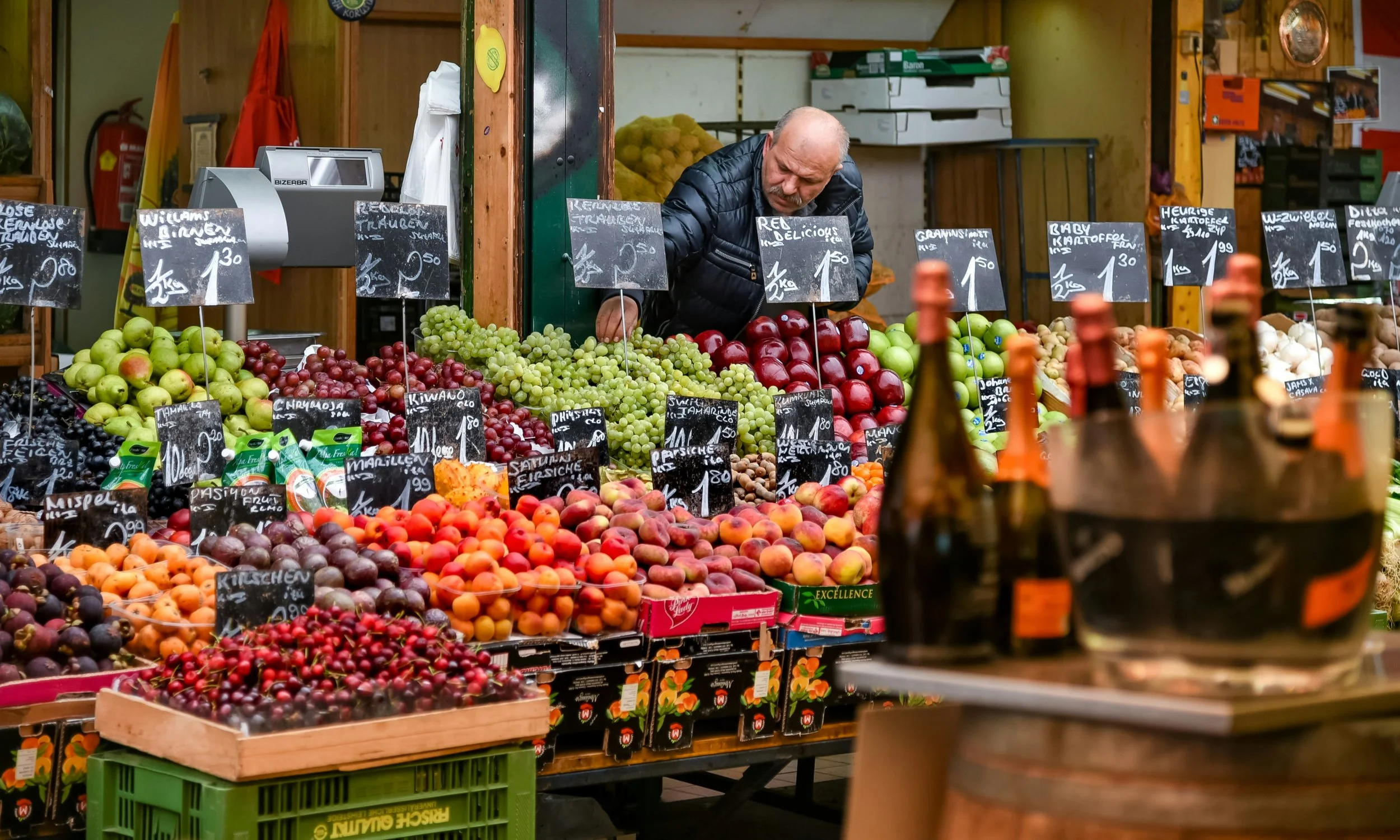
Naschmarkt. Image credit: Unsplash.
Viennese food is hearty, generous and deeply rooted in the old Austro-Hungarian pantry, shaped by imperial influences, regional traditions and the demands of long winters. Wiener Schnitzel remains one of the city’s defining dishes: veal pounded thin, coated in breadcrumbs and pan-fried in clarified butter until blistered and golden, traditionally served with parsley potatoes or a simple cucumber salad. Tafelspitz, another Viennese staple, is tender beef slowly simmered in broth and served with Apfelkren, a sharp apple-and-horseradish relish, chive sauce and crisp Rösti. Famously favoured by Emperor Franz Joseph I, it carries the restrained elegance of the imperial table. Goulash, meanwhile, reflects Vienna’s historic ties to Hungary: a slow-cooked stew of beef, paprika and onions, its flavours deepening into a rich, velvety sauce. A glass of Grüner Veltliner or Riesling from the surrounding vineyards provides the natural counterpoint, its freshness cutting through the richness of the food.
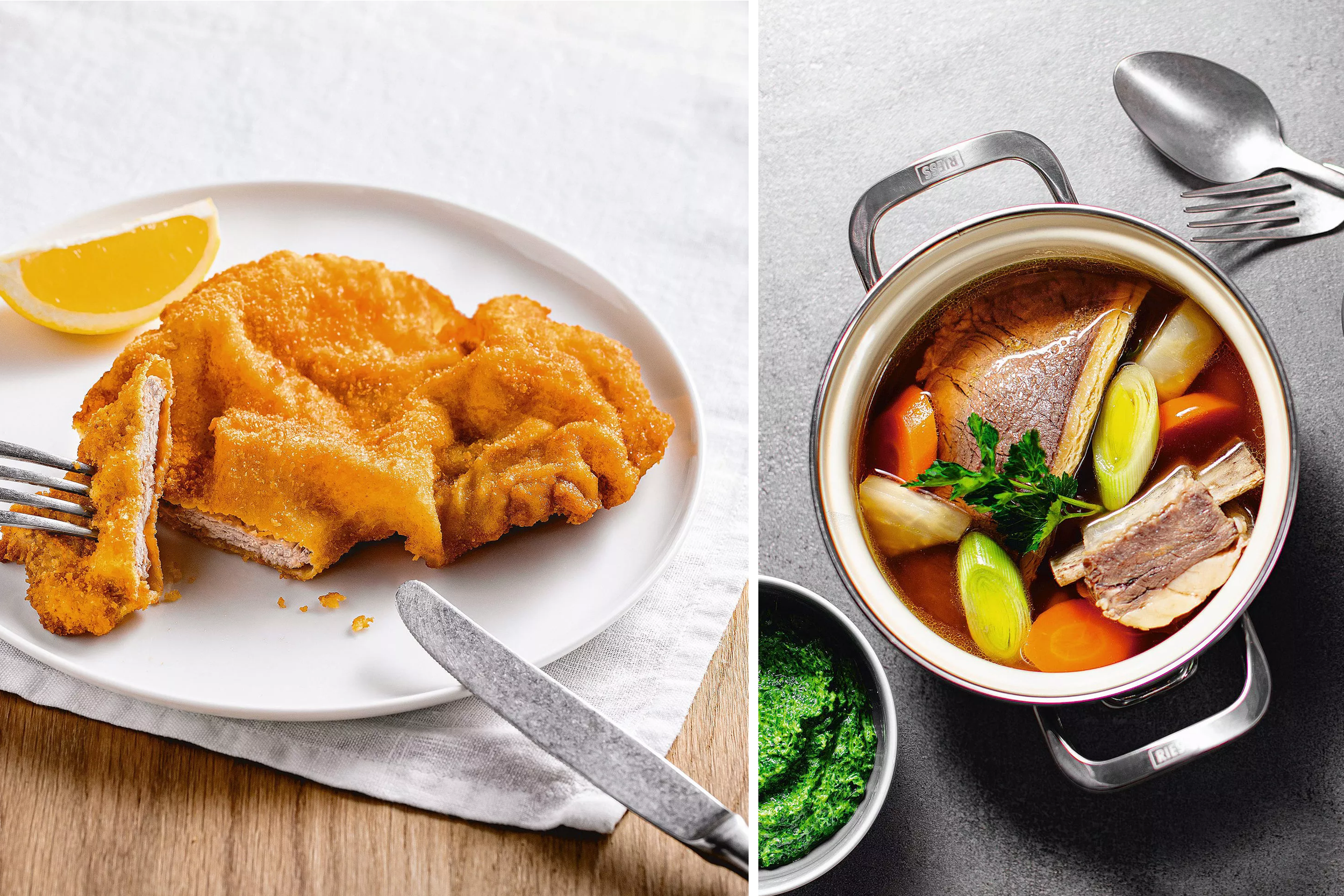
Wiener Schnitzel and Tafelspitz. Image credits: Figlmüller.
Views
Vienna’s skyline is a composition of Gothic spires, Habsburg grandeur and the gilded rebellion of Secessionist architecture. The lacework tower of St Stephen’s Cathedral pierces the sky; the domes and monumental facades shaped under Empress Maria Theresa anchor the historic centre; while the white cube of the Secession Building, crowned with its distinctive dome of gilded laurel leaves, embodies the fin-de-siècle desire to break with convention. The finest way to take it in is from above, cocktail in hand, at Das LOFT. Perched atop the SO/Vienna hotel, the bar’s vast glass walls offer an almost 360-degree sweep of the city, while a luminous, colour-shifting ceiling by Pipilotti Rist transforms the interior into an installation of its own. By day, rooftops and church towers stretch towards the Danube Canal; by dusk, façades soften into amber and rose. After dark, the panorama takes on a more dreamlike quality. Vienna becomes almost Klimt-like—gilded, atmospheric and slightly abstract, as though the city has slipped into one of its own paintings and invited you to look down upon it.
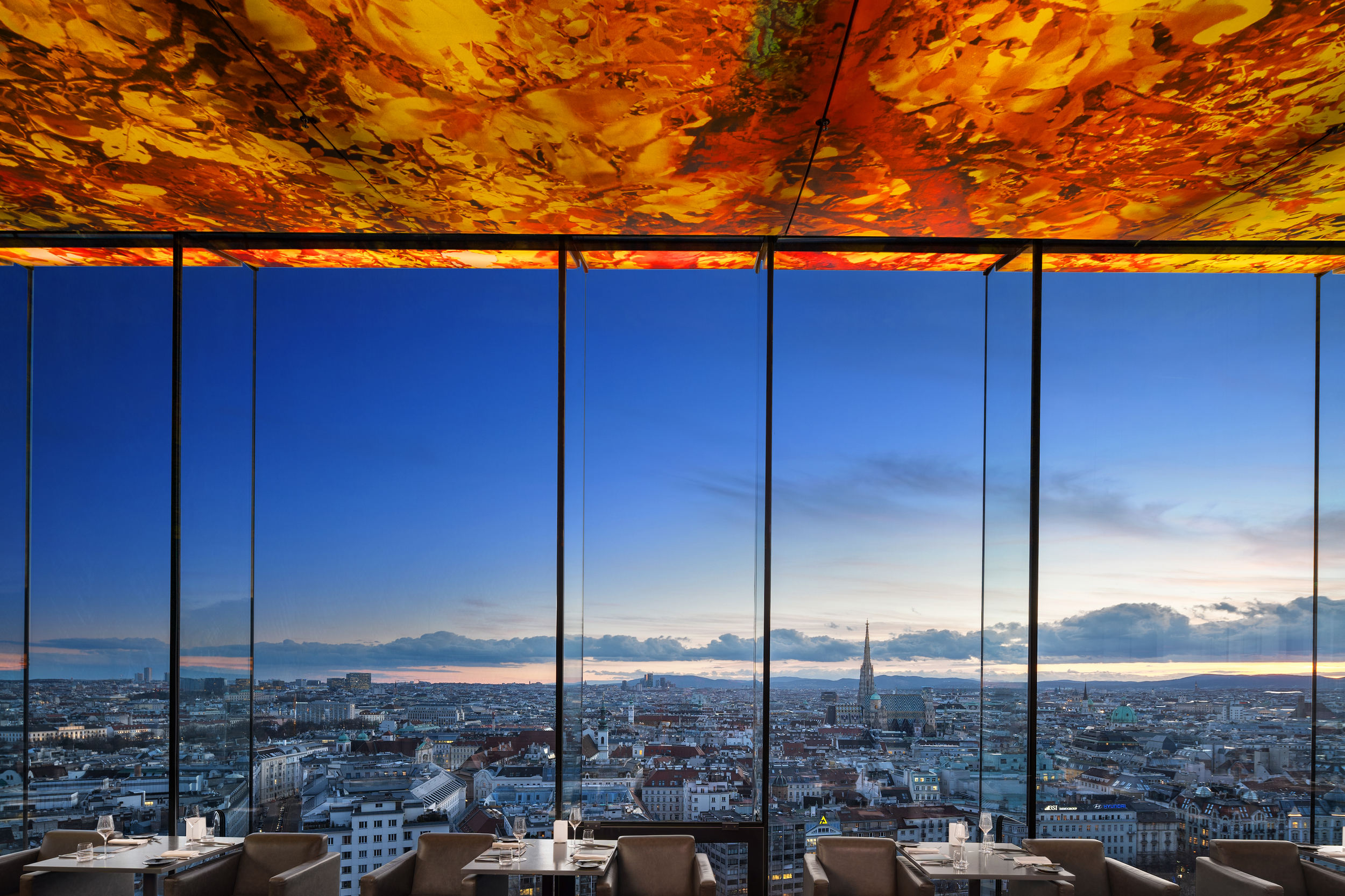
View from Das LOFT. Image credit: Tony Gigov and Das LOFT.
Music
The city wears its musical history lightly but inescapably: Mozart, Beethoven, Schubert, Brahms, Mahler and Johann Strauss II inhabit its streets, squares and concert halls, their names woven into the city’s architecture and daily rhythms. Yet Vienna is not content to live in the past. Alongside its great classical institutions, contemporary composers, experimental musicians, electronic artists and independent venues have given the city a more restless, modern pulse. Classical music remains part of the city’s identity, but it exists in conversation with jazz, contemporary composition, electronic music and live performance. The Musikverein’s Golden Hall, completed in 1870 to Theophil Hansen’s design, remains one of Vienna’s great musical stages, its gilded balconies, crystal chandeliers and ornate plasterwork almost as celebrated as its extraordinary acoustics. The Vienna Philharmonic, founded in 1842, performs a repertoire that extends from the canonical works of the Viennese masters to the world-famous New Year’s Concert. Elsewhere, music takes less ceremonious forms—in intimate clubs, converted industrial spaces and contemporary venues where the audience may be as likely to encounter an experimental set or electronic performance as a symphony. It is this coexistence of reverence and reinvention that keeps Vienna’s musical life from becoming a museum piece.
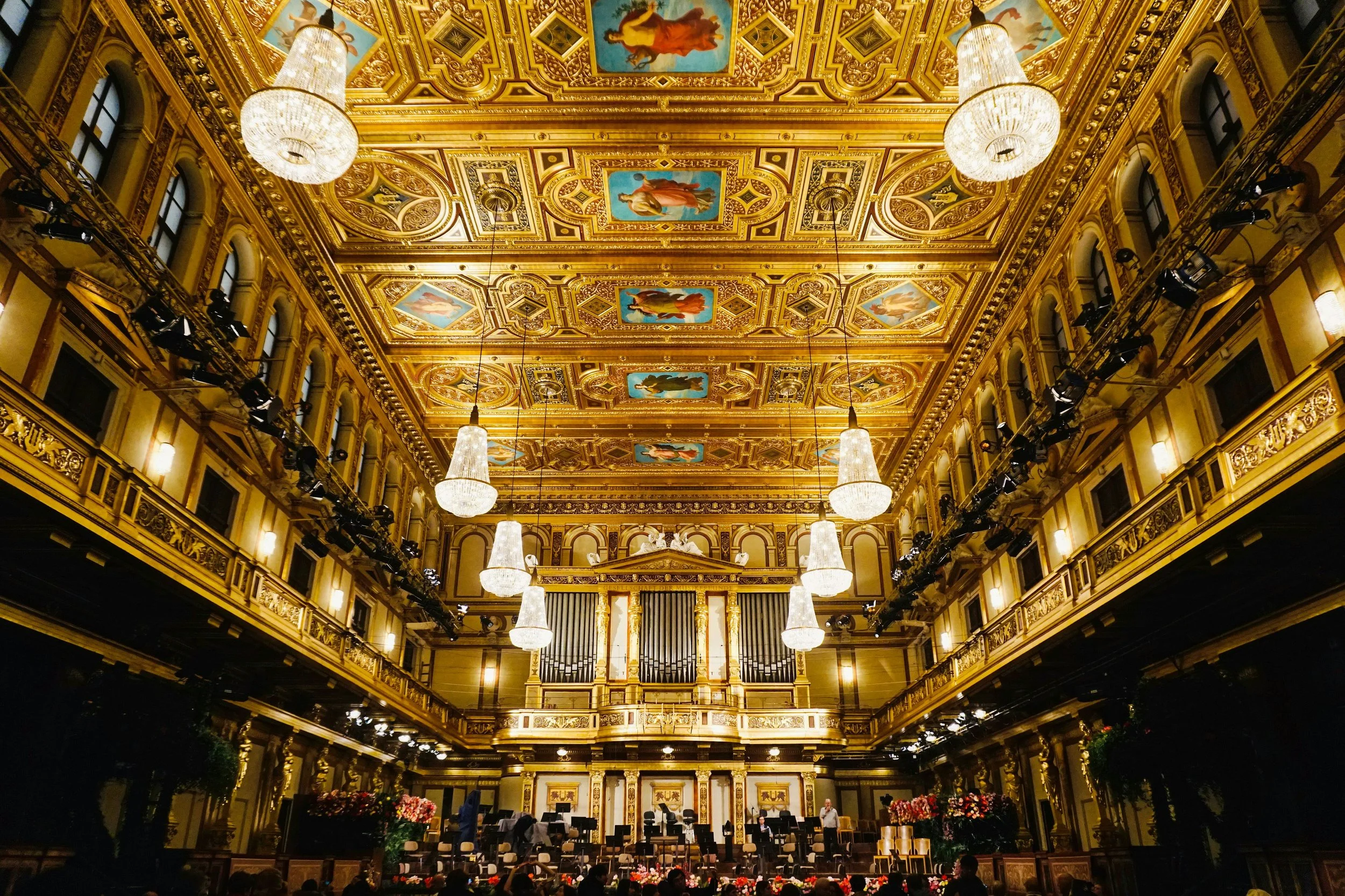
Wiener Musikverein. Image credit: Bells Mayer, Unsplash.
The Vienna State Opera, completed in 1869 to designs by August Sicard von Sicardsburg and Eduard van der Nüll, embodies Neo-Renaissance grandeur and continues to stage opera and ballet, from Mozart to Mahler and beyond. At the Wiener Konzerthaus, opened in 1913 and designed by Fellner, Helmer and Baumann, several halls move effortlessly between symphonic repertoire, chamber music, jazz and contemporary ensembles, their acoustics carefully shaped to preserve both intimacy and resonance. The Volksoper Wien, dating to 1898 and adopting its present name in 1904, offers a lighter, more theatrical counterpoint, with operettas, musicals and German-language opera bringing colour, wit and accessibility to Vienna’s musical traditions. Together, these institutions reveal a city that reveres its classical inheritance without allowing it to become static.
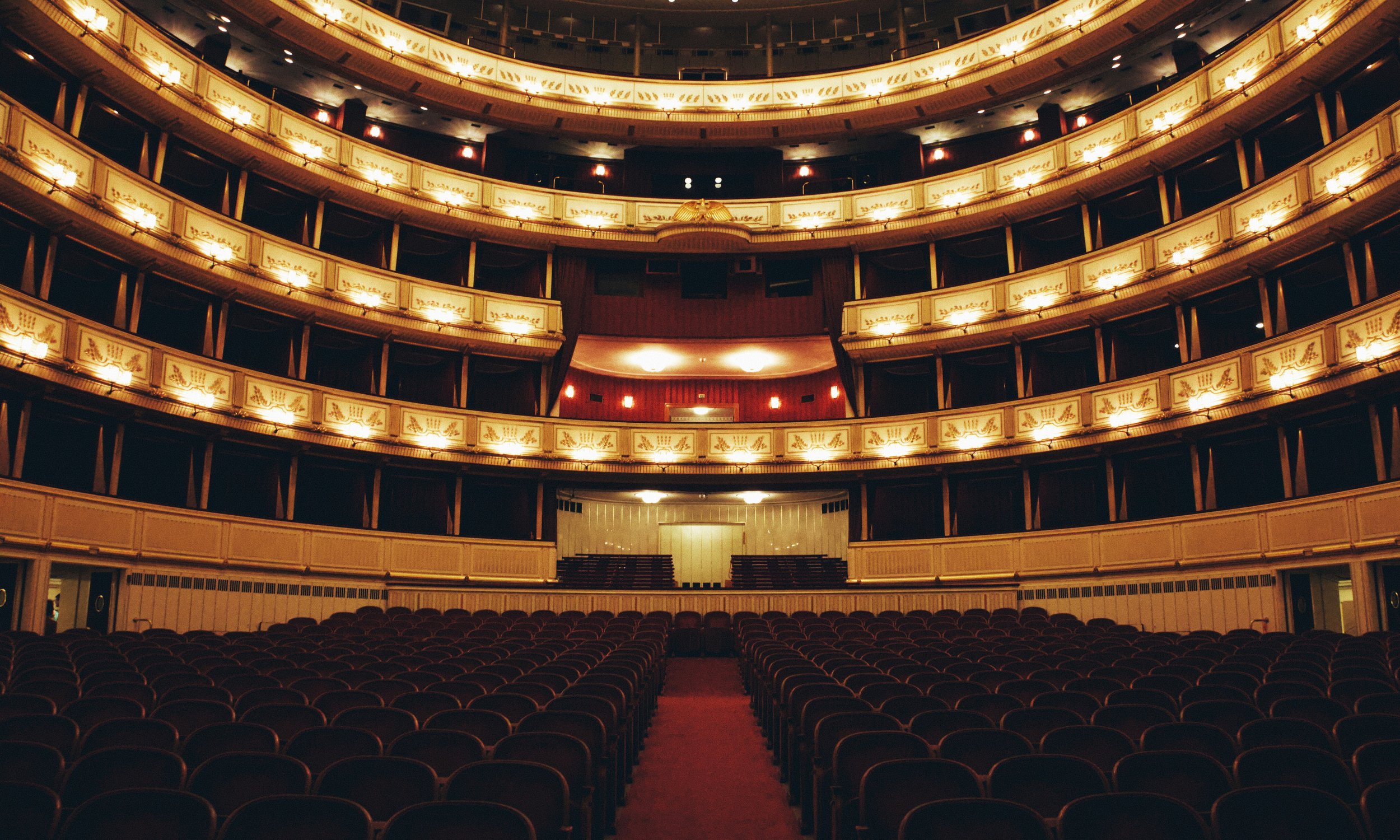
Vienna State Opera. Image credit: Miguel Alcântara, Unsplash.
Art
Vienna has an unusual way of making art feel inseparable from the city around it. Imperial collections sit within former palaces, Secessionist ideas still animate the streets, and museums move freely between Old Masters, modernism and contemporary practice. The city’s artistic character is therefore not confined to its institutions; it runs from the grandeur of the Habsburg court to Klimt’s gilded surfaces, Schiele’s restless lines and the experimental practices of artists working today. A day spent with Vienna’s art is, in many ways, a journey through the city’s changing ideas of beauty, power and modernity.
The Kunsthistorisches Museum, designed by Gottfried Semper and Karl Freiherr von Hasenauer and completed in 1891, rises like a palace of marble, frescoed ceilings and painted cupolas, built to house the Habsburg collections. Within its galleries, Titian’s portraits and Bruegel’s landscapes compress centuries of European art into vivid, immediate encounters. The museum’s breadth is its greatest pleasure: history, craftsmanship and human imagination unfold across its rooms, while special exhibitions regularly bring lesser-known works into conversation with established masters. From this grand sweep of history, the Albertina offers a more intimate experience. Originally part of the Hofburg and redesigned by Joseph Emanuel Fischer von Erlach in 1801, it is home to works ranging from Dürer’s meticulous engravings to the expressive lines of Klimt and Schiele. Its collection of prints, drawings and graphic works reveals another side of artistic history, one built through line, gesture and observation. Photography and temporary exhibitions broaden the conversation, allowing older techniques to meet more modern ways of seeing. Then there is Belvedere 21, designed by Karl Schwanzer in 1958, where Vienna’s artistic vocabulary shifts decisively into the contemporary. Its glass-and-steel pavilion houses Austrian and international art from 1945 onwards, encompassing installation, film, sculpture and conceptual practice.
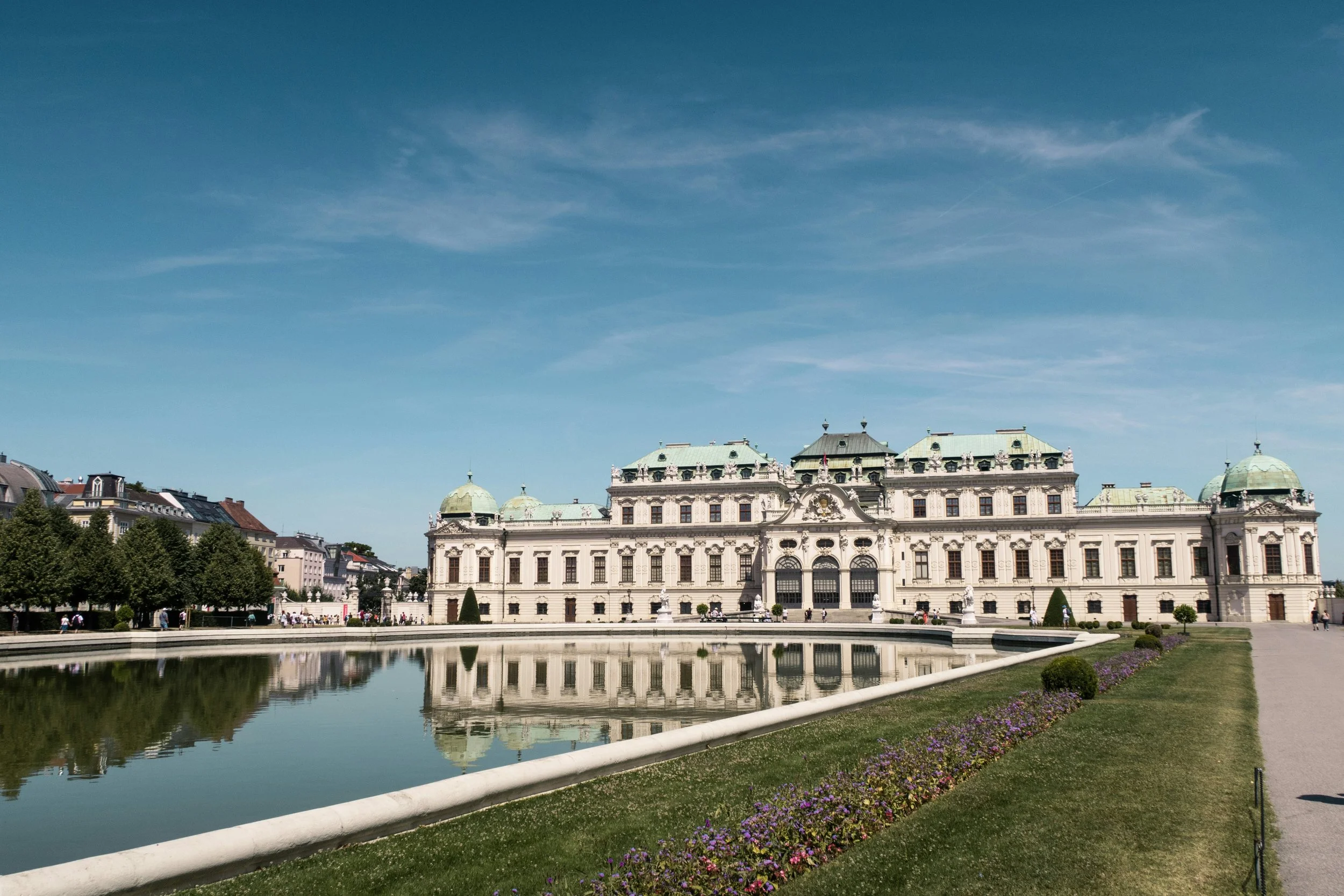
Belvedere Palace. Image credit: Patrik Bloudek, Unsplash.
The Leopold Museum, opened in 2001 and designed by Klaus Kada with Hans Hollein, offers perhaps the most revealing glimpse into Vienna’s more rebellious artistic temperament. Its centrepiece is the world’s largest collection of Egon Schiele, whose elongated bodies, fractured lines and unflinching portraits seem to expose the nerves of early 20th-century Vienna. Around them are works by Gustav Klimt, Oskar Kokoschka and other artists who helped turn the city into a crucible of modernism. The museum’s collection also traces the story of the Vienna Secession, founded in 1897 by Klimt, Josef Hoffmann, Koloman Moser and their contemporaries as a break from the conventions of the academic establishment. Their ambition extended well beyond painting: art, architecture, furniture and design were to exist as part of a unified modern aesthetic.
Beyond the grand museums, independent galleries, artist-run spaces and project rooms thread through neighbourhoods such as Neubau, occupying former workshops, courtyards and converted commercial spaces. Together, they give the city’s art scene a sense of movement—less a heritage to be preserved than a conversation that keeps changing its subject.
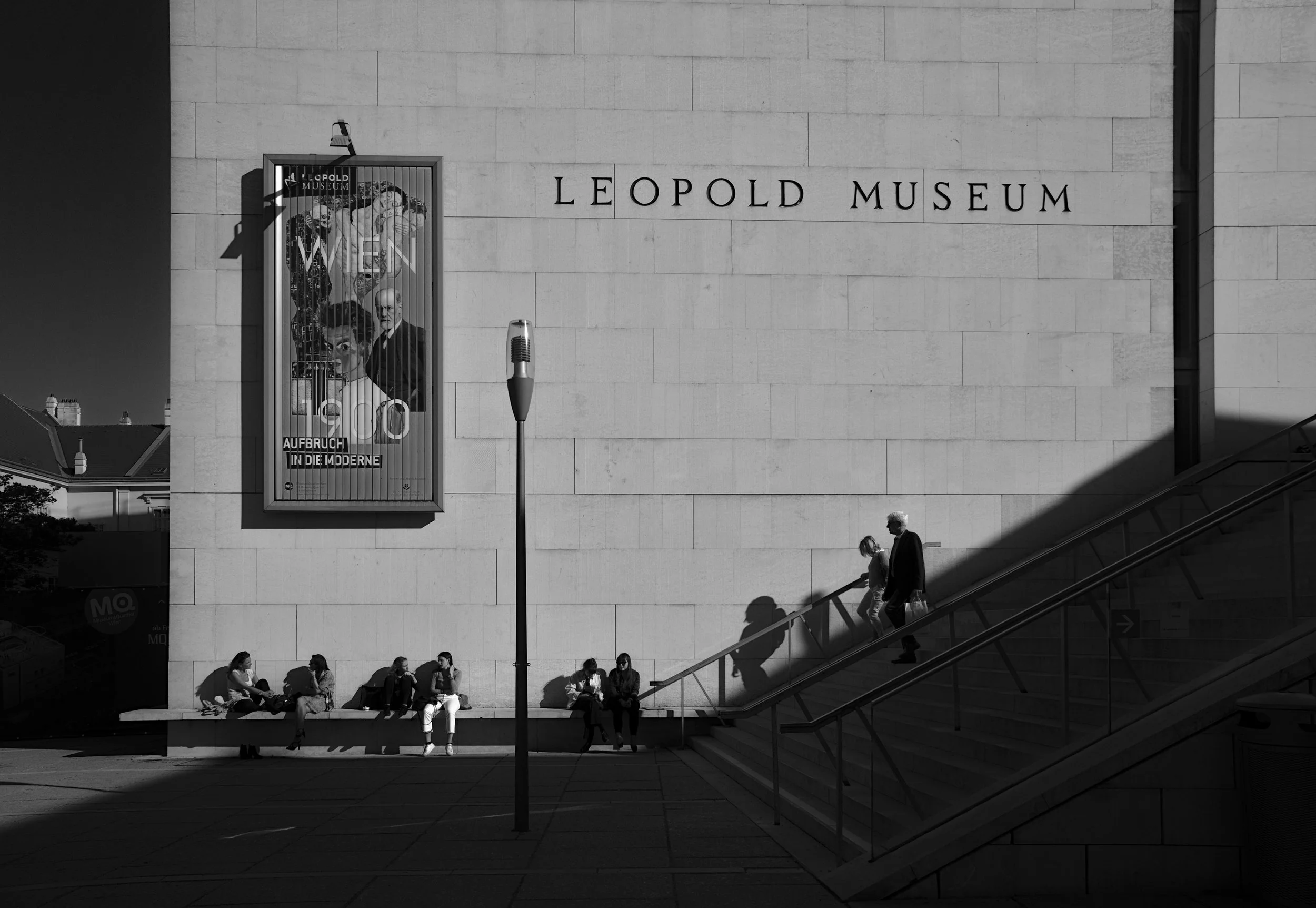
Leopold Museum. Image credit: Alexander Kagan, Unsplash.
Mind
The Sigmund Freud Museum at Berggasse 19 occupies an unassuming building on a quiet residential street, making its history all the more striking. Behind its restrained facade, Sigmund Freud lived and worked from 1891 until his forced exile in 1938, developing ideas that would fundamentally alter the modern understanding of the mind. Today, the museum offers more than a portrait of Freud himself; it provides a window into the intellectual and social world of late 19th- and early 20th-century Vienna.
The rooms retain the atmosphere of Viennese bourgeois life: understated stucco, delicate cornices, tall windows, high ceilings and parquet floors. Their formality makes an intriguing counterpoint to the radical thinking that unfolded within them. The building belongs to the architectural world shaped by Vienna’s great Ringstraße transformation of the 1870s to 1890s, when the city dismantled its old fortifications and replaced them with a grand ring of boulevards lined with palaces, public buildings and elegant apartment houses. It was a period of extraordinary urban and cultural transformation, when Vienna was acquiring the polished grandeur for which it would become known. Yet, behind the calm facade of Berggasse 19, another kind of revolution was taking place. Freud’s consulting room became the setting for conversations about dreams, desire, repression and the unconscious, challenging established ideas about human behaviour and the workings of the mind. Outside, Vienna continued its rituals of cafes, concerts, opera and imperial ceremony; within these rooms, Freud was probing what lay beneath the cultivated surface.
The museum captures that tension particularly well. Rather than presenting Freud in isolation, it places his work within the wider ferment of fin-de-siècle Vienna, where artists, writers, musicians, philosophers and thinkers were questioning inherited ideas and searching for new ways to understand modern life. Berggasse 19 therefore feels less like a shrine to one intellectual than a doorway into a city in the midst of reinventing how it saw itself—and the human mind.
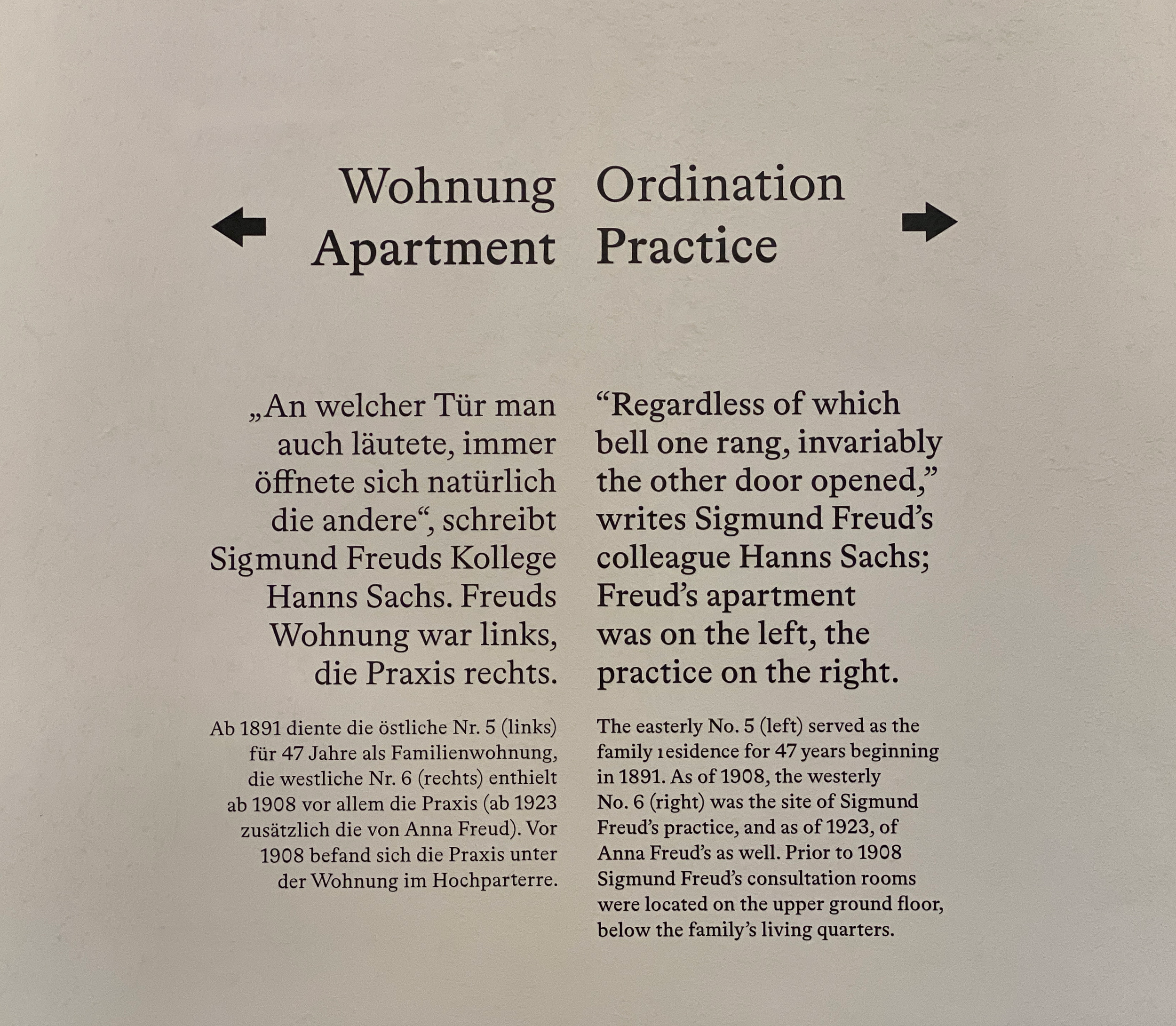
The rooms are pared back; much of the original furniture was taken into exile. The consulting room, however, retains Freud’s iconic couch. Bookshelves, cabinets and display cases—largely later additions or careful reproductions—hold letters, first editions and family photographs, tracing the intimate overlap between domestic life and intellectual labour. There is little theatricality here. Instead, the rooms suggest the quiet accumulation of thought: long hours, familiar routines, pauses and returns to the same questions. What remains is a sense of the disciplined persistence through which Freud gradually shaped an entirely new way of thinking about the human mind.
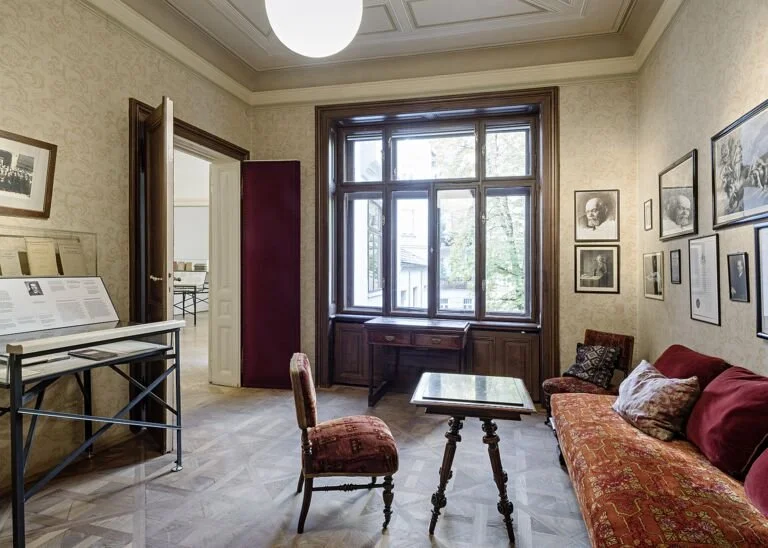
Image credit: Sigmund Freud Museum.
Freud’s life is brought into sharper focus through personal objects: books, letters, his chess set and tarot cards. Visitors move through the preserved rooms, from his study into the family’s living quarters, following the spaces in which his professional and domestic lives unfolded side by side. Exhibitions trace the development of psychoanalysis alongside the history of the Freud family, with particular attention to Anna Freud, his youngest daughter, whose own pioneering work in child psychoanalysis extended his ideas while helping to preserve his intellectual legacy.
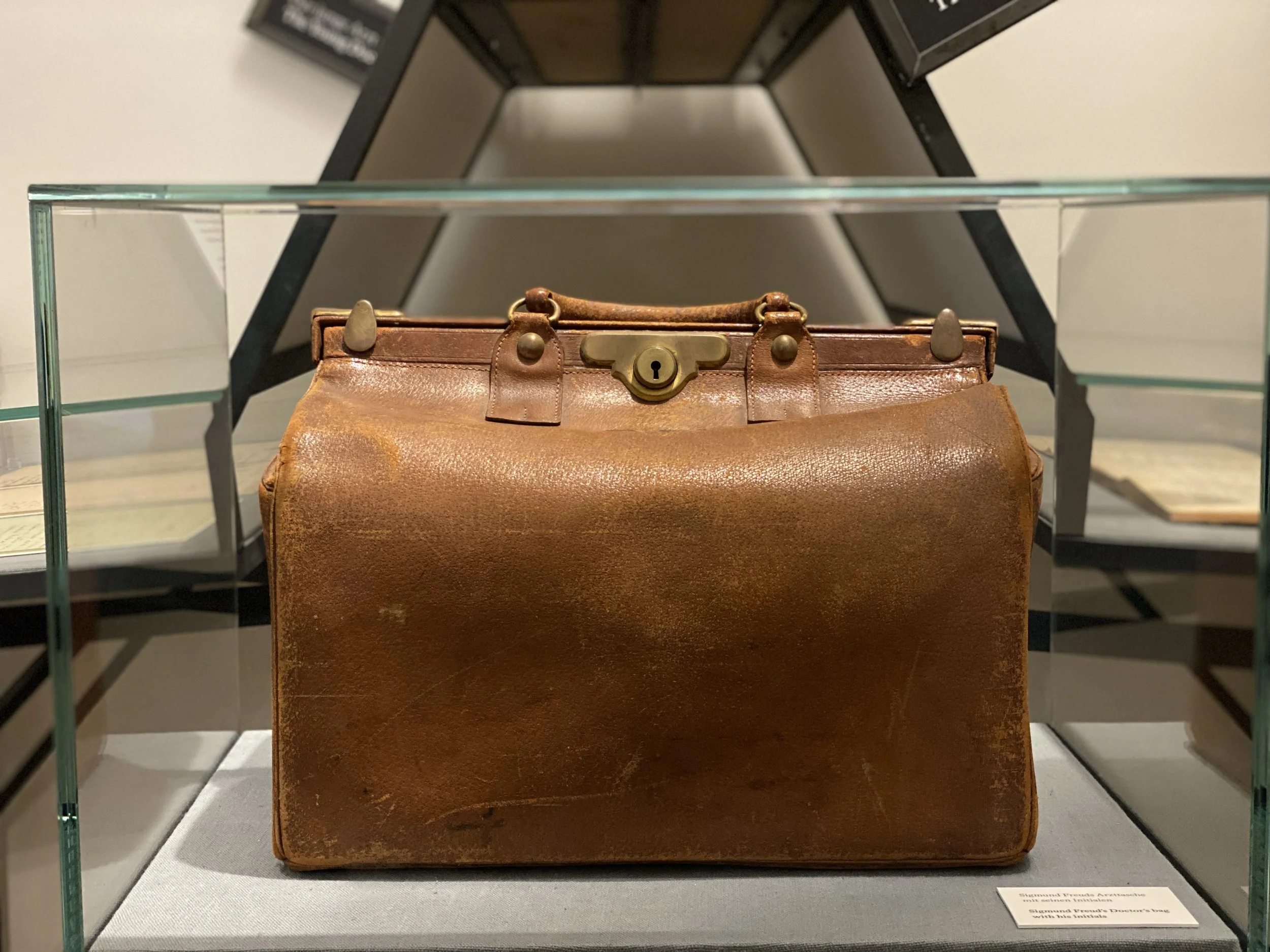
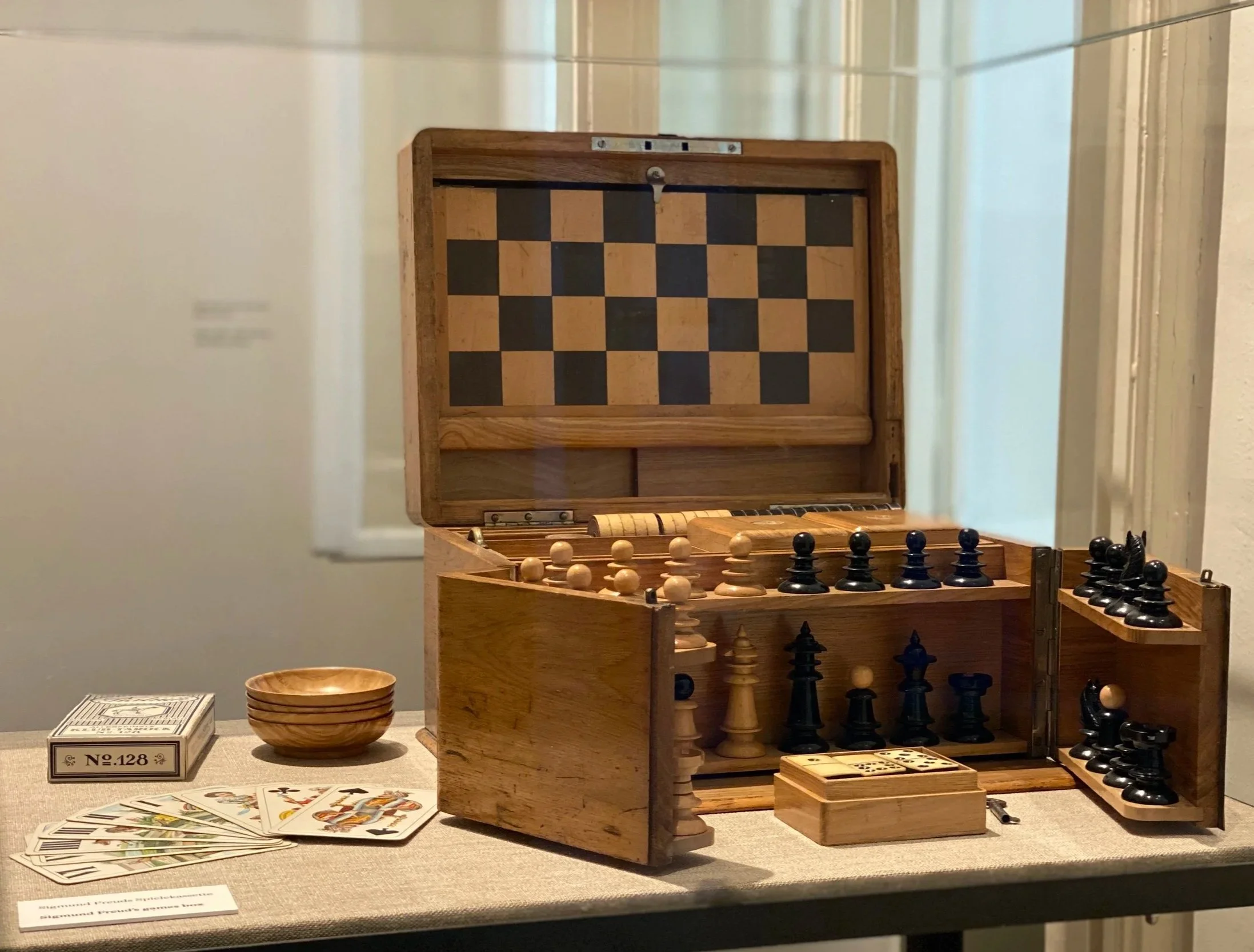
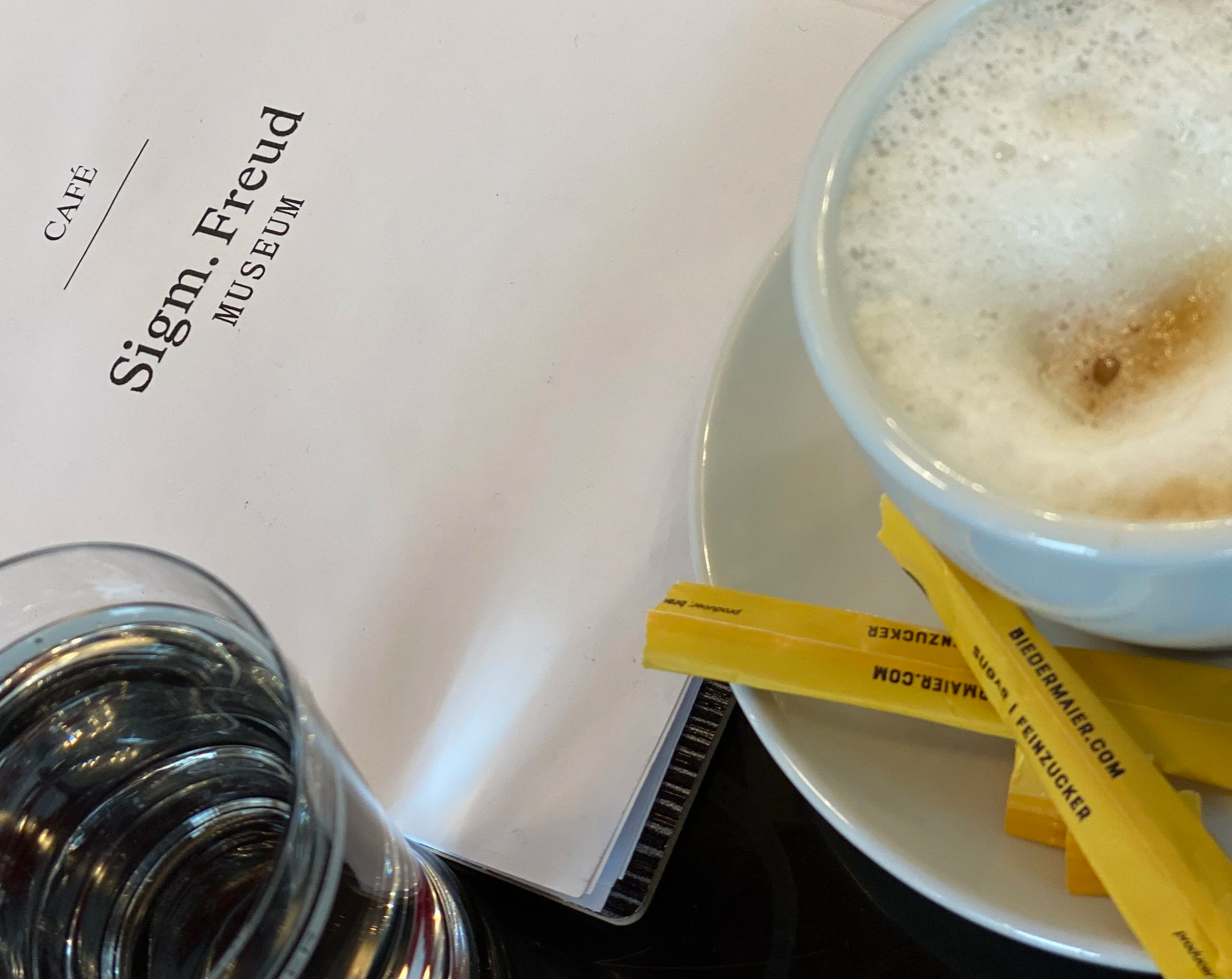
“Where does a thought go when it’s forgotten?”
I’d say somewhere between the first and second coffee, presumably.