On sun-baked ropes strung between balconies and harbour posts, marine life dries beside laundry. Towns wake slowly to the rhythm of the tide; fishermen haul nets, women fold linen, and children chase gulls along the quay. These lesser-known seaside towns still live by the sea’s clock—where what the locals eat depends on what the water yields, and how they cook it is shaped by generations of tide and toil.
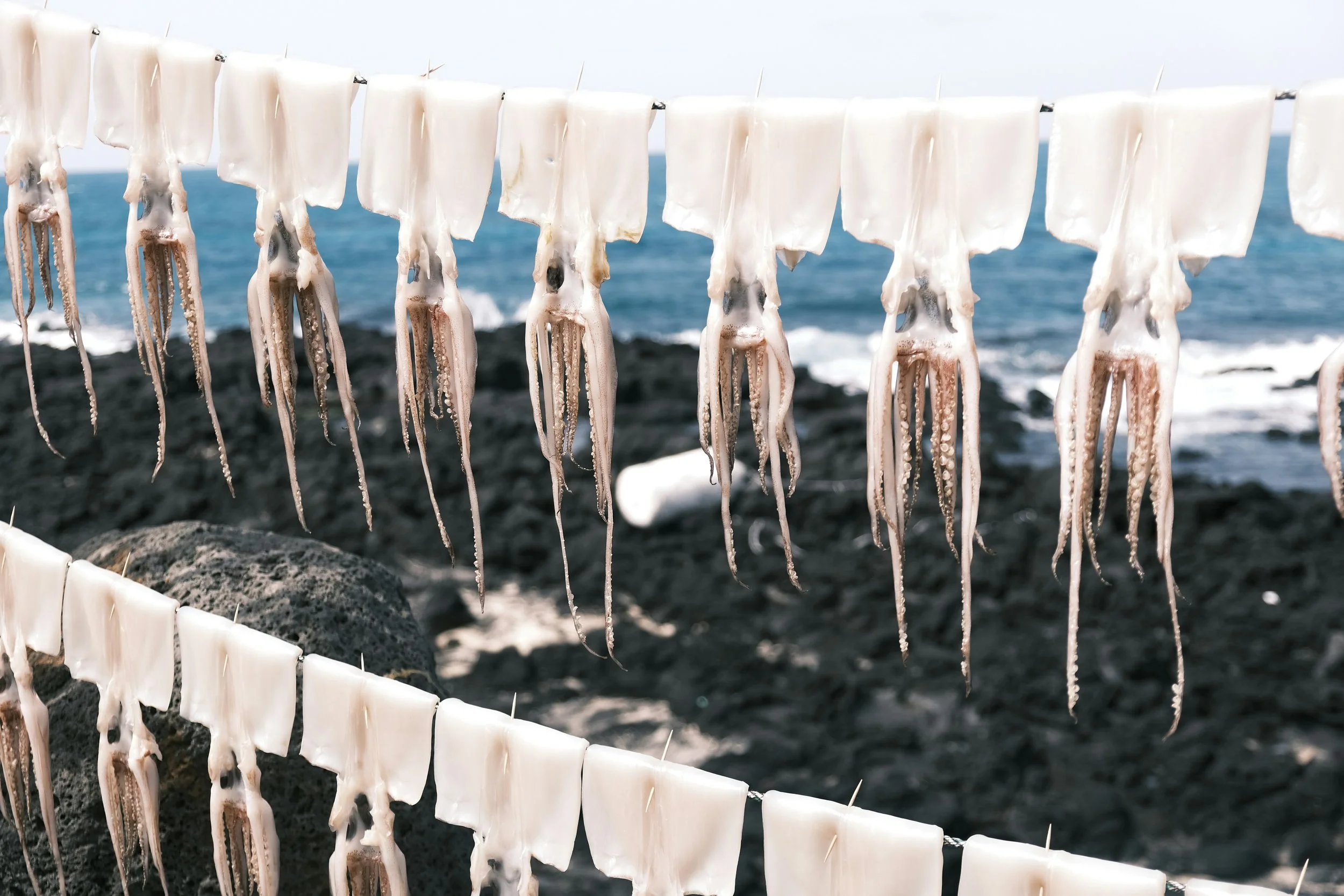
Image credit: Yunho Jeong, Unsplash.
Nazaré, Portugal
On Portugal’s central west coast, about two hours north of Lisbon, the scent of salt and smoke drifts through narrow streets before the sun has fully risen. Once a fishing village and still deeply shaped by the Atlantic, Nazaré begins its day around the sea. The morning clamour of the fish market rises with the gulls: shimmering rows of mackerel, sardines and carapau (horse mackerel) glint under the first light, while octopus and cuttlefish sway from wooden rails, drying in the breeze. Along the waterfront, fishing boats recall the town’s enduring maritime traditions, while above, the whitewashed houses of Sítio cling to the cliffs, looking out towards an ocean famed for some of the largest waves on earth.
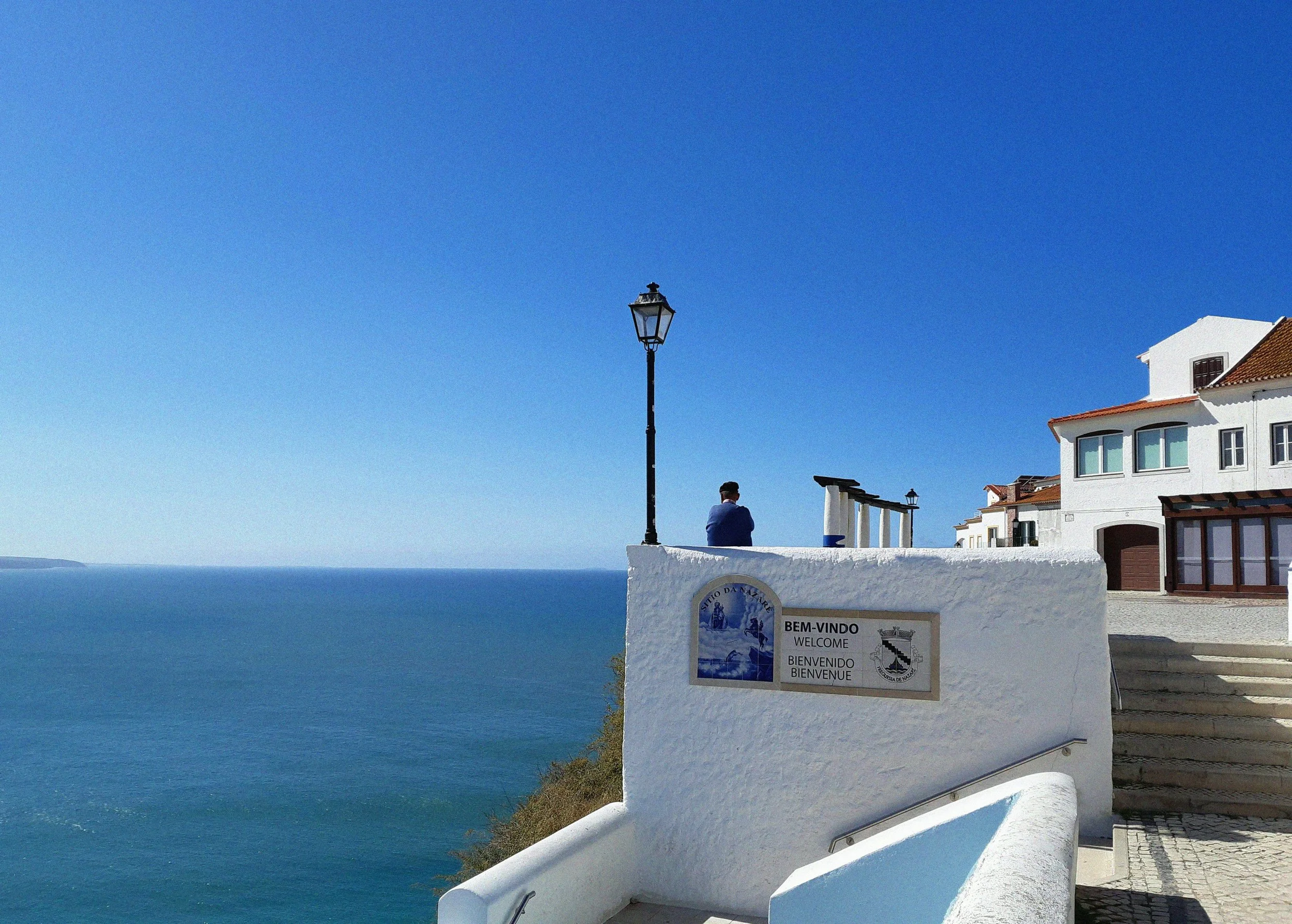
Nazaré. Image credit: Luana Norões, Unsplash.
Food in Nazaré
Home cooking begins from the waters and ends with the stove left on low. Locals grill sardines, simmer fish stews thick, and dress almost everything with olive oil, garlic, and vinegar. Meals are relaxed, eaten late, bread always on the table, conversation as essential as salt. Locals recommend trying caldeirada, the town’s rich fish stew, a medley of the day’s catch, simmered with onions, potatoes, and tomatoes until the flavours ripple together, deep and briny.
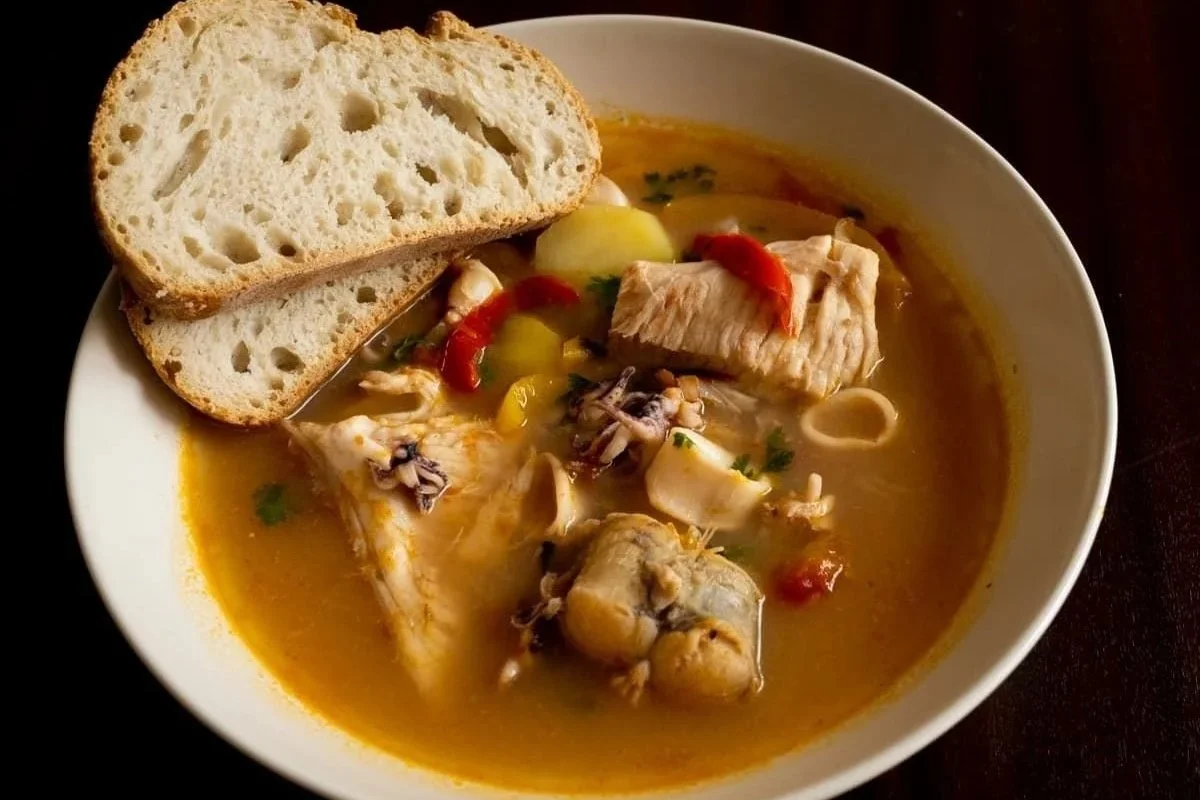
Caldeirada de Peixe, traditional Portuguese fish stew. Image credit: wetravelportugal.com.
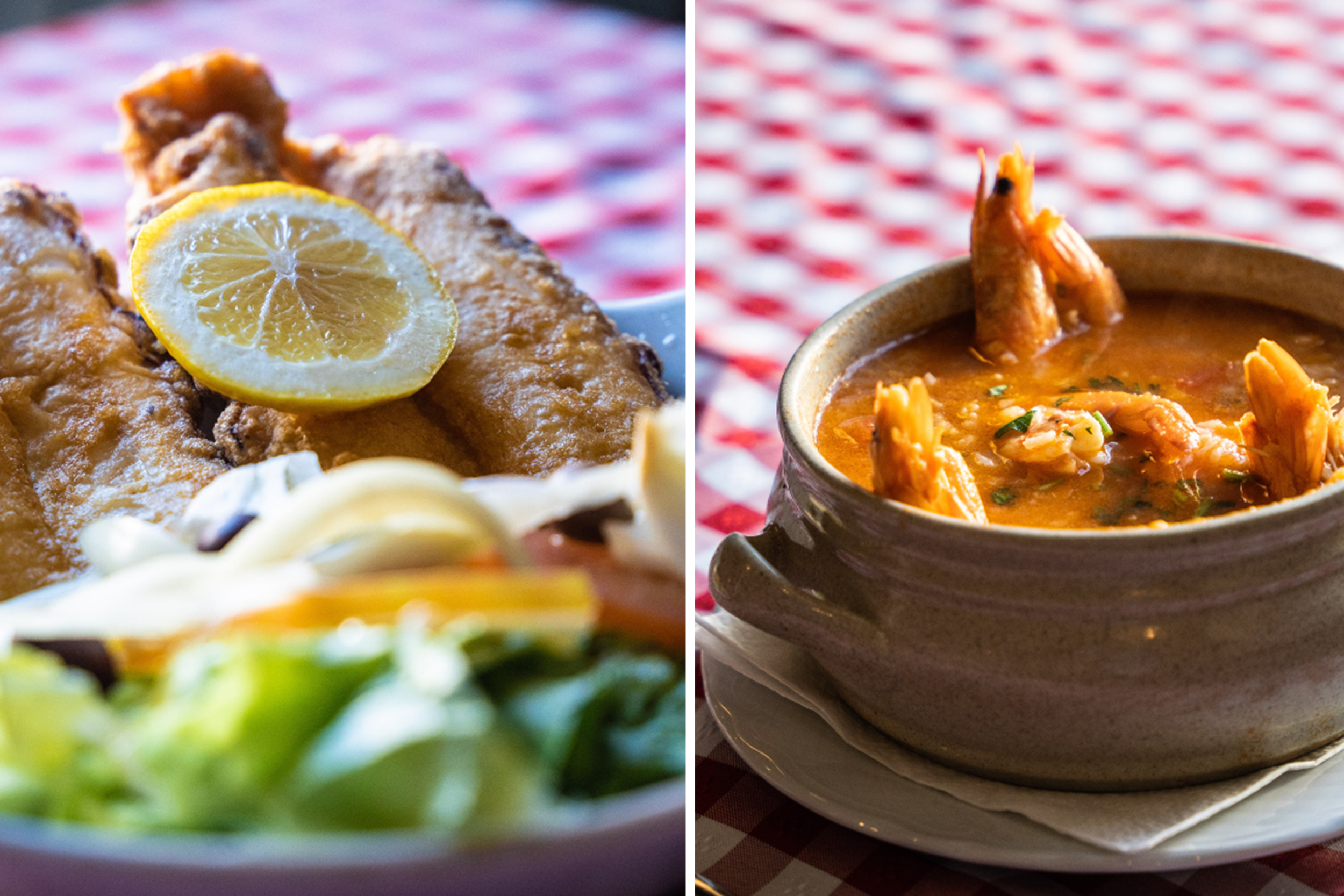
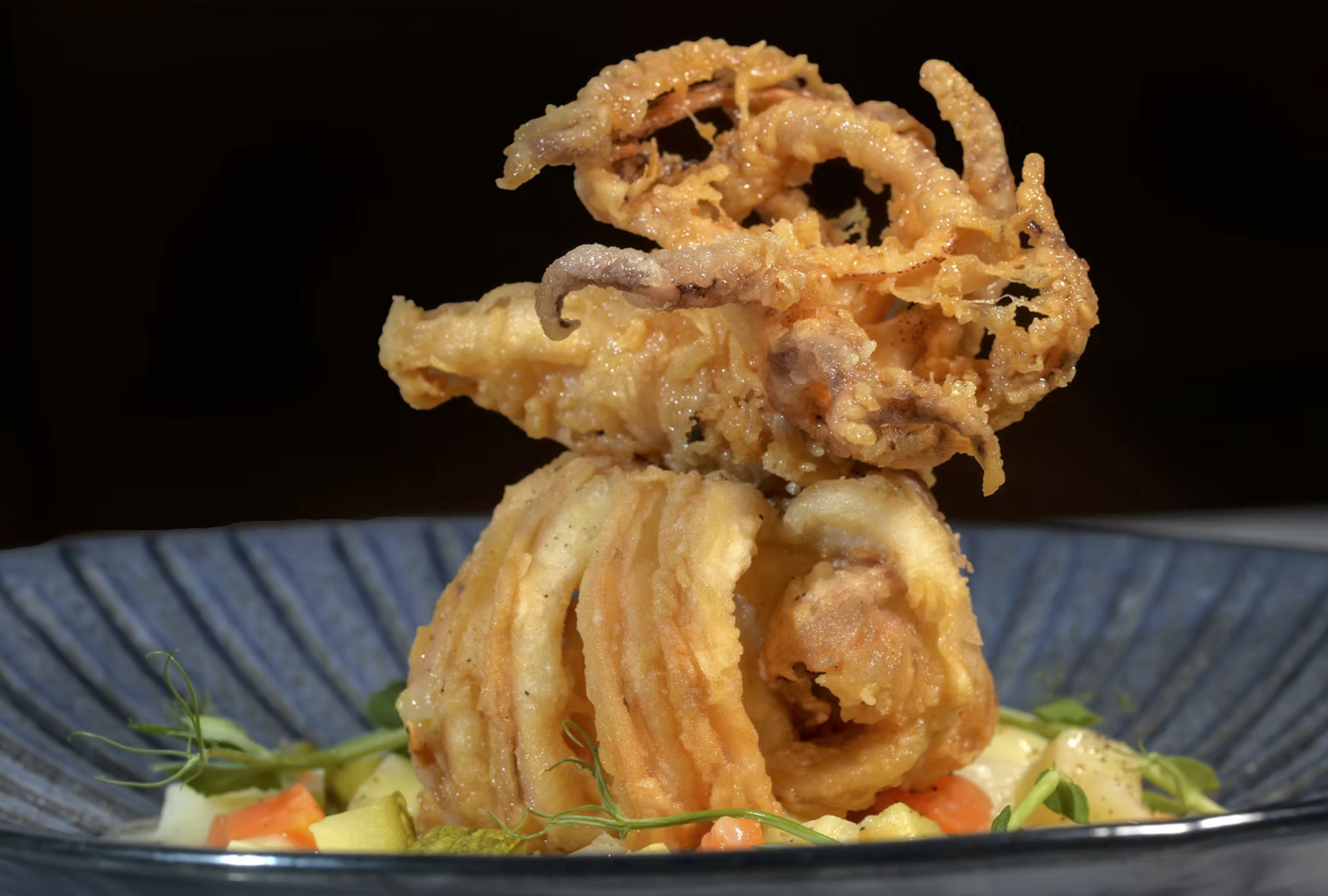
Octopus fritters and monkfish stew. Image credits: Restaurante A Tasquinha.
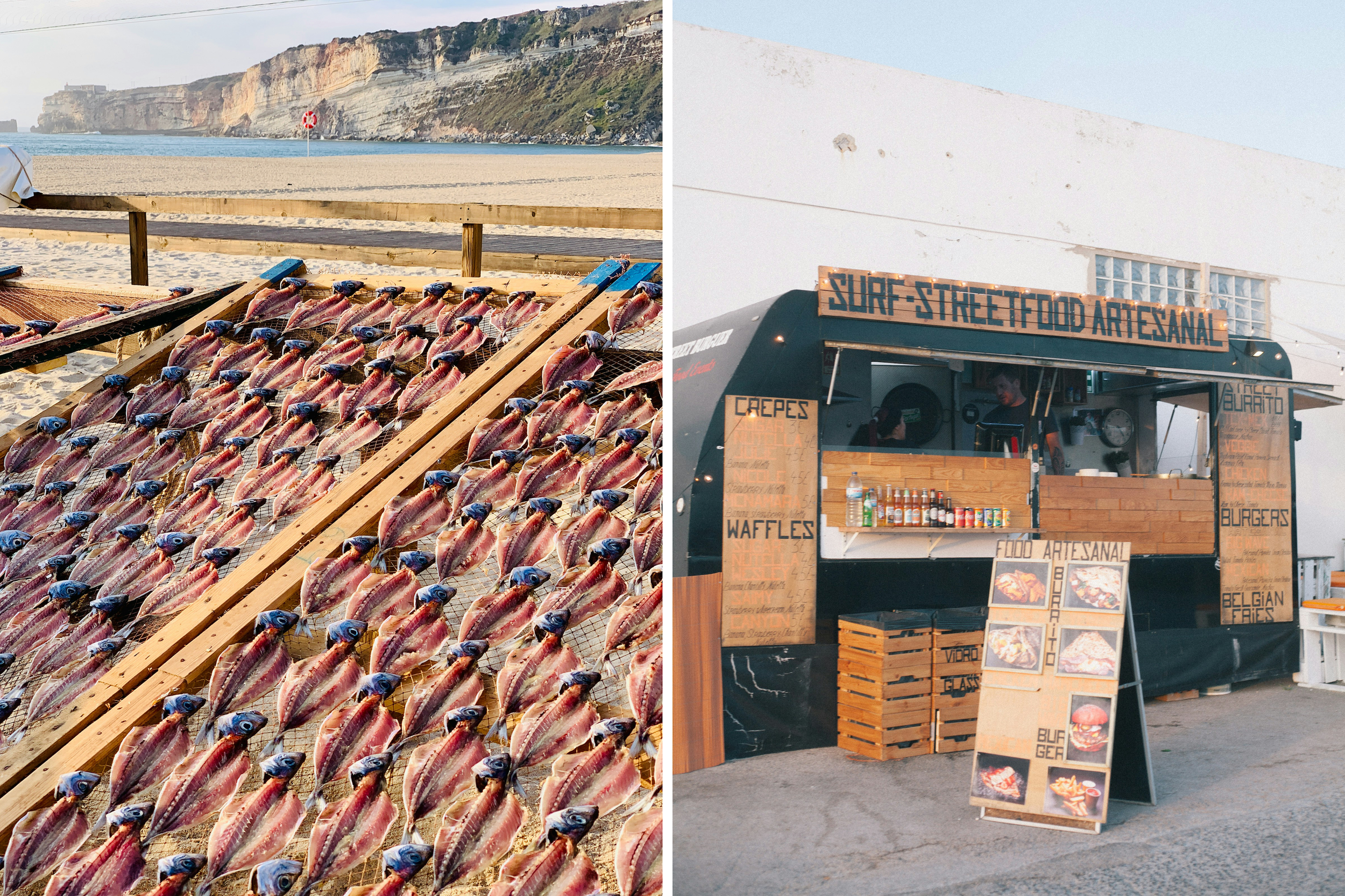
Common sights in Nazaré. Image credits: @travelsven and Marina Maliutina, Unsplash.
Marsaxlokk, Malta
On Malta’s southeastern coast, Marsaxlokk is a traditional fishing village gathered around one of the island’s largest natural harbours. Its waterfront is instantly recognisable for its luzzu—brightly painted wooden fishing boats, many bearing the ancient protective eye known as the Ospra. Once a Phoenician anchorage and later an important harbour under Roman and Arab rule, Marsaxlokk has long been shaped by fishing and seafaring. Today, its promenade comes alive with seafood restaurants and a bustling Sunday fish market, where the day’s catch—from lampuki and swordfish to tuna, octopus and shellfish—reflects the village’s enduring relationship with the Mediterranean.
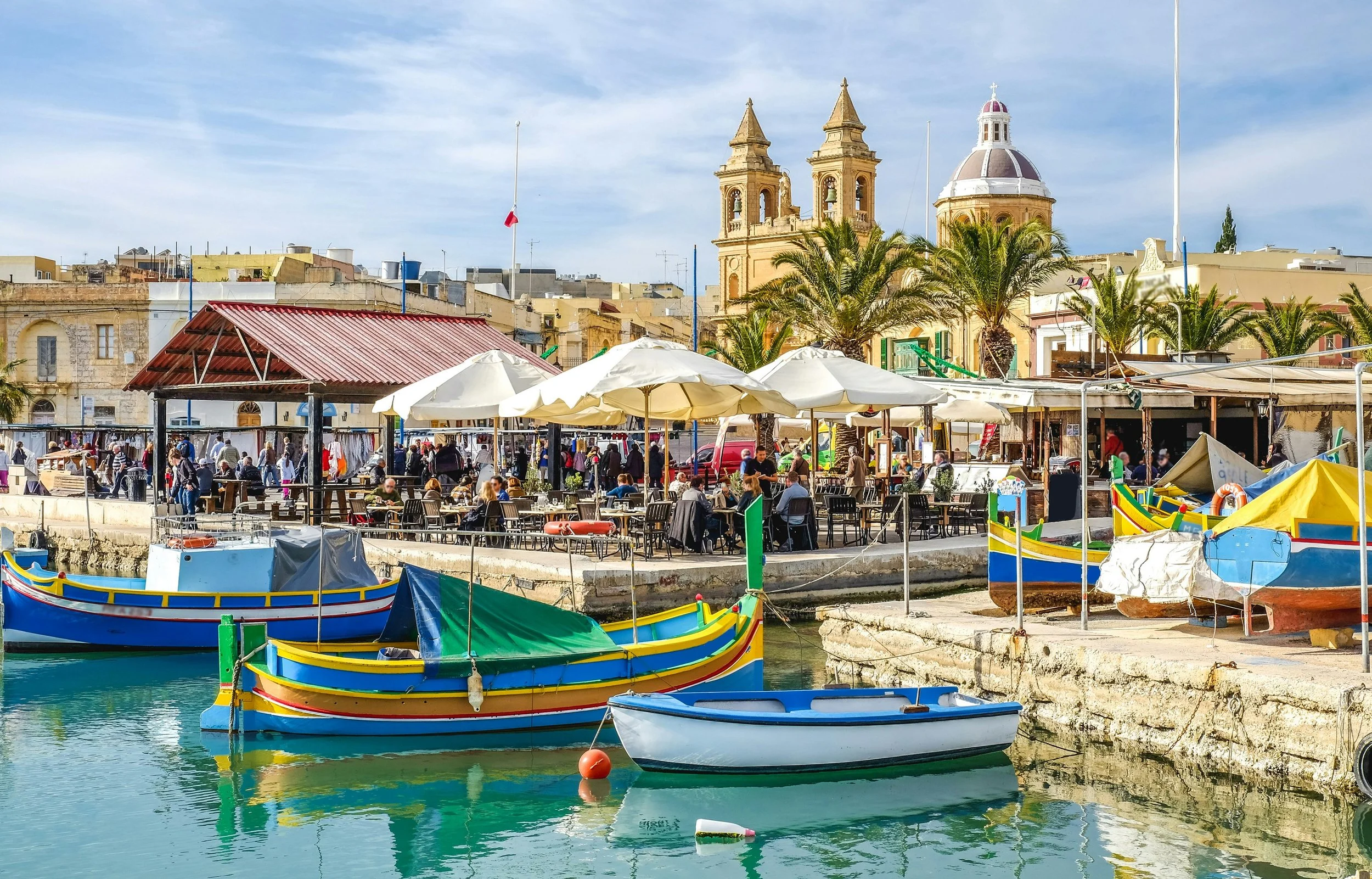
Fisherman village in Marsaxlokk. Image credit: Calin Stan, Unsplash.
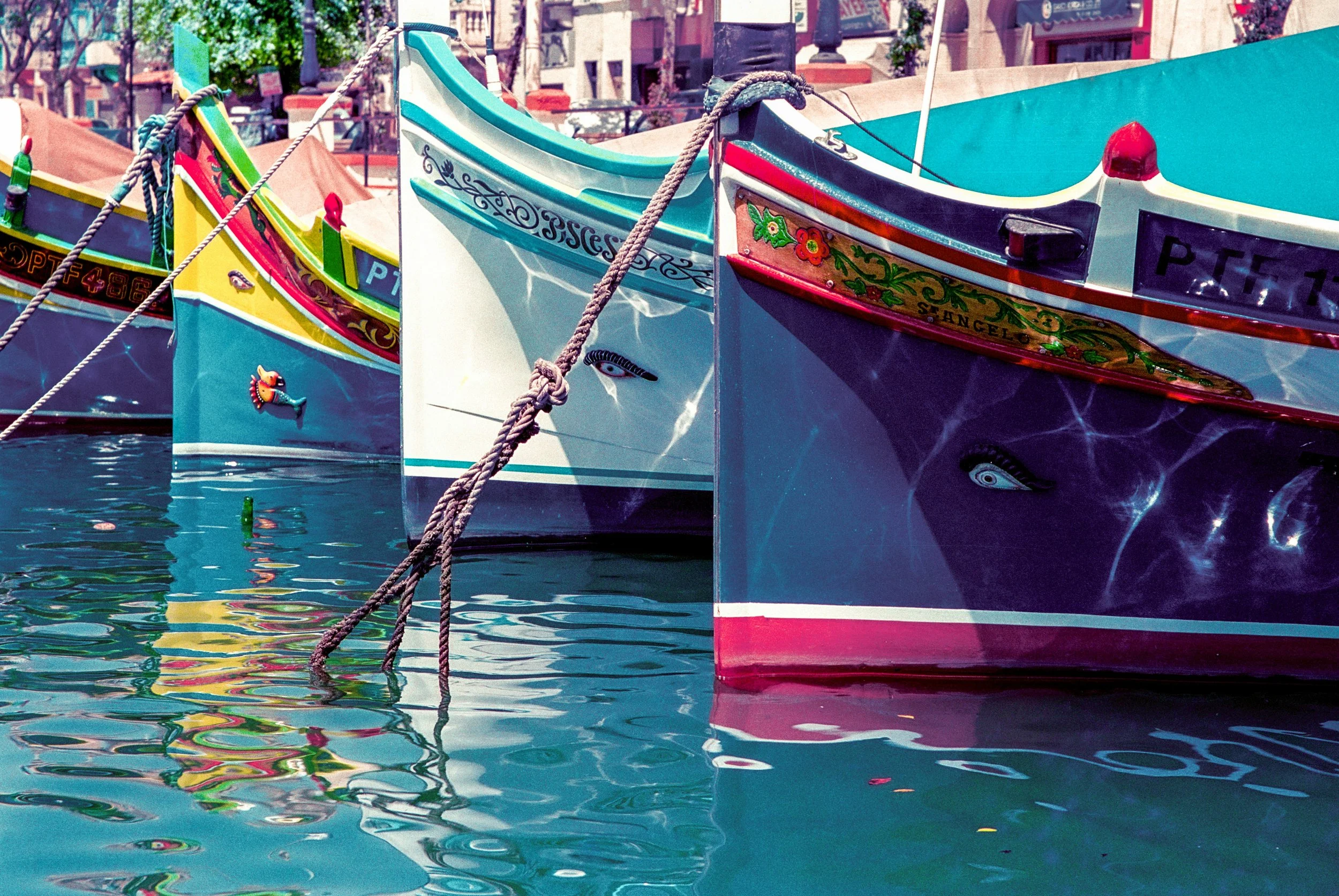
Most luzzus bear the painted Eye of Osiris for protection. Image credit: Mick Haupt, Unsplash.
Food in Marsaxlokk
The morning air carries the briny scent of the sea, mingling with the chatter of fishermen sorting their catch—bright red mullet, gilt-head bream, and the plump, sweet lampuki that are usually laid out on local tables. Maltese home cooking is generous. Fish is baked or stewed with capers, tomatoes, and olives, while rabbit or bragioli (beef olives) slow-cook in wine-rich sauces. Fish might be lightly grilled over charcoal, rubbed with sea salt and lemon, or stewed slowly with garlic, tomatoes, and a splash of local wine, letting the flavours mingle as lazily as the tide. The Sunday fish market is a ritual, where locals haggle and share recipes alongside crates of fresh prawns, squid, and octopus, much of which will end up in classic dishes such as aljotta, a fragrant fish soup, or in simple platters of lampuki pie, still warm from ovens.
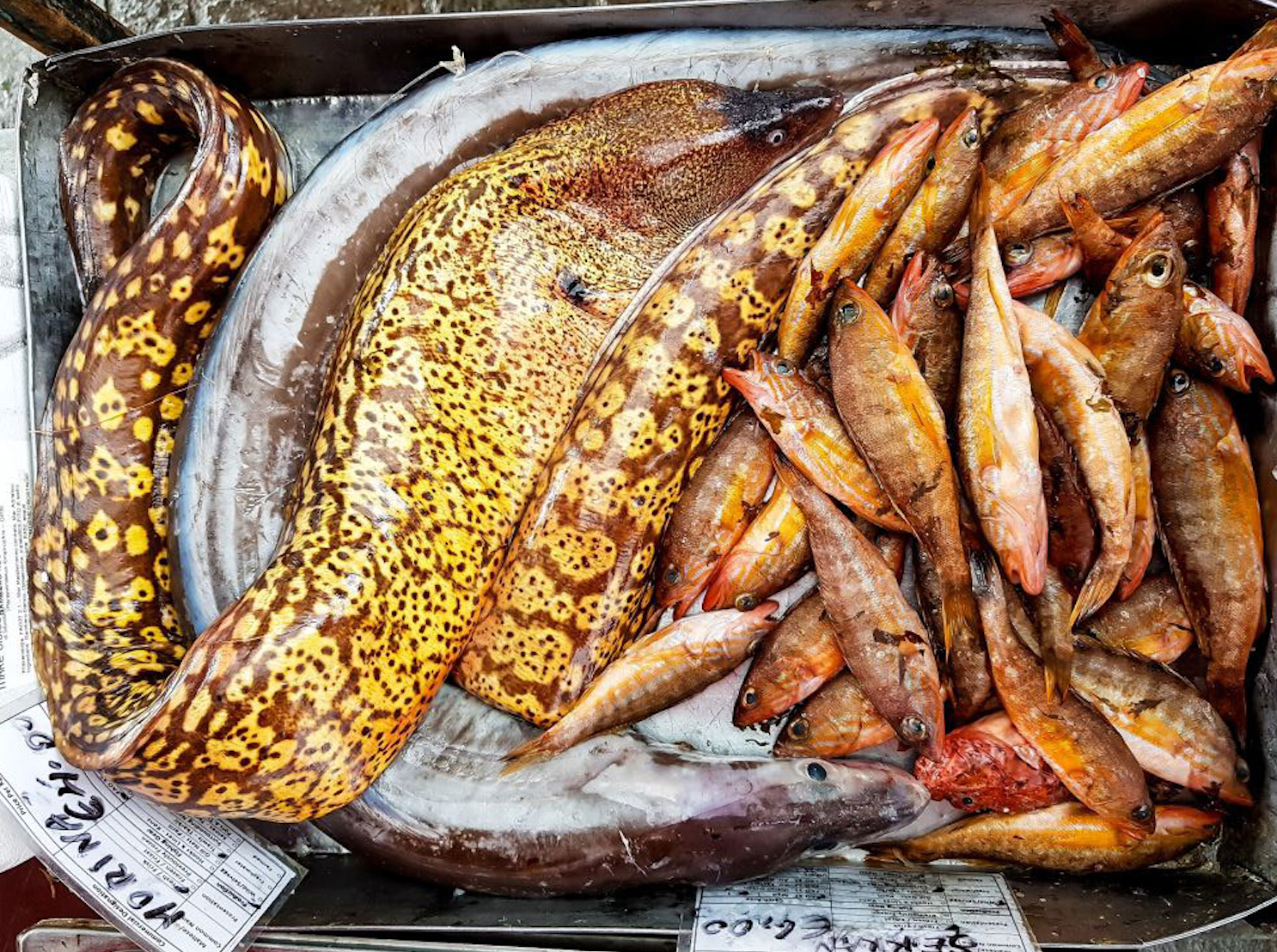
Fresh catch at the Sunday market of Marsaxlokk. Image credit: Ana Matei.
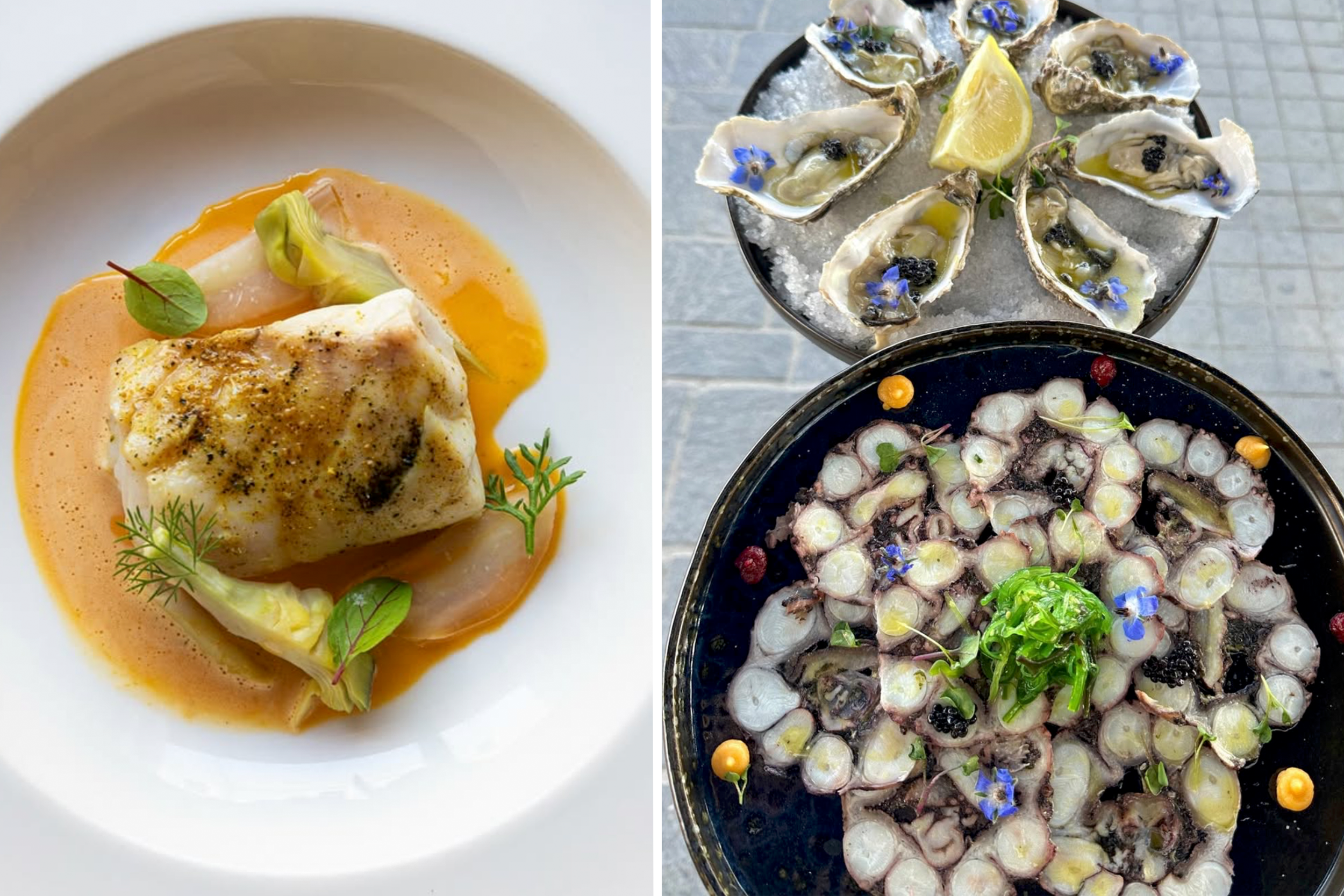
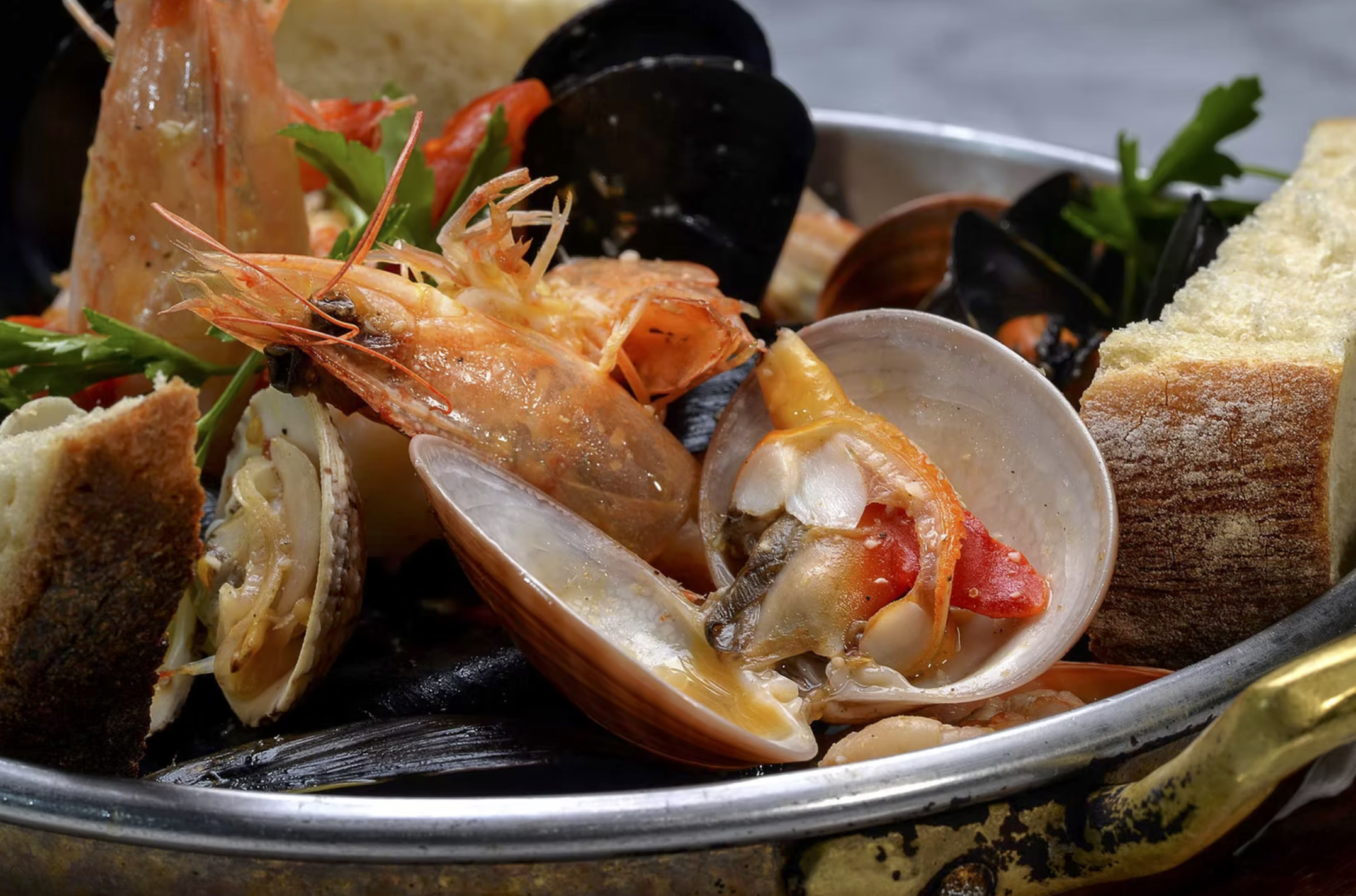
Grouper, razor clams and artichokes in ‘nduja broth, and oysters. Image credits: Tartarun and La Nostra Padrona.
Trondheim, Norway
At the northern edge of the Trondheimsfjord, Trondheim wakes beneath a wash of pale Arctic light. Its old wooden wharves line the water where fishing boats have long arrived with the day’s catch. Founded by the Vikings in 997, the city grew into a centre of trade and pilgrimage, its history still watched over by the soaring Nidaros Cathedral. Yet Trondheim’s relationship with the fjord is perhaps most vividly expressed at the table. Cod, salmon, shrimp and mussels meet wild herbs, berries, mushrooms and vegetables from the surrounding countryside, producing a cuisine that is at once briny and earthy.
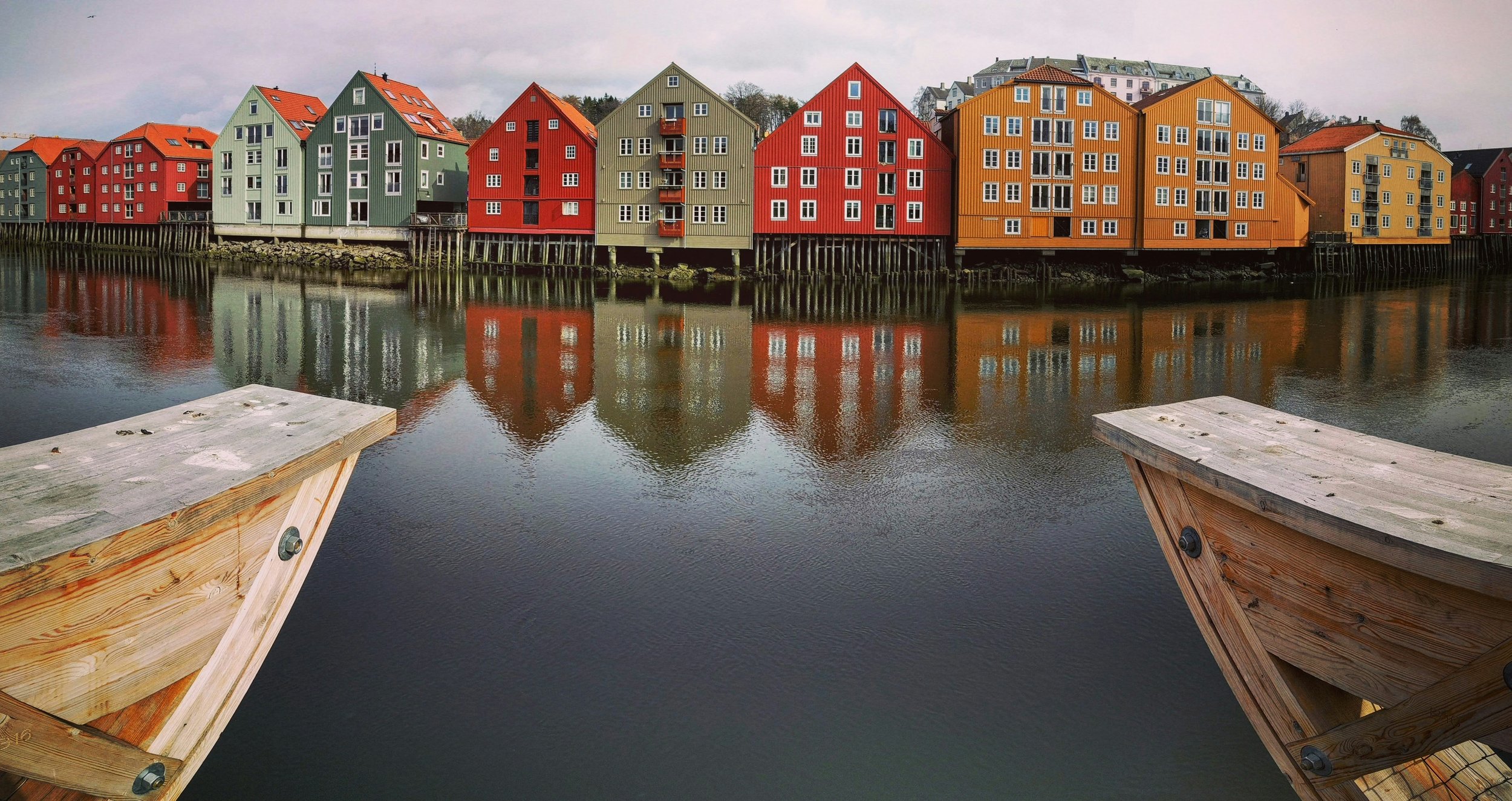
Trondheim. Image credit: Darolti Dan, Unsplash.
Food in Trondheim
In Trondheim, fish is smoked, salted and cured, preserving generations of Norwegian tradition. Gravlax, smoked salmon and skrei, the prized winter cod, are among the staples. Gravlax is cured with salt, sugar and dill, sometimes with juniper or aquavit, then sliced thinly and served with mustard-dill sauce and rye or crisp bread. Cod, salmon, mackerel and shrimp are usually pan-fried with butter and herbs, folded into creamy fiskesuppe, or gently poached and baked. Herring is pickled with vinegar, sugar and spices, while cold shrimp and prawns are served simply with lemon and dill. Open-faced sandwiches layered with smoked or cured fish, buttered crispbread and pickled garnishes are a familiar lunch. Alongside the seafood, potatoes, rutabaga and seasonal vegetables from local fields bring an earthy balance to the flavours of the fjord.
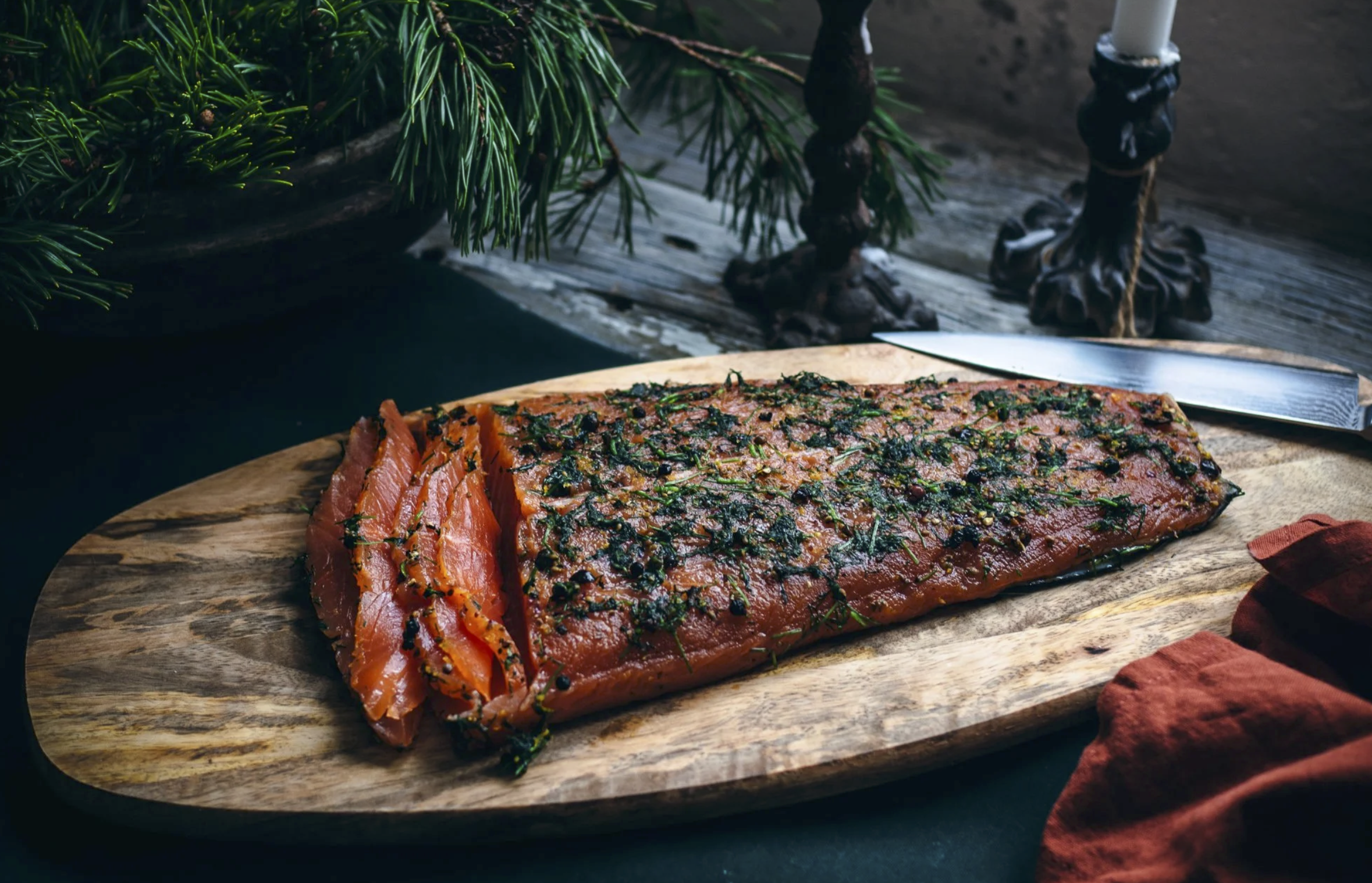
Winter spiced gravlax. Image credit: Kvaroy Arctic.
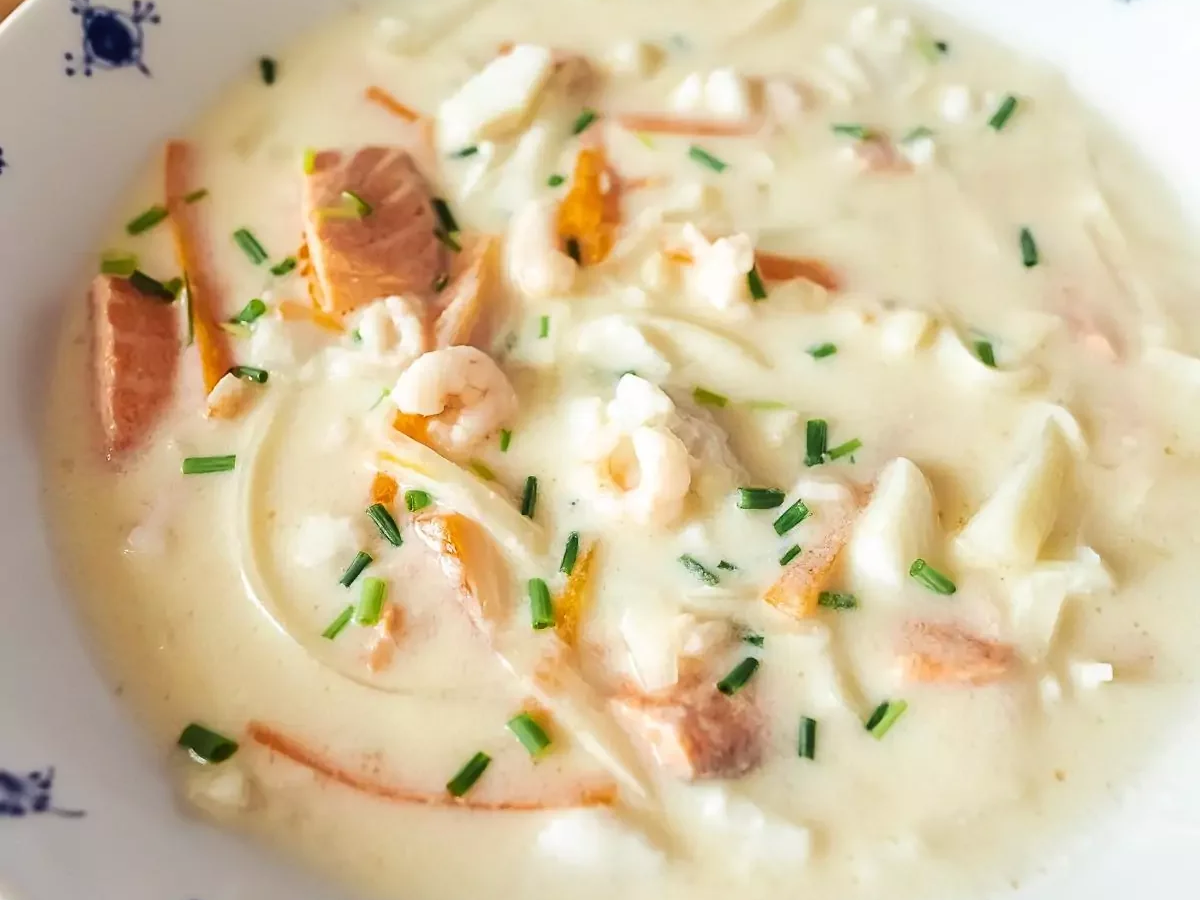
Fiskesuppe (creamy Norwegian fish soup). Image credit: Scandinavian Cookbook.

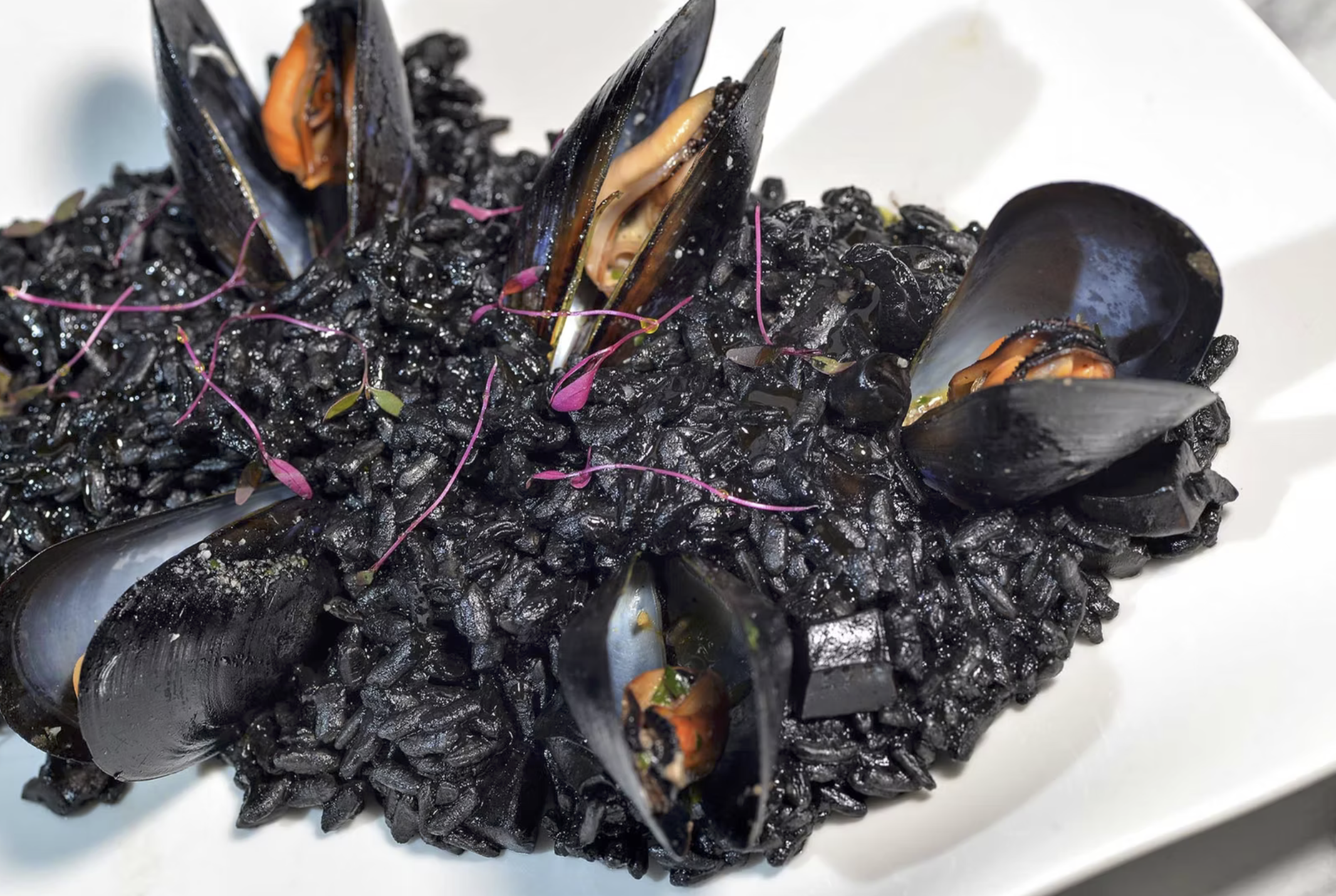
Image credit: Speilsalen.

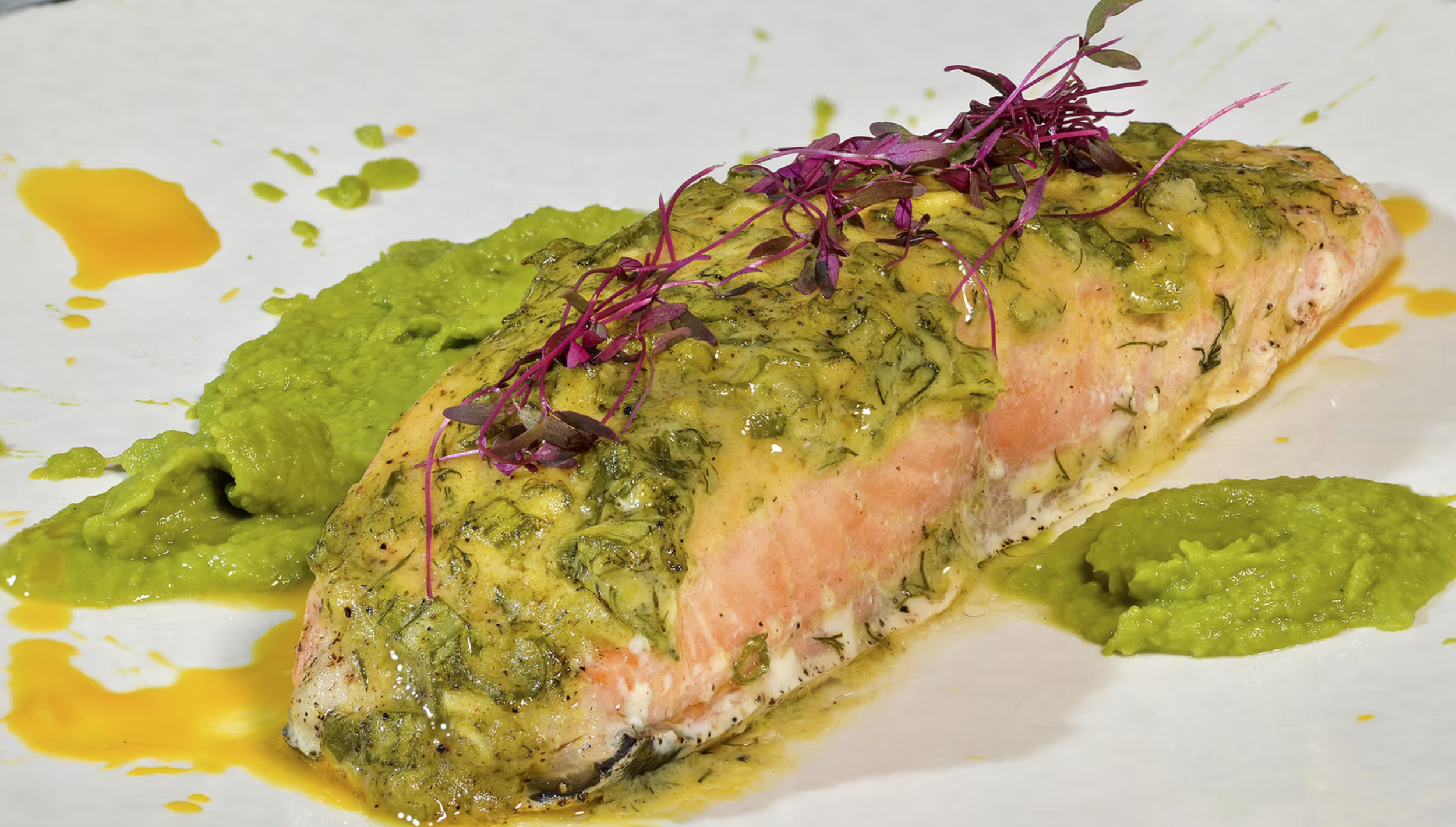
Aurora salmon, mussel sauce with chives and chervil, white asparagus, celeriac cream, and caviar. Image credit: Speilsalen.
Lakka, Greece
On the Ionian island of Paxos, Lakka curves around a turquoise bay like an amphitheatre, its olive groves and whitewashed houses descending towards the water. Laundry flutters above octopus strung out to dry, while fishing boats rest in the harbour and small kitchens prepare the day’s catch. By daylight, swimmers and kayakers disappear into sea caves along the rocky coast; by evening, the village shifts towards the waterfront. Boats return as grills begin to glow, filling the air with the scent of charred fish, lemon and herbs. At long tables by the quay, plates are passed between families and travellers as conversation drifts into the warm night, the gentle tide keeping time below.
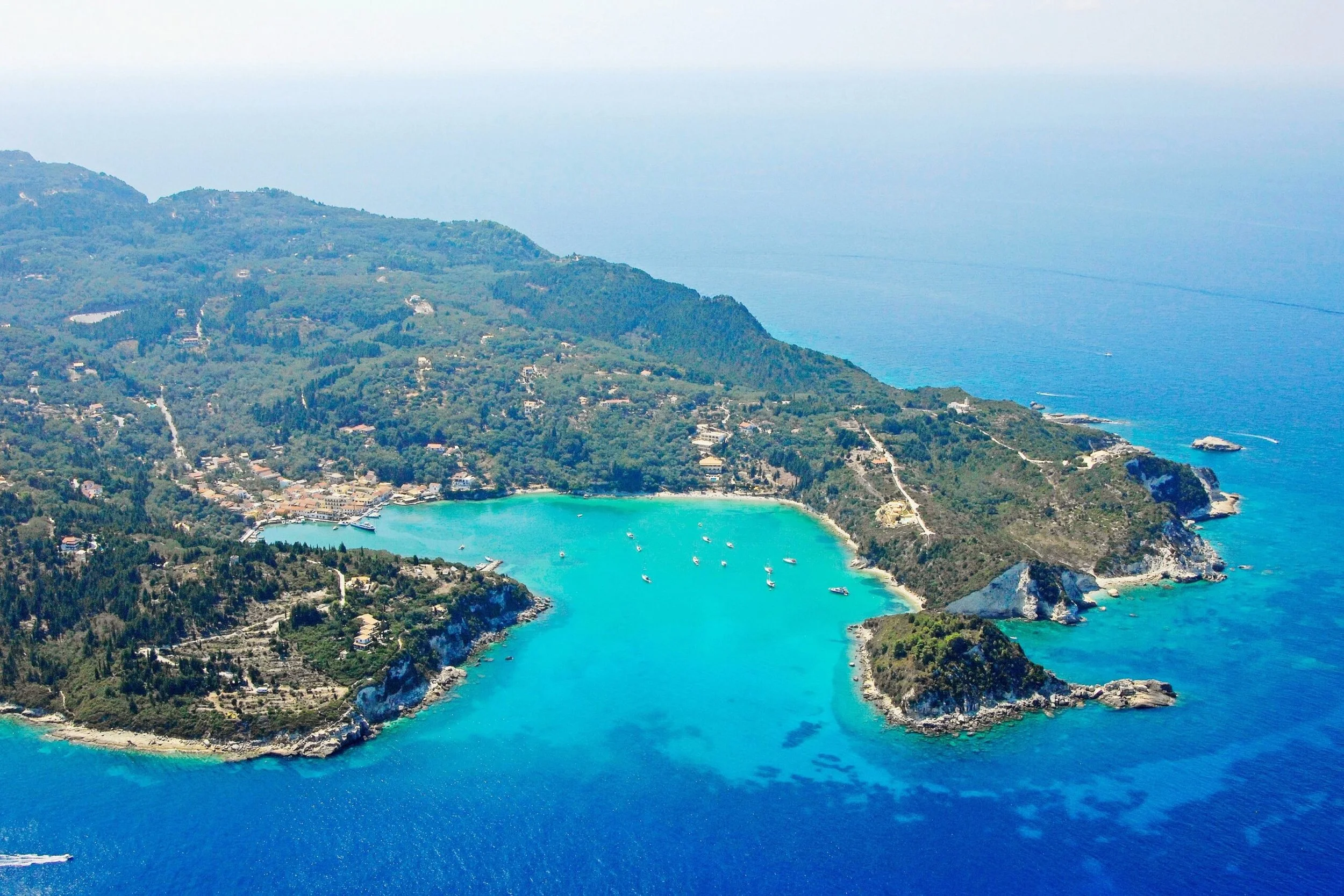
Lakka. Image credit: Paxos Local Guide.
Food in Lakka
Fresh fish is commonly grilled whole or fried crisp, while octopus is charred over coals and served with lemon, olive oil and herbs. Prawns, squid and other seafood often appear simply cooked, allowing their natural flavours to come through. Vegetables are equally important, with tomatoes, courgettes, aubergines and peppers slow-cooked in olive oil or combined in rustic stews. Greek salad, olives, local cheese and warm bread accompany the seafood, while pasta dishes with prawns or fish bring together the island’s coastal flavours. Olive oil is central to the cuisine, generously used in dressings, marinades and cooking, while local wine completes the meal.