

It began, as all memorable escapades often do, with a bout of indecision. My partner and I—then ensconced in the Renaissance splendour of Florence—were planning our first weekend away. We rummaged through the usuals: Cinque Terre, too picture-perfect; Siena, a textbook illustration of Tuscany; Lake Como, haunted by the glamour of Clooney. And then, as if the cosmos itself had grown weary of our dithering and decided to intervene—though I am convinced that the universe occasionally moonlights as a travel agent—we stumbled upon Carrara.
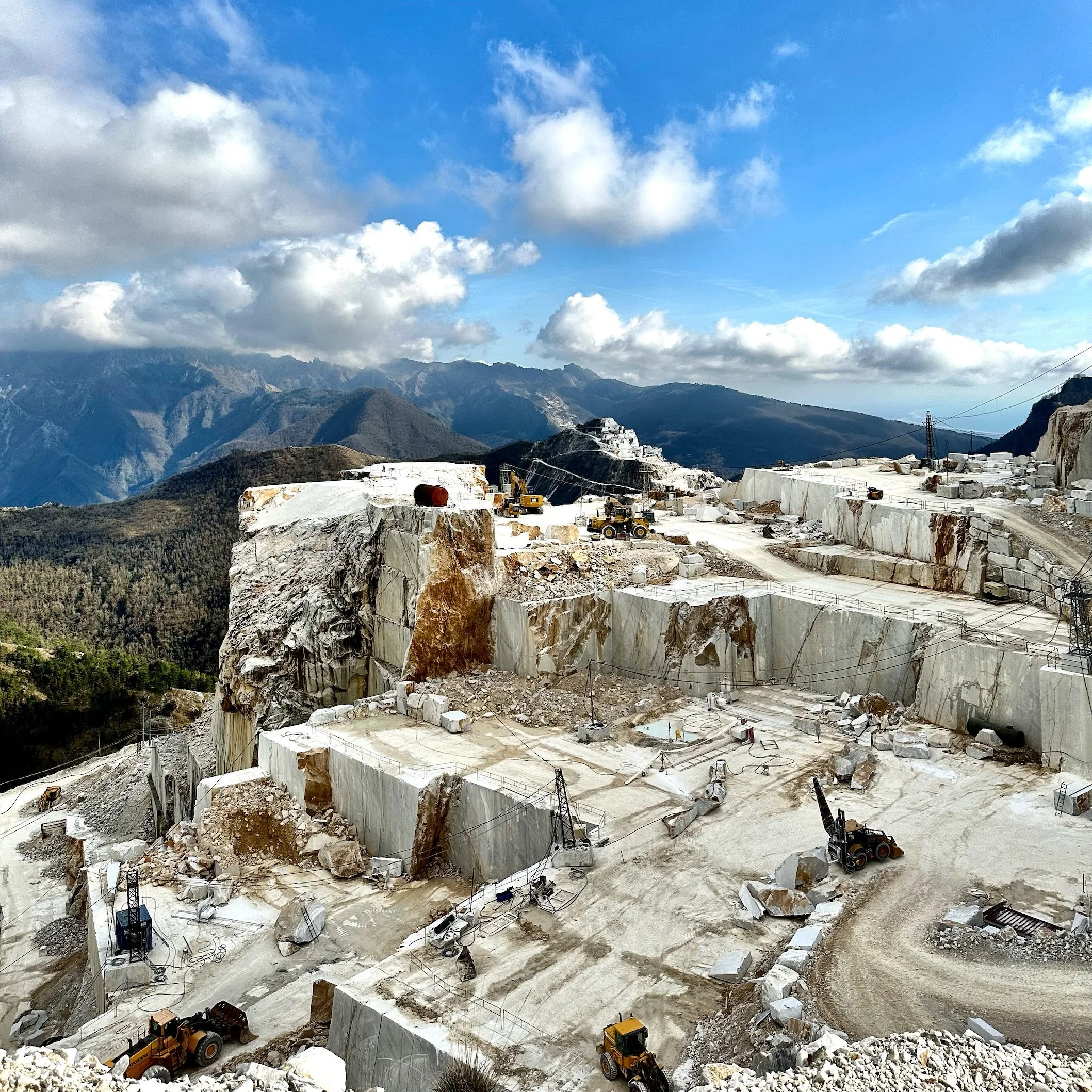
Carrara is a city celebrated for its marble, for quarries that pierce mountains like the veins of an ancient, slumbering giant. Truth be told, I had never given stone more than a passing thought—beyond the occasional one in my shoe or the dismay of stubbed toes. Marble, to me, had always existed as a polished abstraction, the sort of thing confined to hotel lobbies and living rooms: cool, aloof, emotionally unavailable.
There is a peculiar vitality here: light brushes the mountains with a warmth that seeps into the bones, and silence is not empty, but dense with the wisdom of centuries. It was our first trip away together, and somehow this city of stone made us feel more rooted in the present and, paradoxically, lighter than ever.
Our cab driver, a man whose gestures were as elliptical as his explanations, halted at the base of a slope, gestured vaguely uphill, and intoned that our B&B was “up there.” Bags onto the pavement, we set off, imagining, of course, that it would be just around the corner. It was not. To reach it required what can only be described as a Himalayan climb, my partner valiantly dragging our luggage skywards while I followed behind, offering moral support, breathless yet marvelling at the mountainous absurdity of our first excursion.
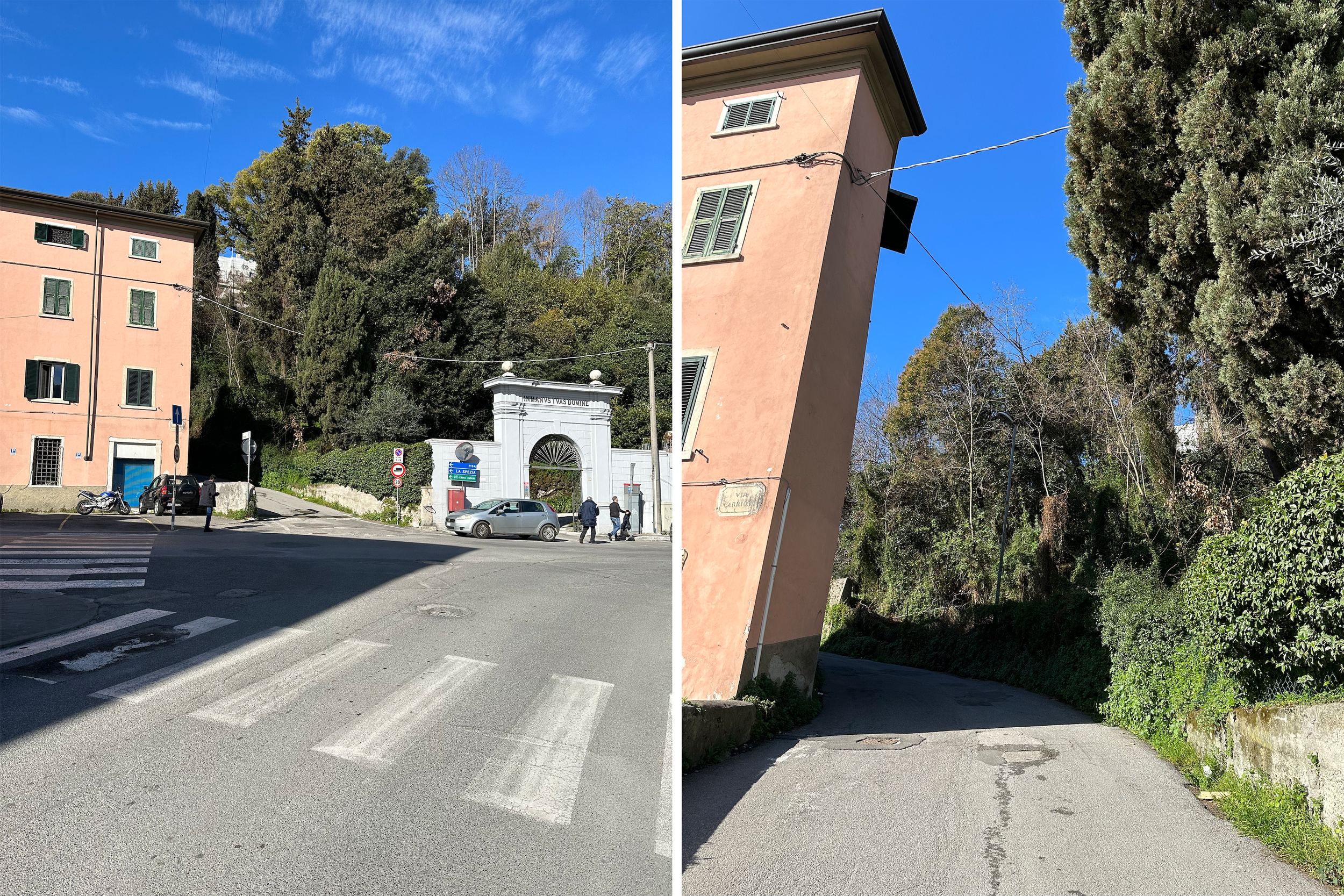
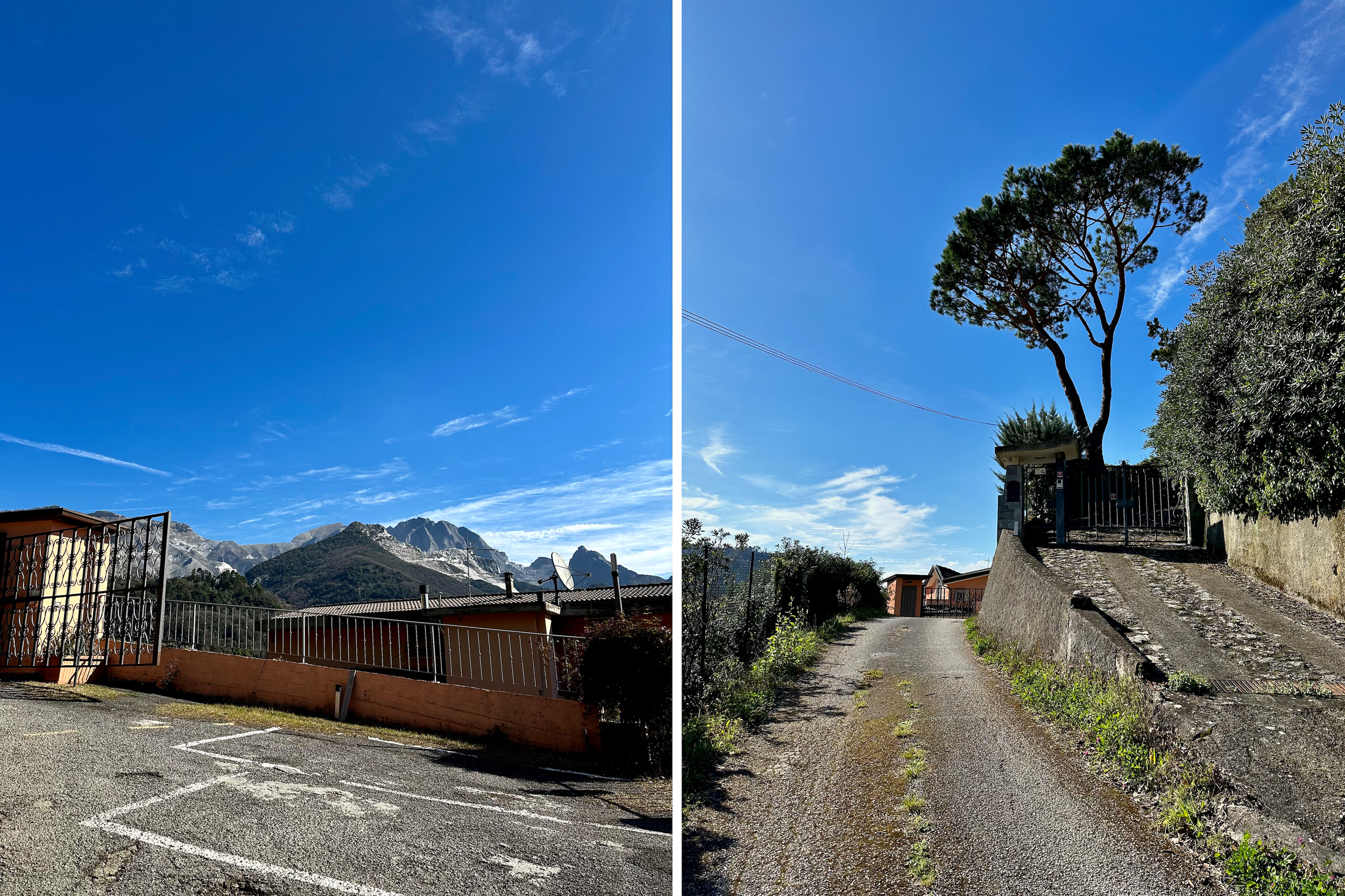
This home clung to the hillside with the stubbornness of a mountain goat. Perched right atop the slope, the house gazed out over Carrara’s untamed, marble-sculpted terrain. The entrance opened onto a cosy breakfast nook, where a moka pot waited like a tiny altar to ritualised caffeine, flanked by packaged croissants, cookies, teacakes and an assortment of books and board games.
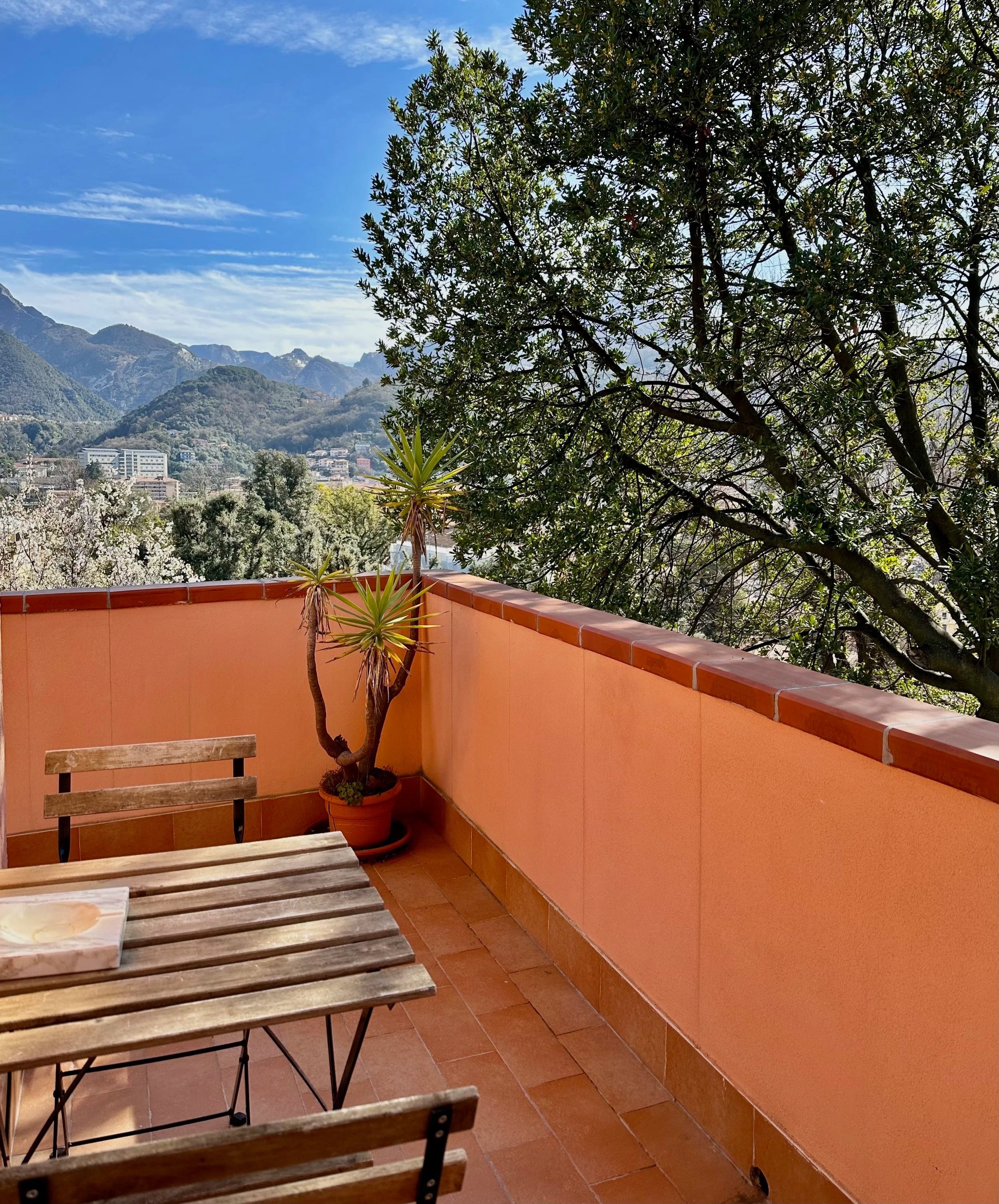
Our room was spare yet meticulous, and its balcony framed a panorama that might have made a filmmaker weep with envy. From there—and even from the bathroom—we drank in the sweeping vistas, tea in hand, as a chill threaded the air and a gentle drizzle began to lace the hills with silver. The B&B, in its thoughtfulness, provided us with umbrellas, and so we set off, umbrellas in hand, to lose ourselves in the labyrinthine heart of Carrara’s downtown.
Streets twist and turn, curl and dip in gentle loops, as though the city were taking your arm and steering you into a waltz. Family-run shops spill their pride onto the pavements, displaying treasures made by hand—not the glossy, soulless trinkets of the tourist trade, but objects created from the city’s marble legacy, all telling tales of quarries and the patient hands that shaped them. We bought marble dice, a thimble, magnets and mini sculptures. By midday, shutters descend, and shopkeepers retreat for siestas, leaving the streets hushed. Come evening, cobblestones lead to cosy trattorias and mellow wine bars. We wandered toward Piazza Alberica. The Monumento a Maria Beatrice d’Este stands sentinel, watching over the square. Pietro Fontana’s 1824 statue casts her as Minerva: staff and scroll in hand, an eagle by her side. At the base, bas-reliefs—bassorilievo, in the tongue of the country—trace histories in chiselled gestures. A lion-topped fountain rises at her feet, above taps of potable water.
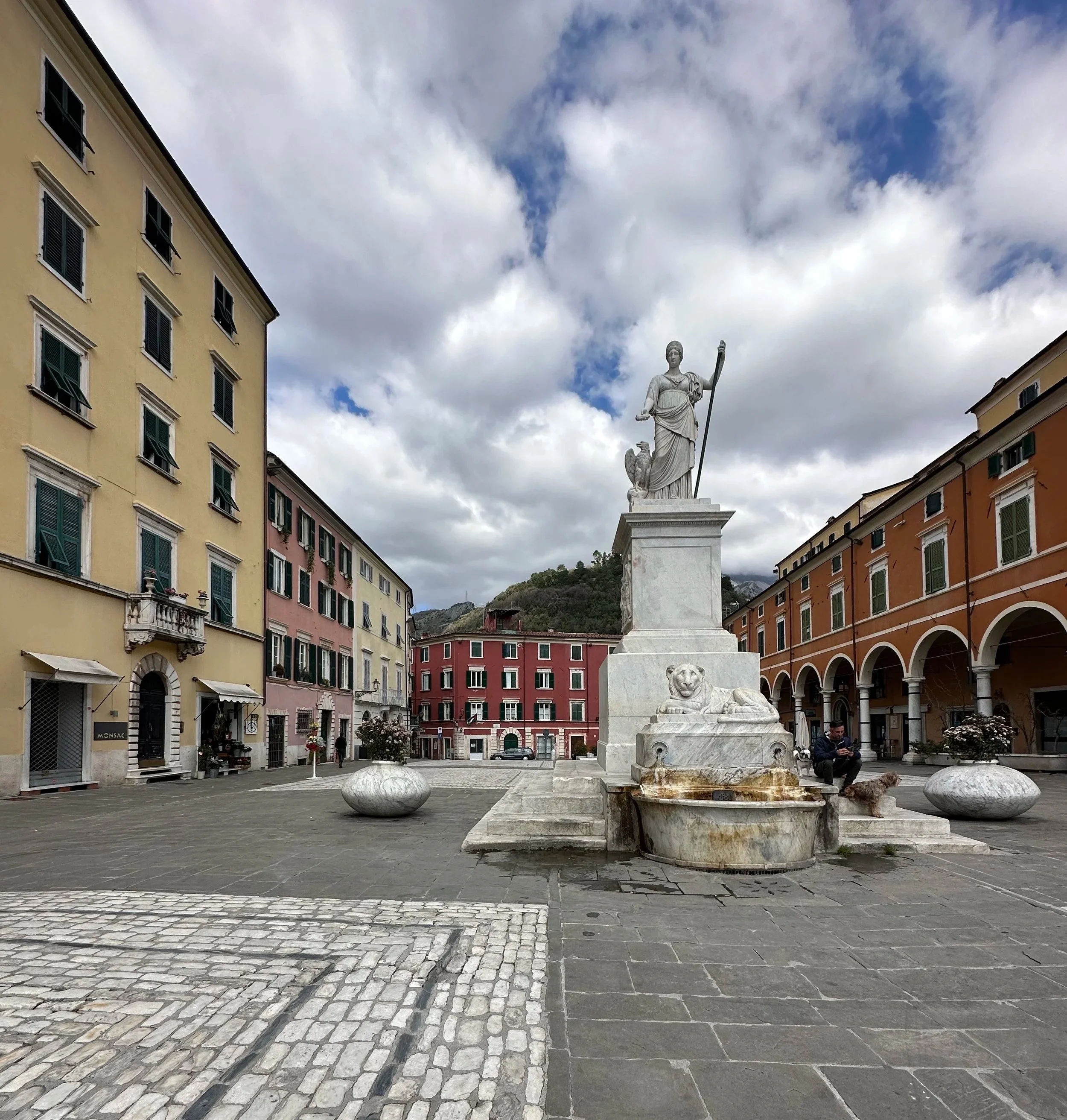
Fontana’s Maria Beatrice D’Este, Piazza Alberica.
We stumbled upon Caffetteria Leon d’Oro, positioned in the square with the precision of a theatre proscenium. The cafe carried the tones of a classic Italian bar. We had espresso, cappuccino, and some pastries to satiate a mini hunger pang. For lunch, we gathered paper bags and filled them with the day’s spoils from the local supermarket—fresh warm bread, local cheeses, Lardo di Colonnata (the region’s famed lard), and fruit still redolent of sun.
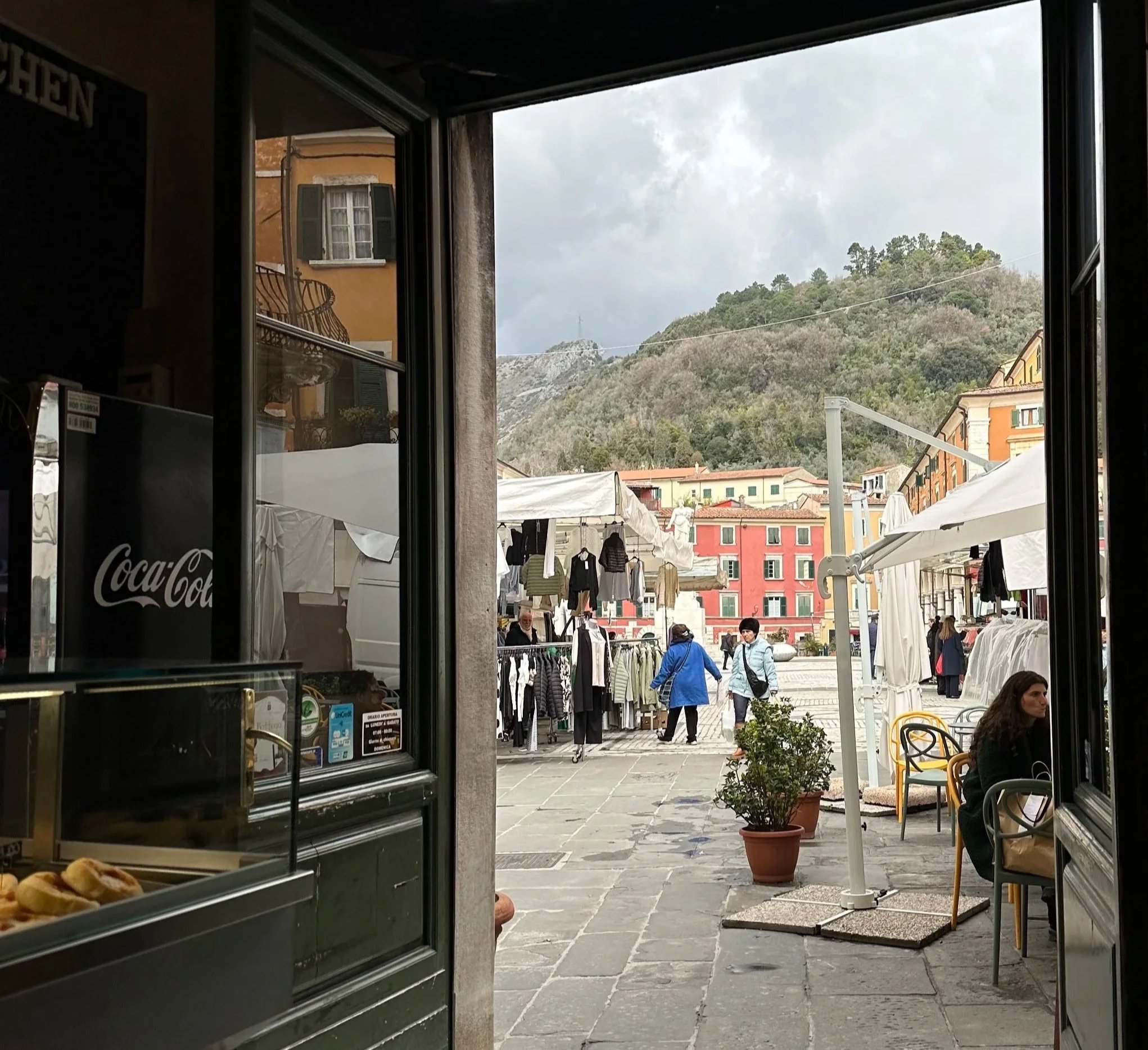
In Piazza Antonio Gramsci, also historically known as Piazza d’Armi, we came across a magnificent sculpture: Stefano Ricci’s marble tribute to Pellegrino Rossi Carraresi (1787–1848), an Italian-born, naturalised French and Swiss economist, jurist, and statesman, whose mind and ambition once rippled far beyond the city’s stone-clad streets, shaping 19th-century Italy through law, politics, and scholarship.
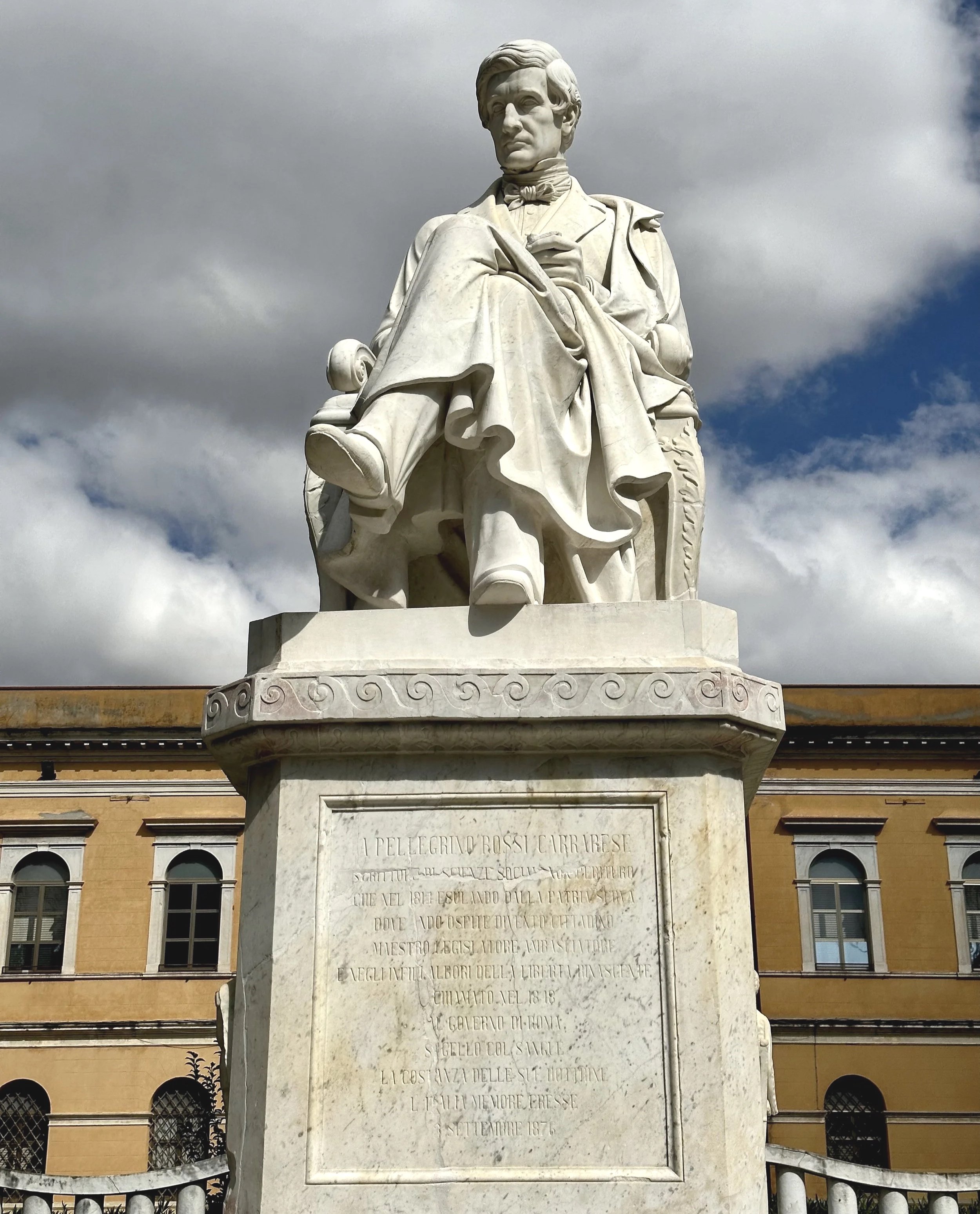
Ricci’s Pellegrino Rossi Carraresi in Piazza Antonio Gramsci/Piazza d’Armi.
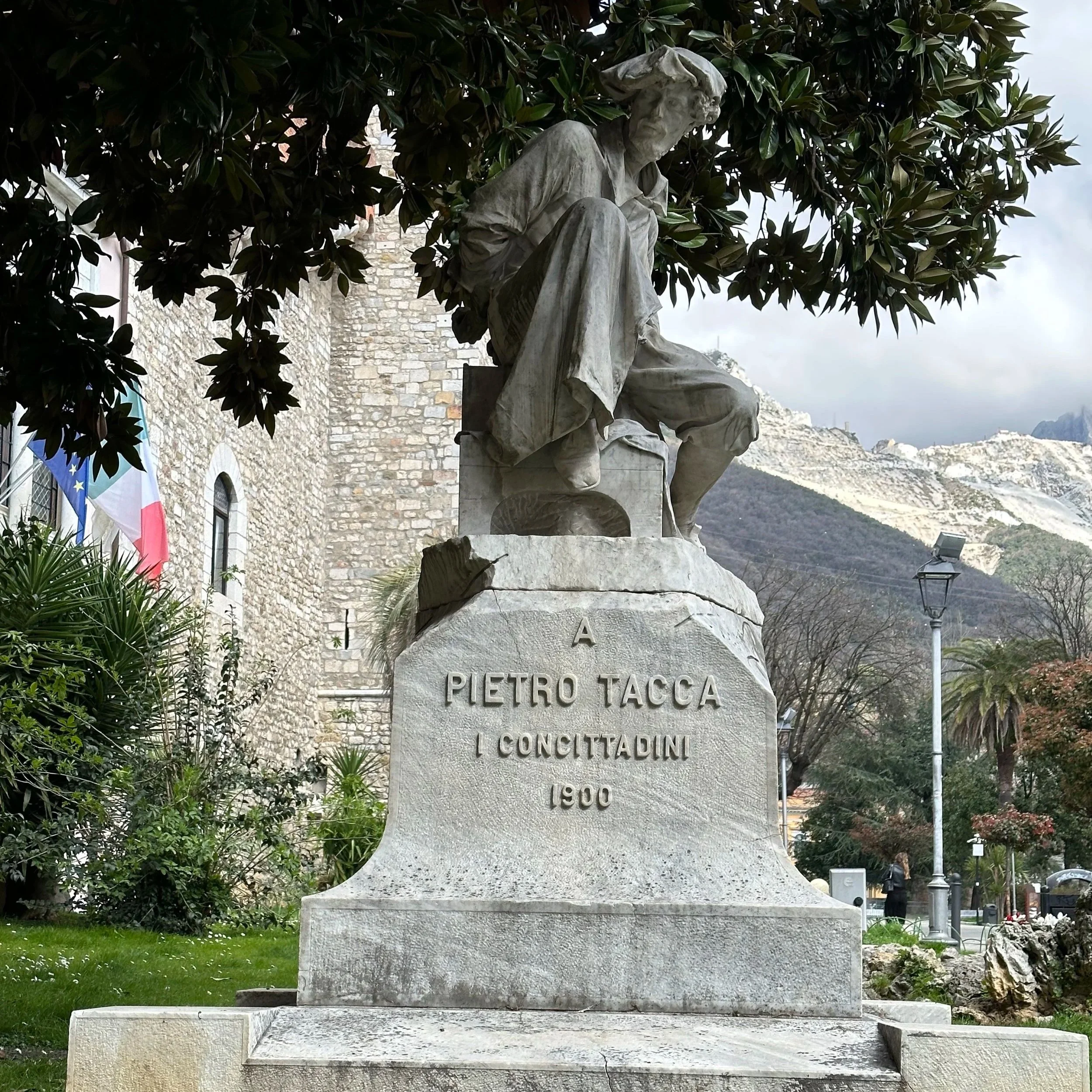
Carlo Fontana’s 1900 Monumento a Pietro Tacca in Carrara’s Piazza Accademia, honouring the Baroque sculptor in his characteristic cap and work apron.
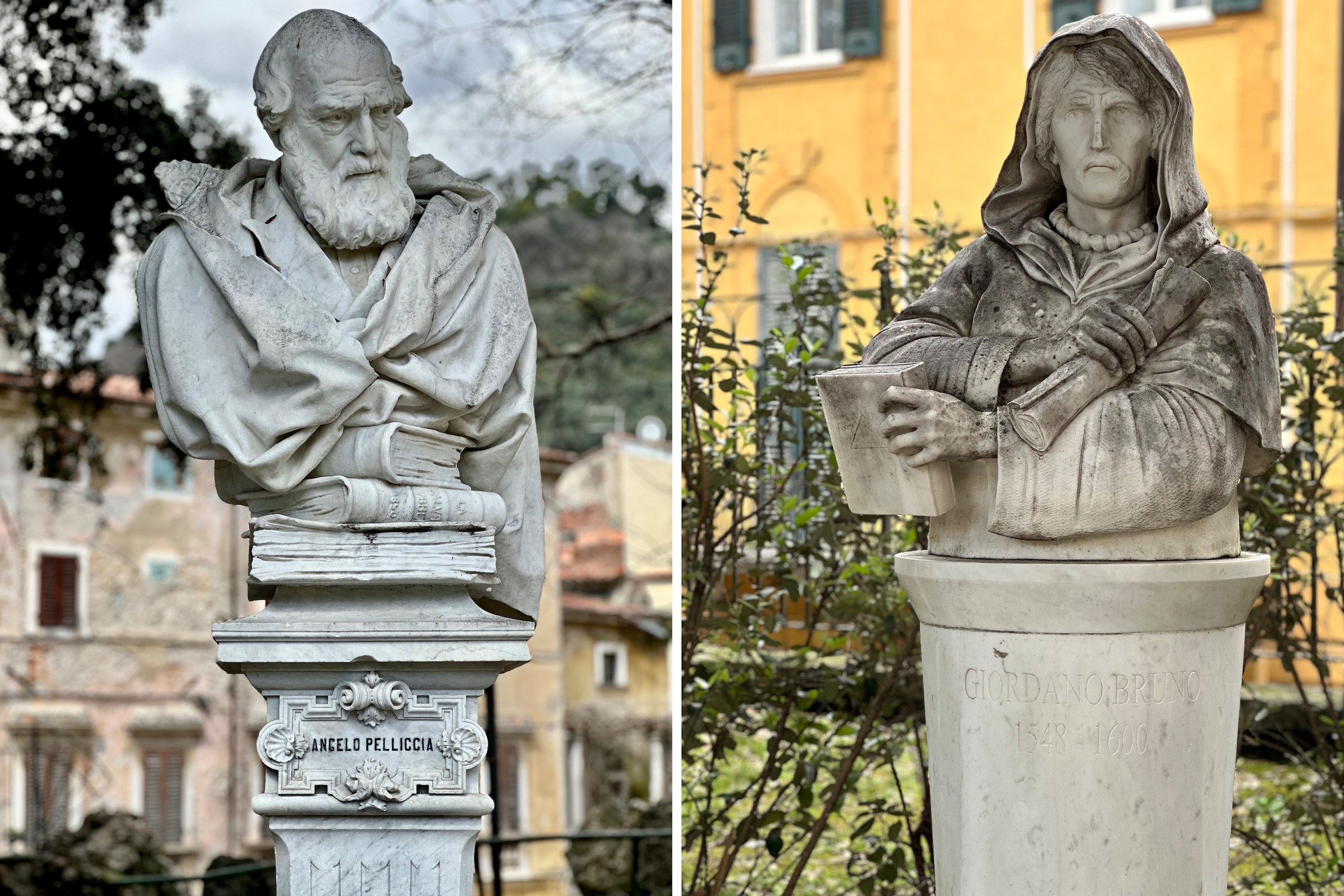
Gino Nicoli’s bust of Angelo Pelliccia and Roberto Fantoni’s tribute to Giordano Bruno, framed by marble balustrades, the Fontana dell’Elefantino and a sunlit gazebo in Carrara’s civic heart.
We wandered a little further through the city. Locals were stocking up on their weekly groceries at the farmers’ market, students drifted back from class in loose clusters, and buskers played to passing tourists. Stalls spilled over with linen shirts, cotton tees, skirts and socks, alongside the occasional vintage curiosity: trays of costume jewellery glinting in the sun. Vendors laid out arrays of meats and cheeses for tasting.
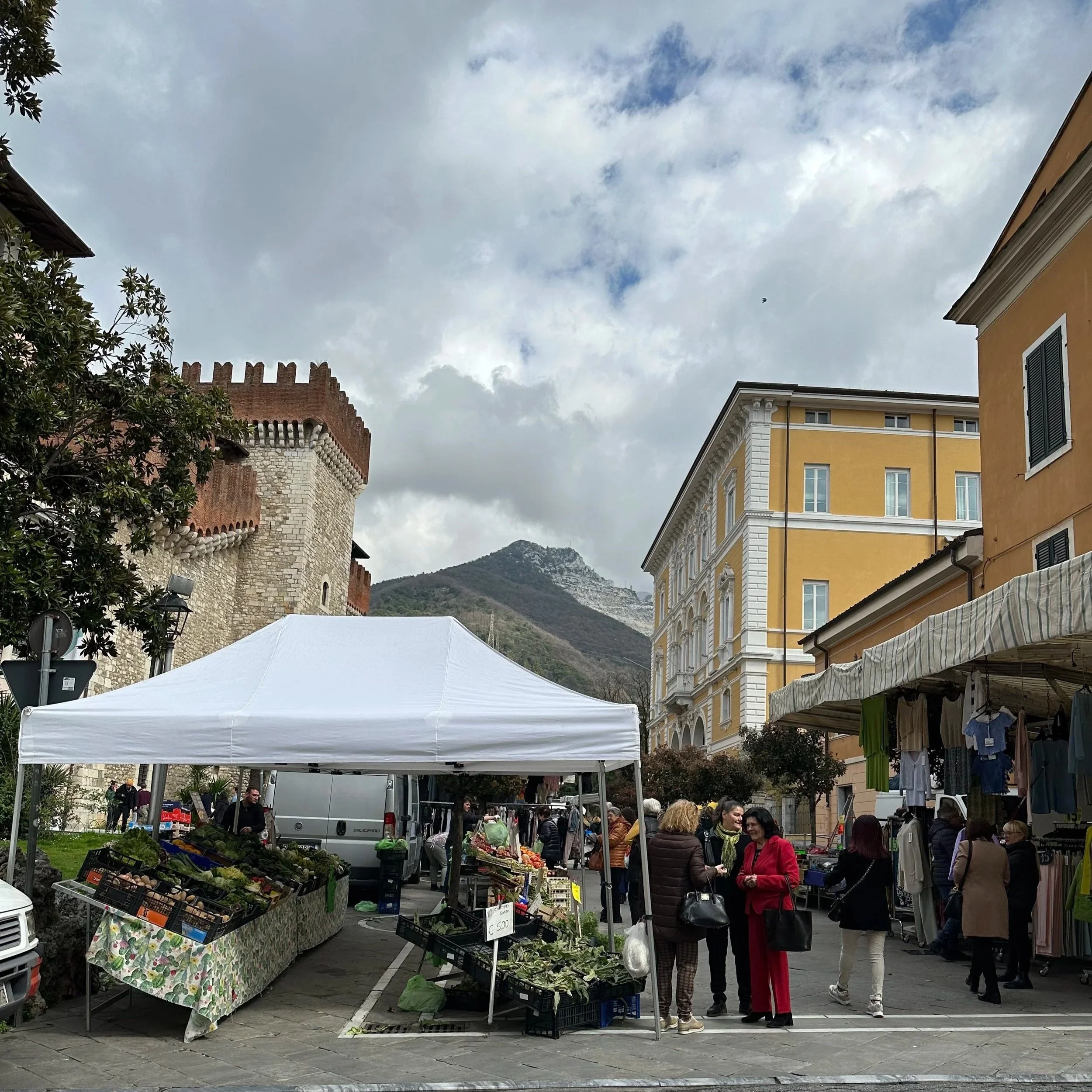
Tired from our longish stroll, we made our way back up the steep incline. Post a nap, the rain gods decides do shower us with blessings. Umbrellas in hand, once again we descended, clinging to each other as we navigated the slick street. We reached the town centre, hoping to find dinner at the first restaurant we spotted—but that, as it turned out, was not to be. There were long queues everywhere, and we put our names on a couple of waitlists.
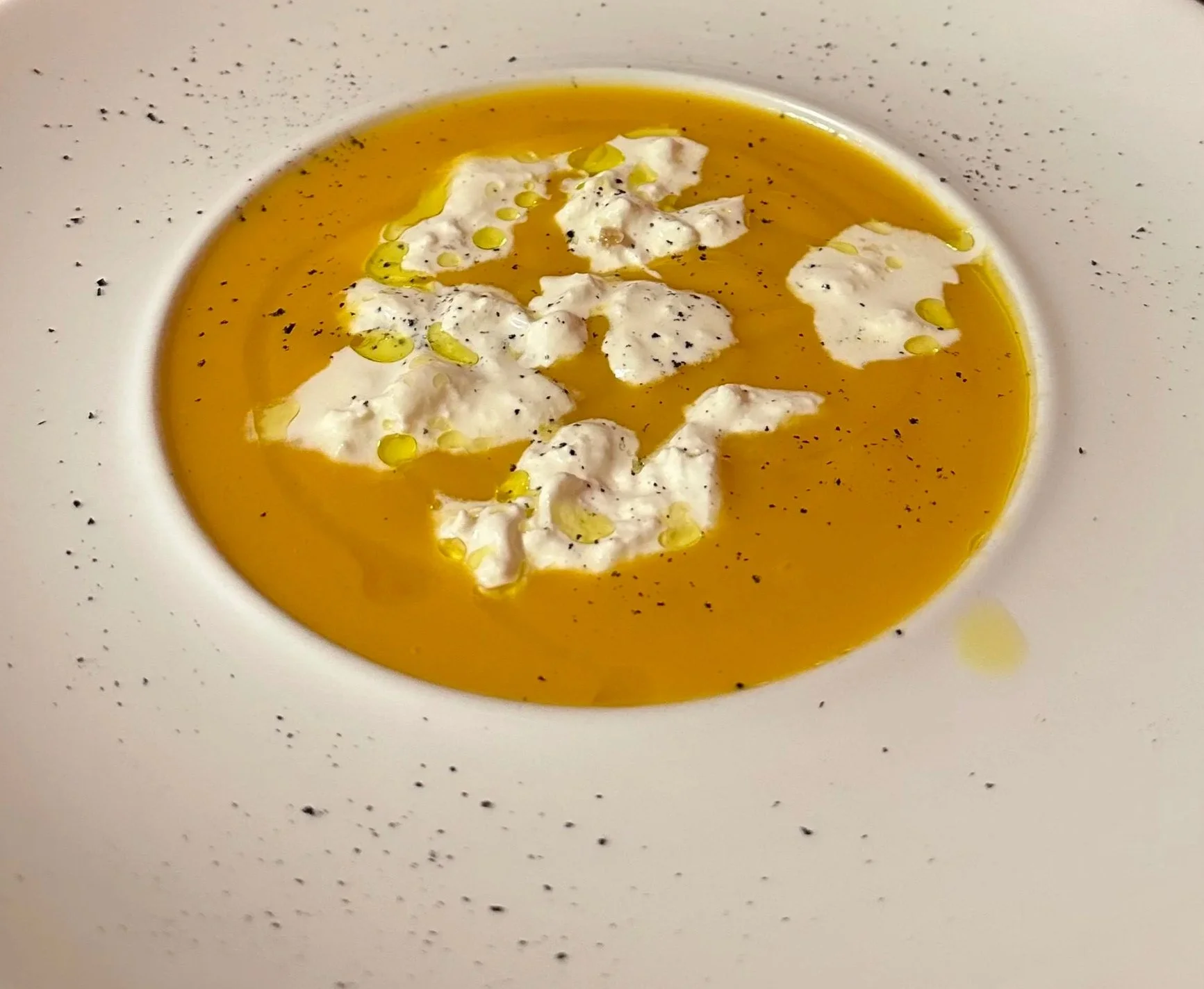
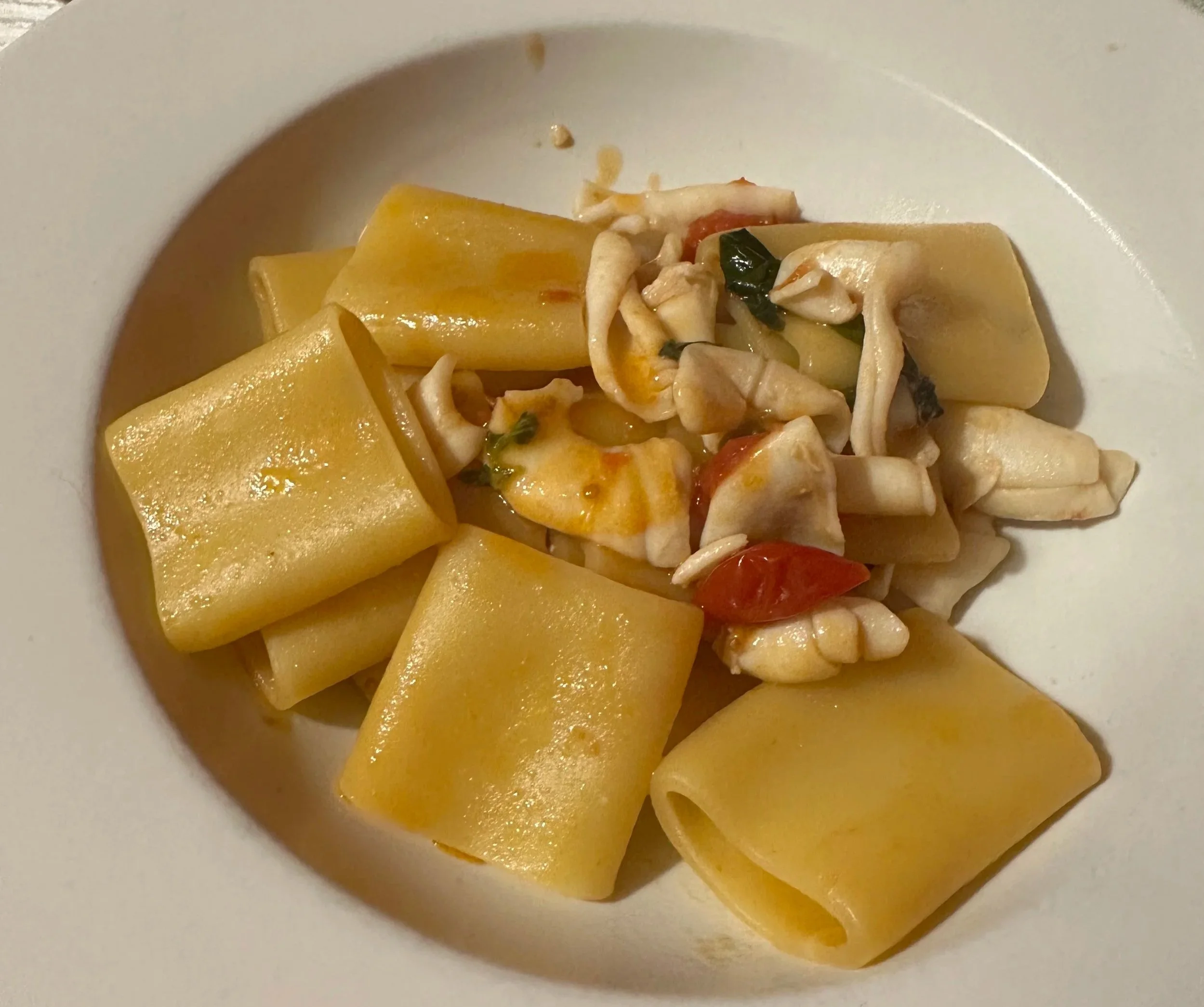
As we wandered through the rain, dodging puddles, a dim light beckoned from a corner. We chanced upon Il Rebacco. We slipped inside. Outside, the town lay hushed under the steady pour; within, the restaurant thrummed with life. The diners—almost all locals—seemed to be resuming conversations over pasta, wine and bread, as though the evening were a continuation rather than a beginning. We opted for a table on their upper floor, where the host promised a little quiet and privacy. The menu was not extensive, but offered enough variety to satisfy us that evening. My partner chose a creamy pumpkin soup with burrata, while I surrendered to a seafood pasta.
The following morning, we set off on a tour of stone, bound for the marble quarries that have long made Carrara famous. A jeep rumbled up, its tyres crunching over the cobbles as though announcing our departure to the hills. Behind the wheel sat a guide who seemed part geologist, part historian, and wholly local—the sort of person whose knowledge ran as deep as the quarries themselves.
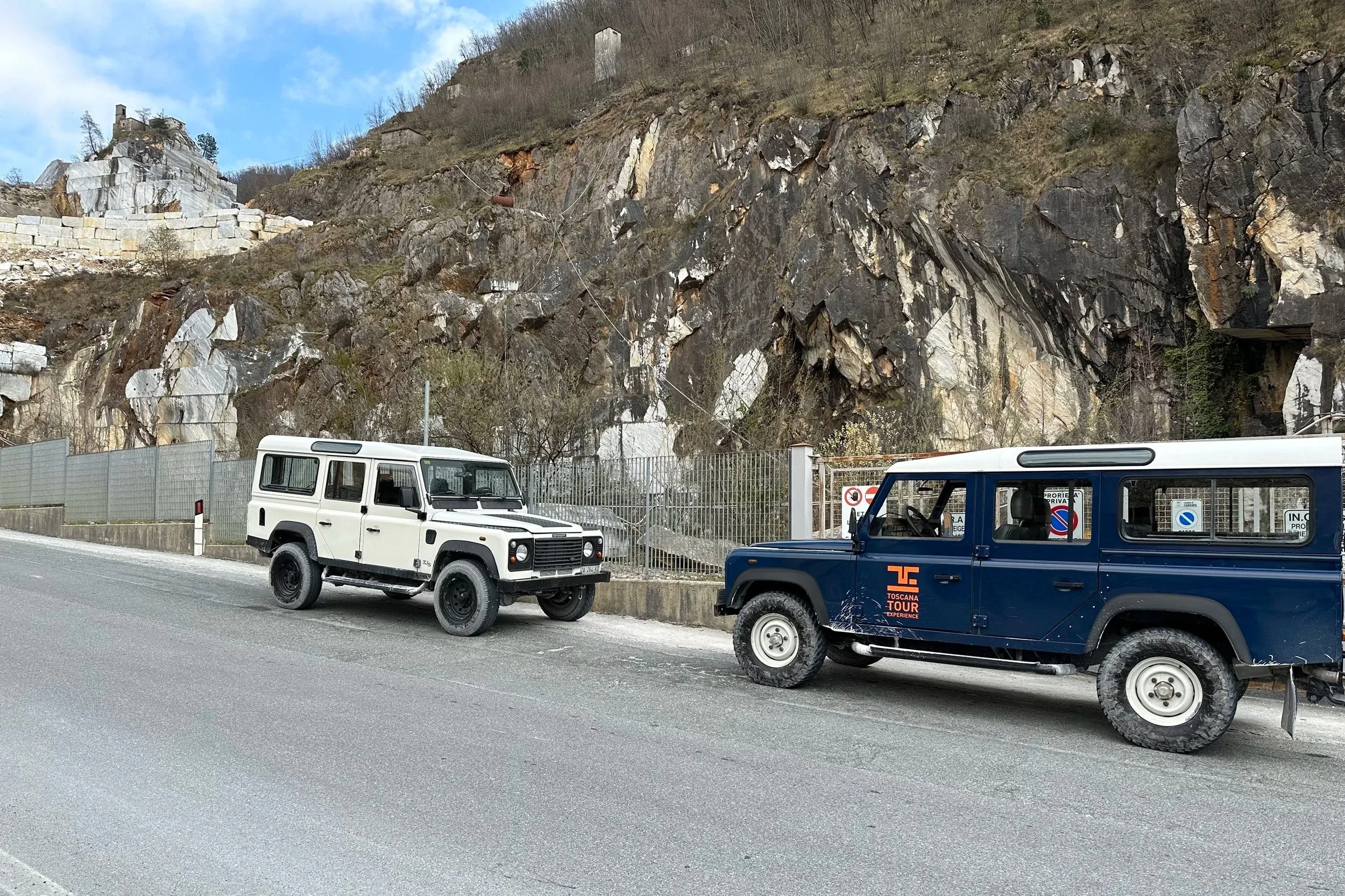
We were a group of five. Our guide, Marco, vowed to shepherd us through vast caverns of marble, carved and coaxed into existence by centuries of human ambition, sweat and imagination, after which he would take us to a local joint for a tasting of Carrara’s cheese, jam and lard.
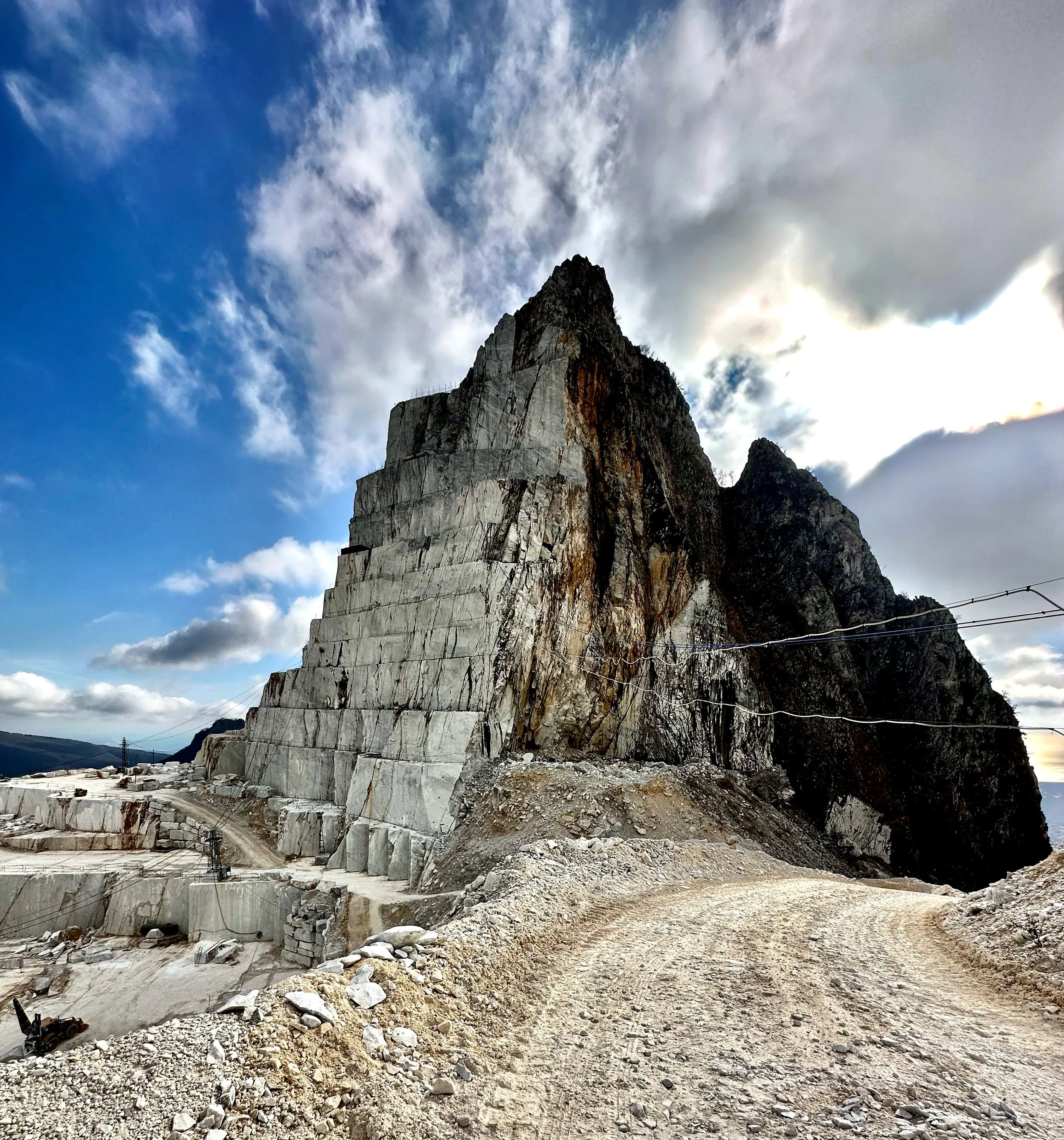
Quarries sprawled across the mountainside, framed by the Apennines in shades of ash, slate, ivory, and deep forest green. Roads curled along the cliffs in serpentine loops—mostly a scenic delight, partly a test of nerve. Terraced like the stairway of a colossal, gorgeous giant, Carrara’s marble shimmered beneath a sky streaked with clouds, while machines scuttled across it like ants at a god’s feet. And when light struck the stone just so, it glowed—like bone, like moonlight, like something sacred wrested from the earth itself.
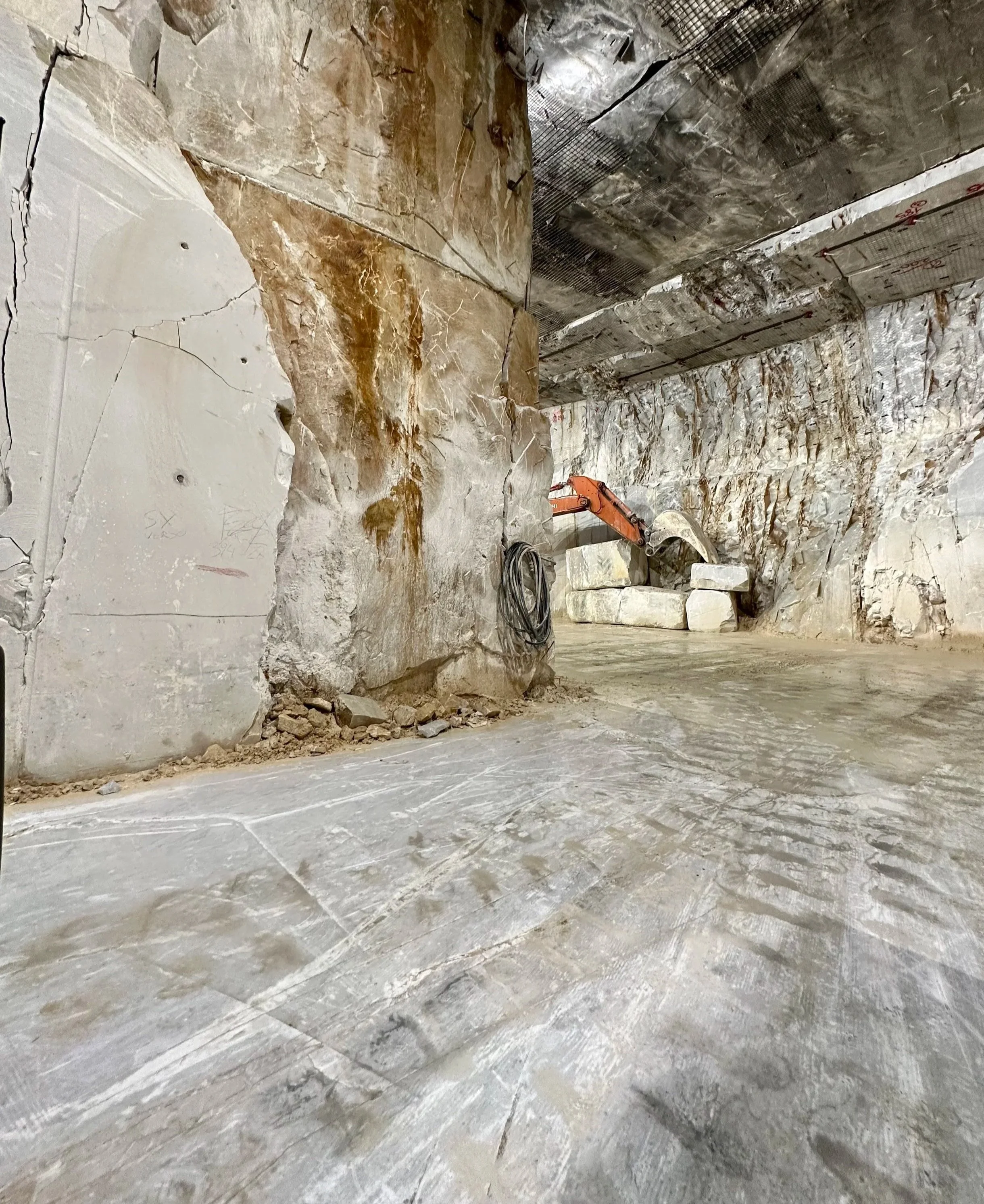
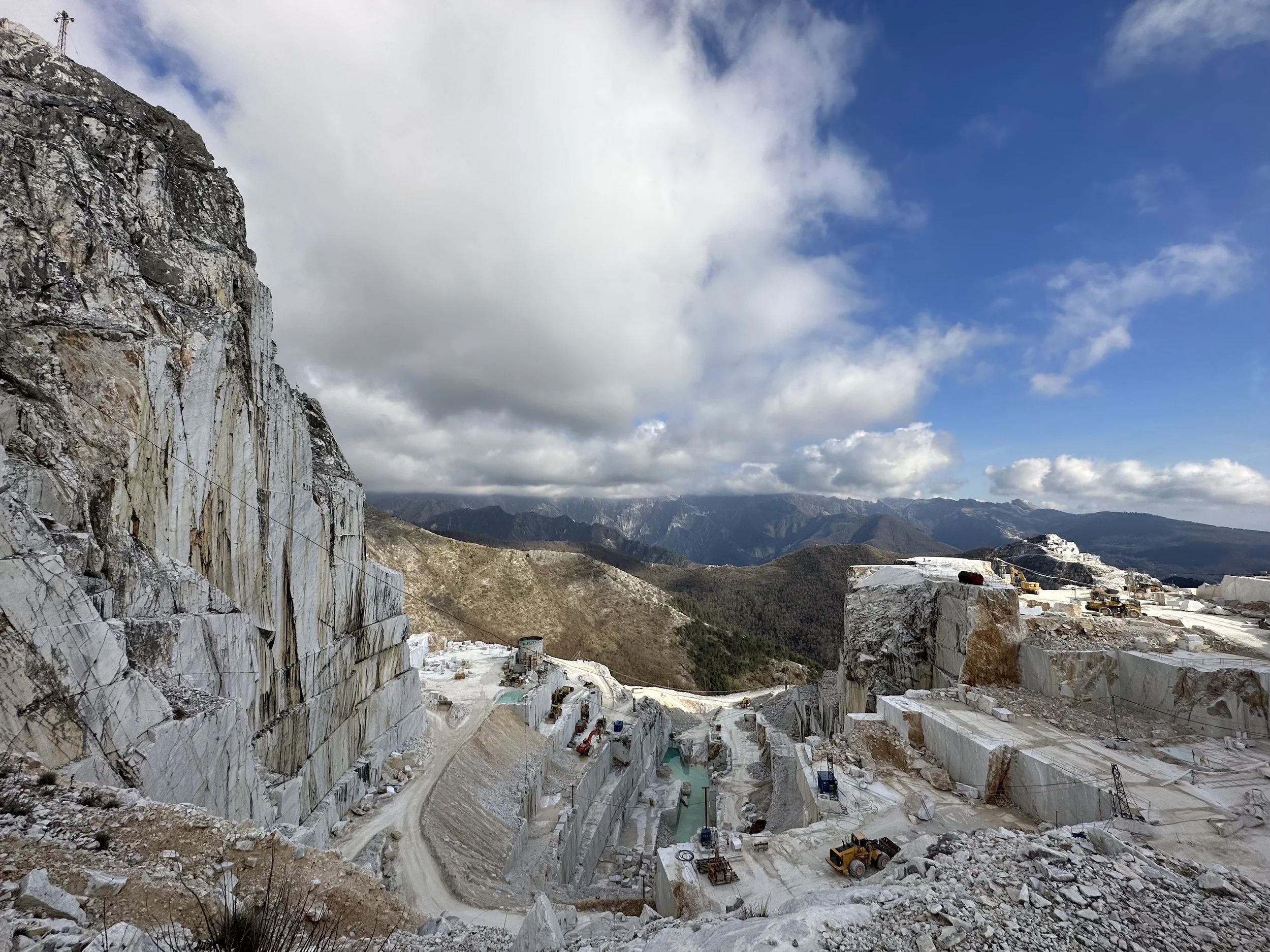
After exploring some quarries, Marco led us to a small marble museum. From there, he pointed out the very mountain from which Michelangelo sourced marble for David, after which he steered us towards a store selling marble homewares. To conclude the tour, he drove us to the summit. From here, Carrara lay beneath us—a city hewn from living stone, its pale veins catching the light as though the mountains themselves had released their artistry into the world. Marble was everywhere: fragments scattered like confetti, towering blocks asserting their mass, pools of water holding the sun, rugged slopes etched with centuries of labour. The sky stretched open and immense. The rain had cleared, the air was sharp and cool, the sun gilded everything it touched, and from that altitude, looking down upon the city and its quarries, it was nothing short of magic—a moment suspended between earth and light, past and present, stone and wonder.
By the day’s end, we were utterly spent. Rain began again as a murmur, then escalated to a drumbeat so fierce that the street lamps along the slope flickered and quivered in protest. My partner, assuming the role of hero for the second time that trip, braved the cold, the wind, and a wilful umbrella, navigating near-darkness guided only by the thin beam of his phone torch, to bring us burgers from a local bar. That night, our dinner was half-warm burgers and fries, consumed in bed, punctuated by glimpses of the city and its marble-framed vistas, rain-soaked and ethereal, beyond the window.