I have always found Delhi’s relationship with status fascinating. It is a city where an address can carry as much significance as the person inhabiting it, where the choice of a lunch table can be a social shorthand, and where certain establishments acquire a familiarity that goes beyond their stated purpose. Taj Mahal, New Delhi belongs to this particular geography of the capital. During my stay, I found myself thinking less about the hotel as an emblem of established hospitality and more about its relationship with the city outside: the conversations it has accommodated, the rituals it has absorbed, and the generations for whom it has become part of Delhi’s social landscape.
My time at this property coincided with a brief work trip to Delhi, which my parents and I decided to turn into an excuse for a little time together. Work dictated the broad outline of our visit, but we left room for the pleasures that rarely make it onto an itinerary: lingering over a meal, taking the day at a gentler pace, and being in one another’s company. It was neither quite a holiday nor strictly a work trip, but something in between—a few days borrowed from routine, with the luxury of having my parents along for the ride.
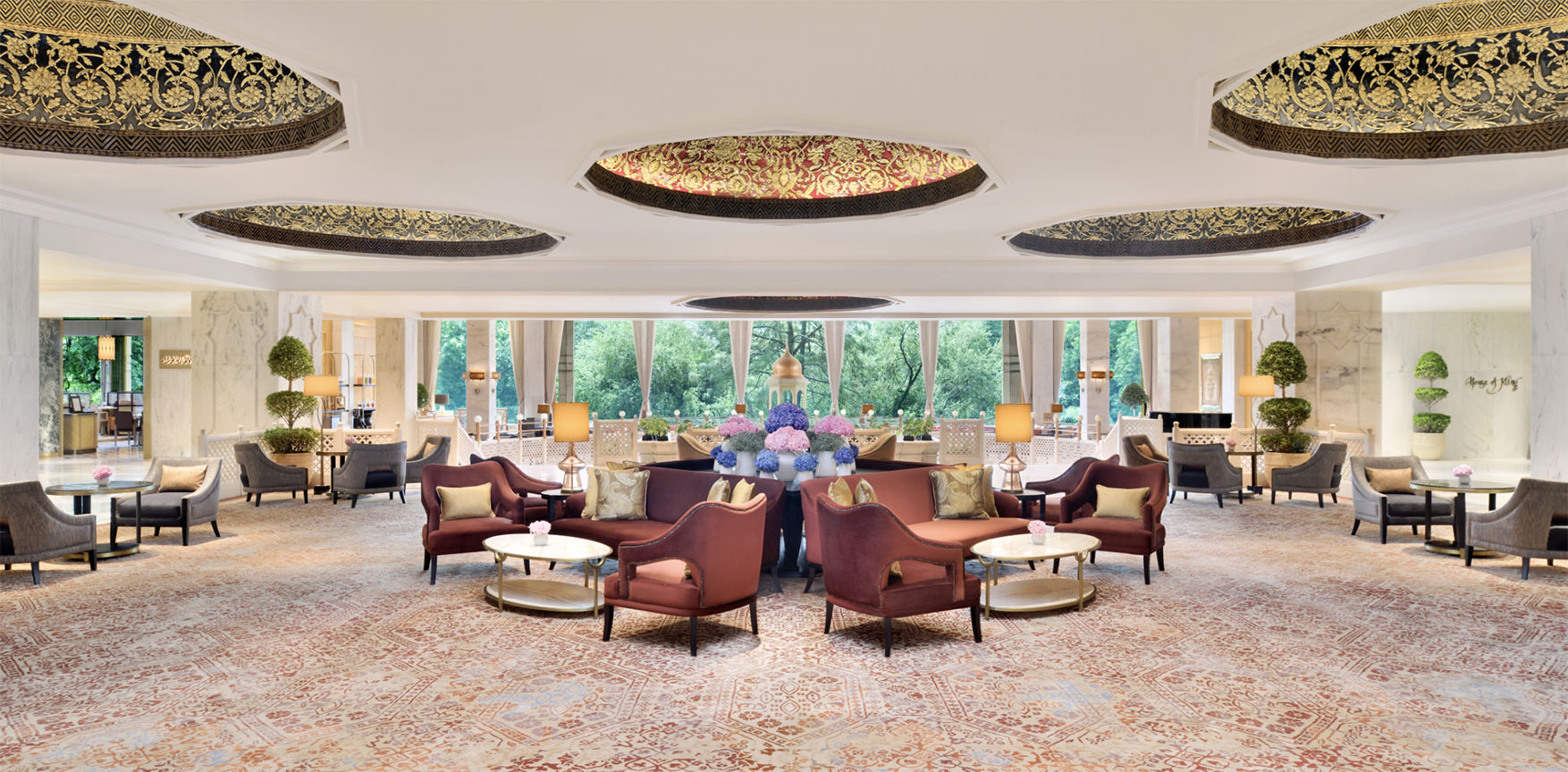
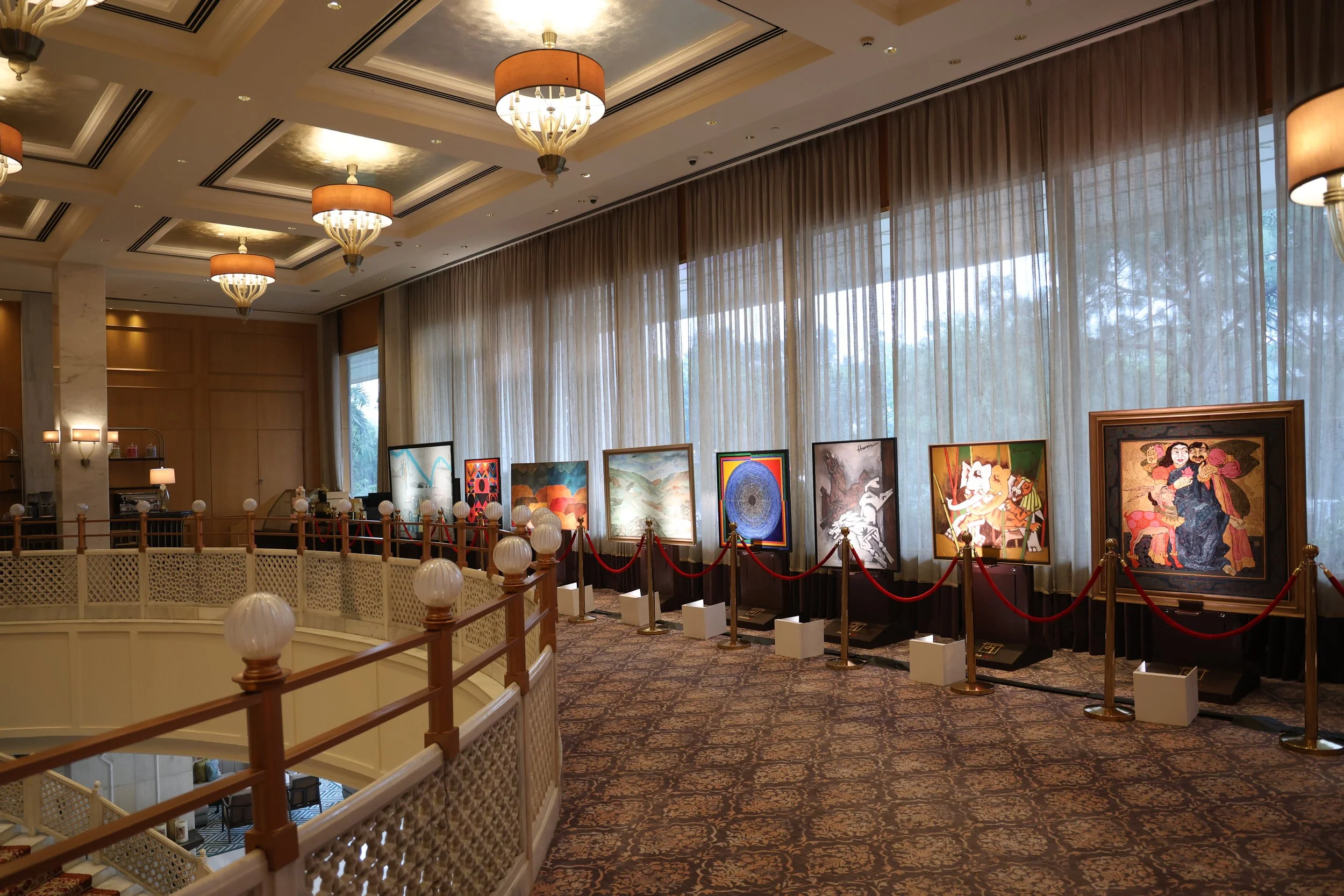
The lobby is broad and contained, its height absorbing rather than amplifying sound, its light diffused across stone surfaces that avoid gloss.
The hotel’s location places it within a particular geography of Delhi. India Gate and the ceremonial sweep of Kartavya Path lie nearby, as do the ministries and government buildings that shape the capital’s official life. Embassies and diplomatic residences occupy the surrounding neighbourhoods, while Khan Market, with its bookshops, boutiques and well-established cafes, is a short drive away. The Delhi Golf Club adds to the area’s distinctive character. Moving between these places, one becomes conscious of how Delhi’s social life is mapped as much by proximity to power as by the everyday pleasures of shopping, dining and meeting friends.

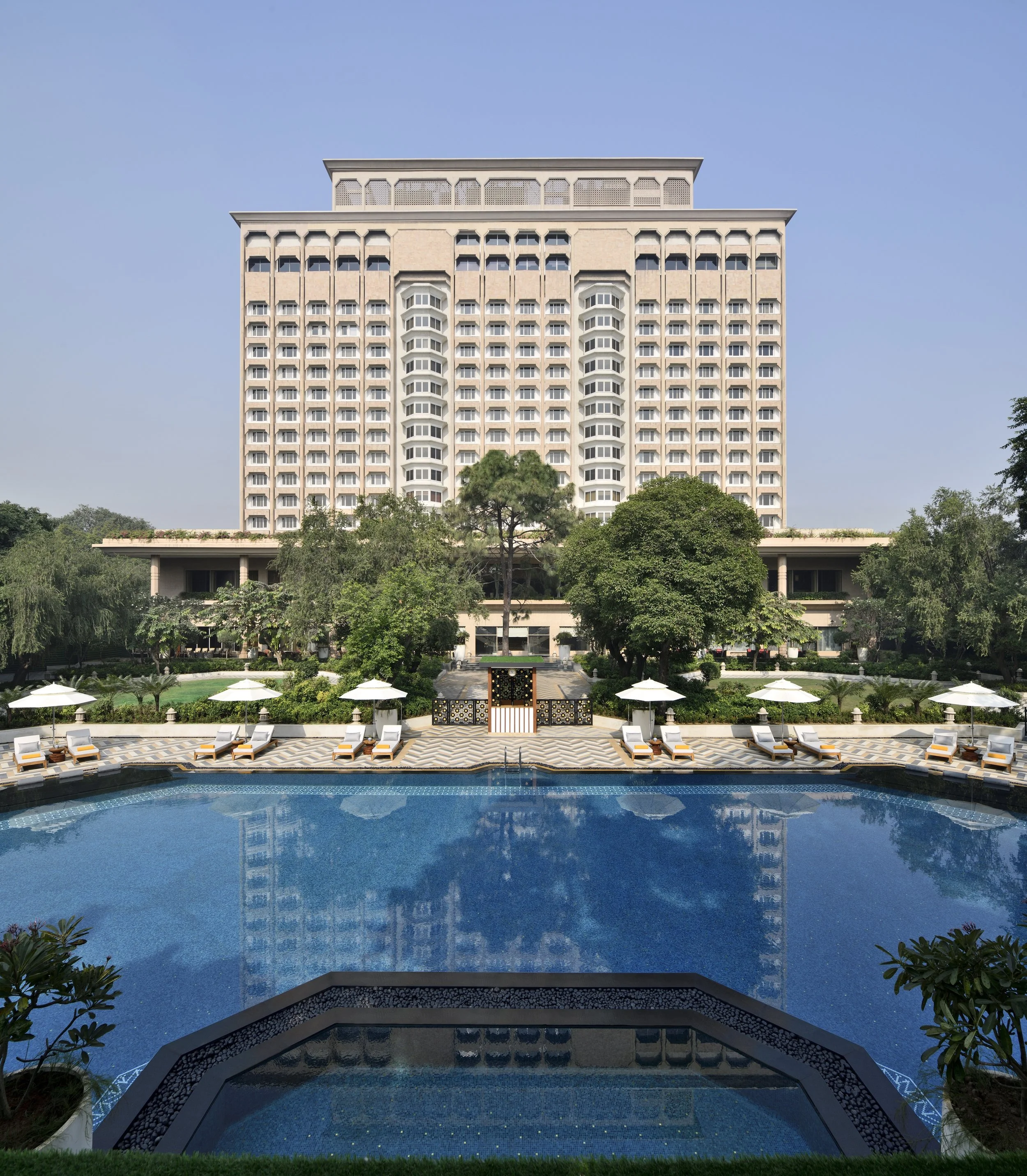
The hotel belongs to a specific moment in Delhi’s post-Independence evolution, when hospitality itself was being calibrated as an extension of statecraft. In the late 1970s, the city was still learning how to present itself to a growing flow of international delegations and domestic elites without resorting to overt display. The property was originally developed by India’s state tourism apparatus and operated under an earlier identity before being taken over and refined by the Taj group, which redefined its tone rather than its form. Its architecture reflects that transitional language. Neither fully modernist nor historically referential, it holds to a measured restraint: sandstone facades, horizontal emphases, and proportions that never tip into excess. It is a building that understands its context too well to compete with it. Within the Lutyens landscape, it reads less as an intervention than as a continuation—absorbing the surrounding vocabulary of embassies, ministries, and ceremonial voids into its own subdued register.
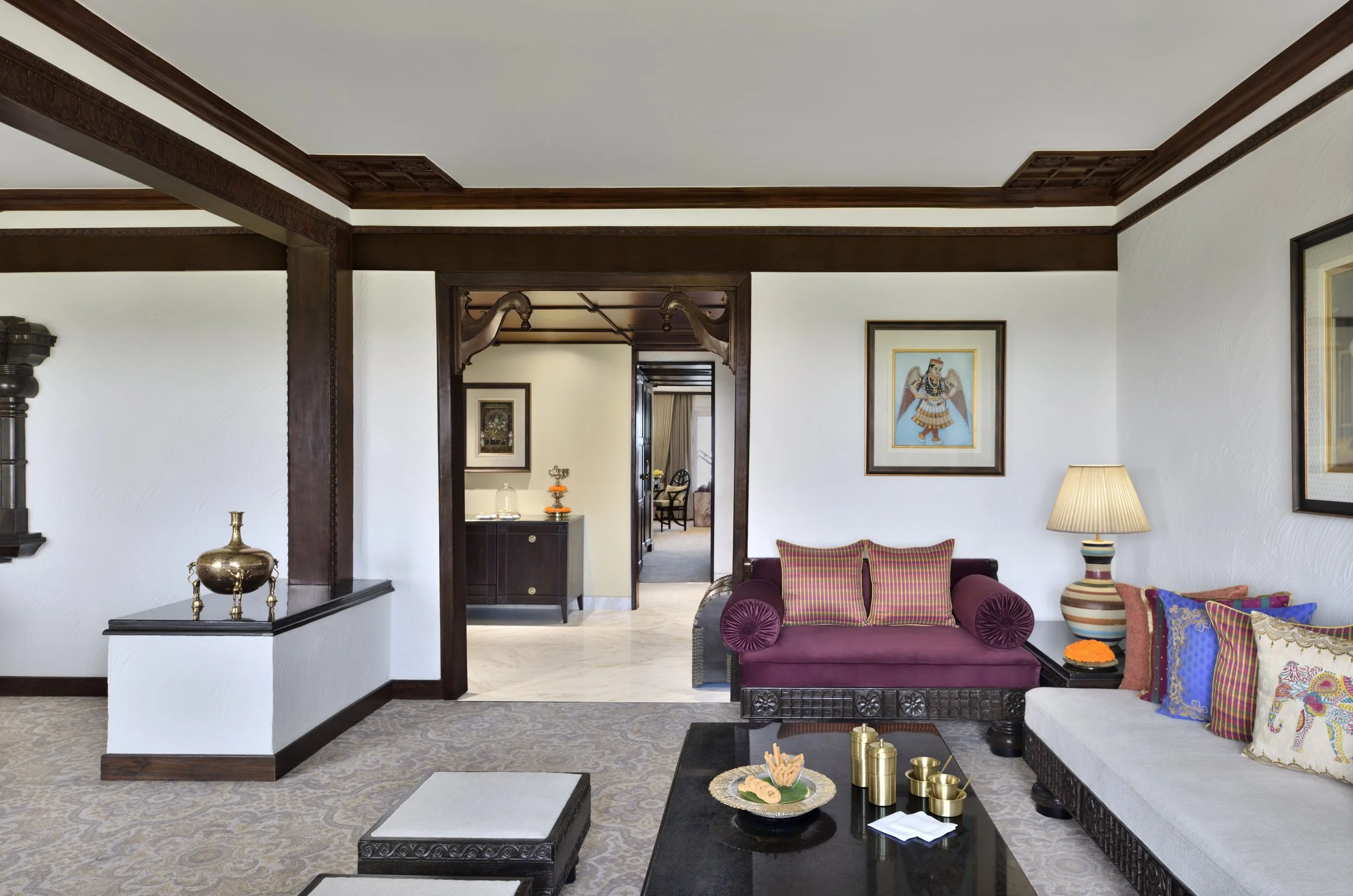
The Tanjore Suite
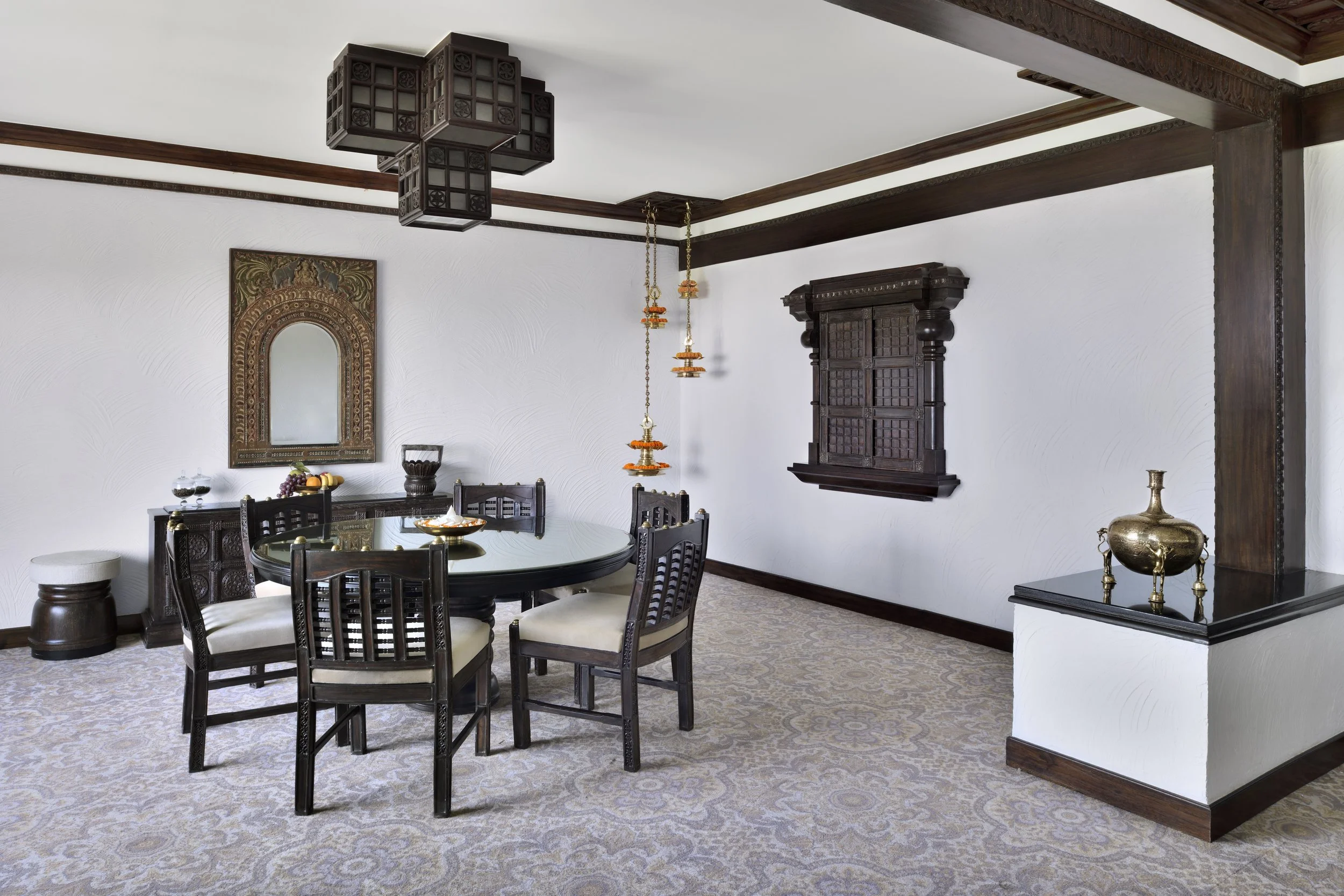
The suite draws on the artistic traditions of Thanjavur, a city shaped by successive Chola, Nayak and Maratha rulers and celebrated for its contributions to South Indian art and culture. Brass accents, silk upholstery and finely worked wood establish an interior in which traditional materials meet a more contemporary sensibility. The suite’s cultural references extend to the region’s classical music, Bharatanatyam, temple architecture and distinctive painting tradition, recognised for its gold leaf, intricate gesso work and richly coloured compositions. Even the city’s name carries a mythological association, linked to the legend of Tanjan, a giant whose dying wish, according to local tradition, was that the land bear his name.
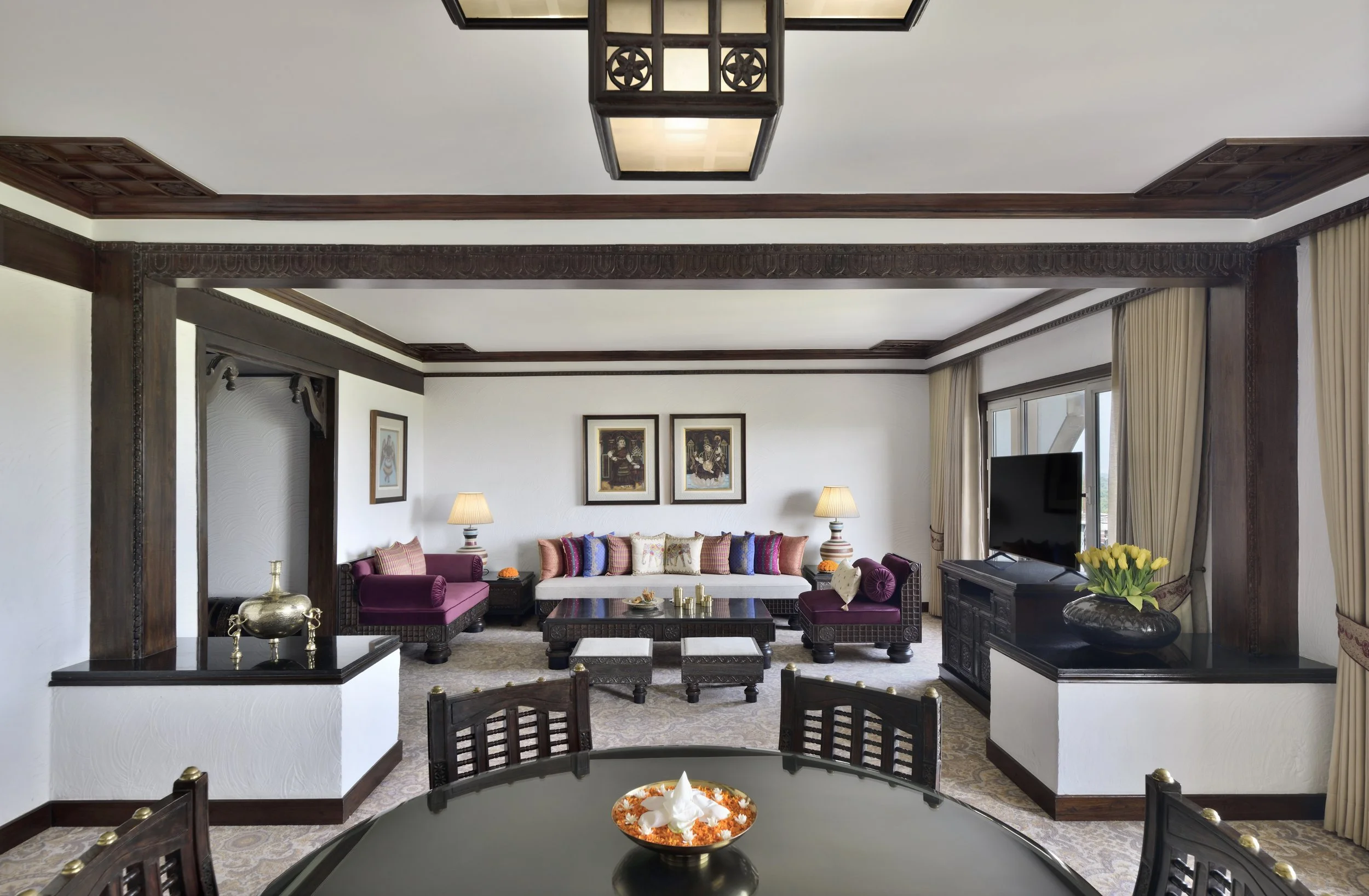
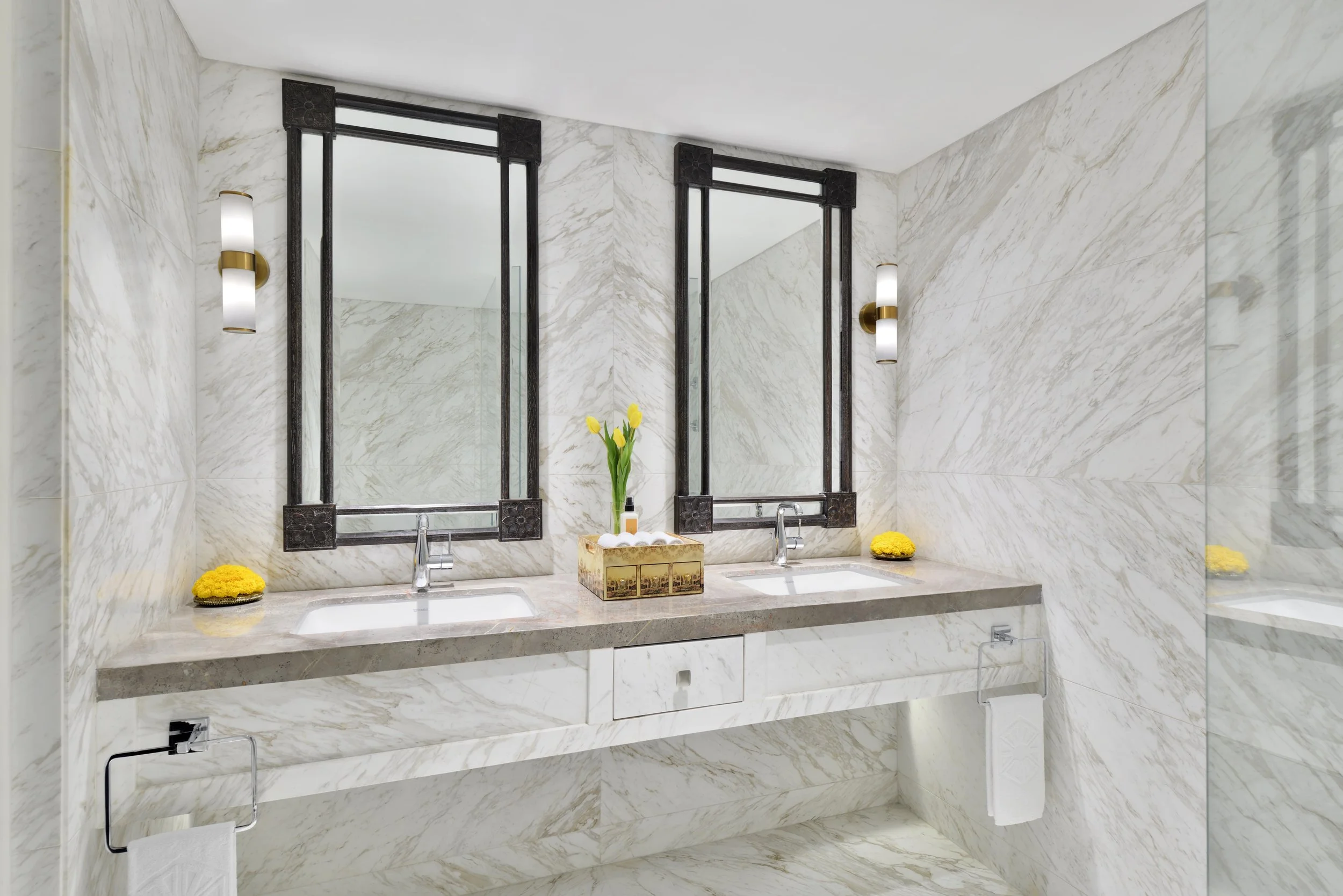
Within the suite, these cultural references find expression in the details rather than through overt display. Curated artworks, period-inspired furnishings and antique forms lend character to the generous living and dining areas, while silk textiles, brass inlay and carved wooden panels introduce texture and depth. The effect is one of considered richness, with an almost archival sensibility. Spanning 102 square metres, the suite offers views of the Presidential Palace and the pool, balancing an elaborate material vocabulary with a measured sense of space. It can also be configured as a two-bedroom residence with an adjoining Taj Club room, extending its accommodation without compromising the suite’s composed character.