Mornings in Florence tiptoe in, threading rays of sun through narrow streets and over worn stones, slipping into curious corners. The obvious voices arrive first: the jewellers’ windows along the Ponte Vecchio, the stately arches of Santa Maria Novella, the cloisters of San Lorenzo. On Via Tornabuoni, Florence’s ribbon of couture, Antica Torre Tornabuoni rises in thirteenth-century stone, watching the street with a patience honed by time. Its masonry remembers everything—the cadence of hooves, the drip of fallen gelato, the brief electricity of a romance brushing past its doors.
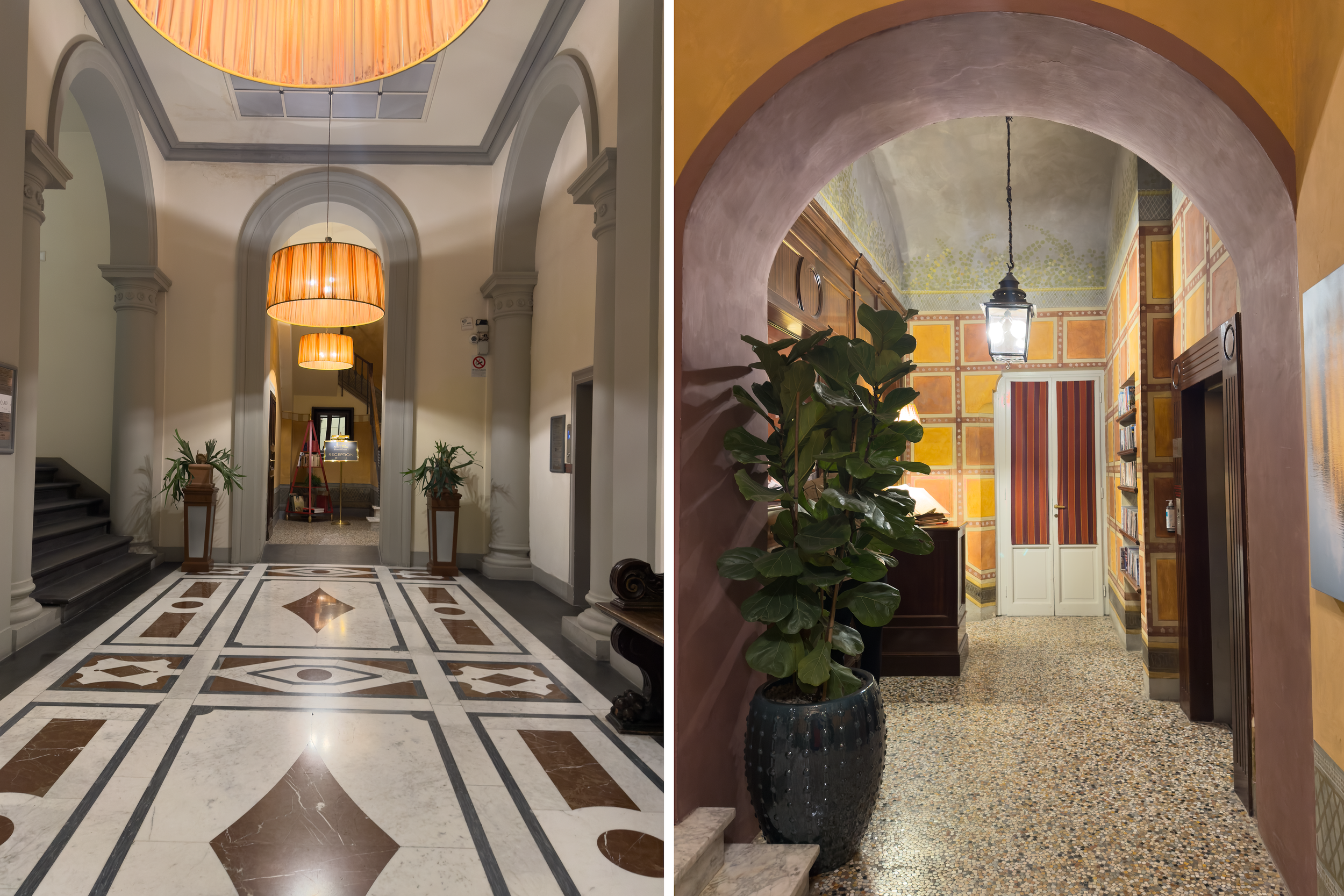
We arrived in the late afternoon. Prada, Gucci, Ferragamo pressed their claims, but the tower paid them no heed. The entrance—a heavy, engraved timber door—opened onto floors of white, grey, and chestnut marble, polished to a patient sheen. Arches framed the hall; pendant lamps in burnt orange cast a soft amber glow. A wooden bench stood opposite a hand-carved chest of drawers. The air was cool, heavy with history, still echoing its life as the Pensione Piccioli—a haven for British aristocrats and wandering bohemians, where travel diaries became novels and Chianti-stained conversations stretched long into the night. Restored in 2001 and expanded in 2008, the residence pulsed with life, yet what lingered most was the sensation of slipping through a seam in time.
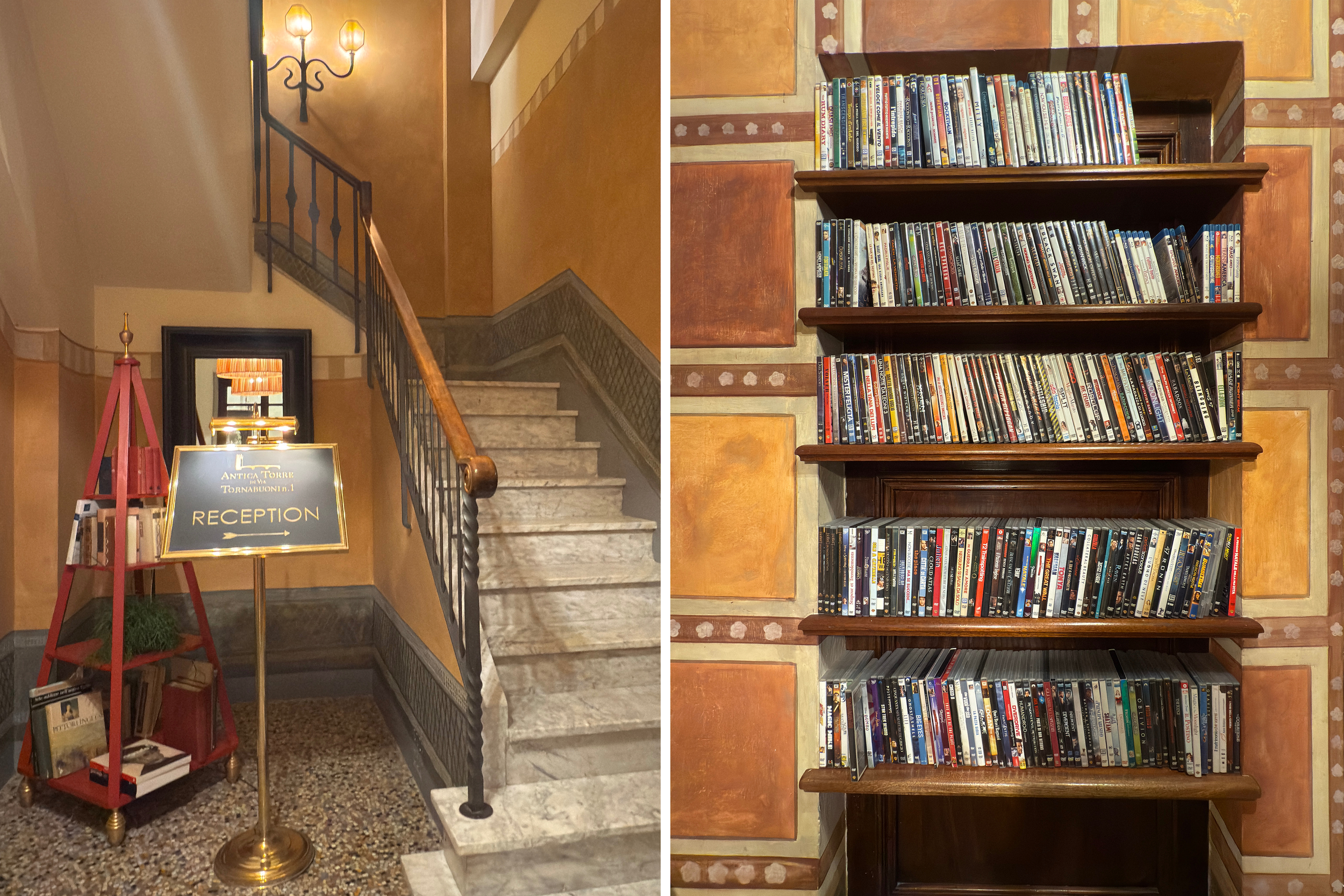
The reception walls were enlivened by hand-painted Italian motifs. Beneath the muted glow of a shaded lamp lay a visitors’ book, waiting for declarations of honeymoons and anniversaries—or the occasional complaint about the Wi-Fi, which by the way, performed without flaw. A laddered bookcase offered a literary flourish, and nearby, a stack of DVDs acknowledged those whose cultural adventures preferred subtitles to books.
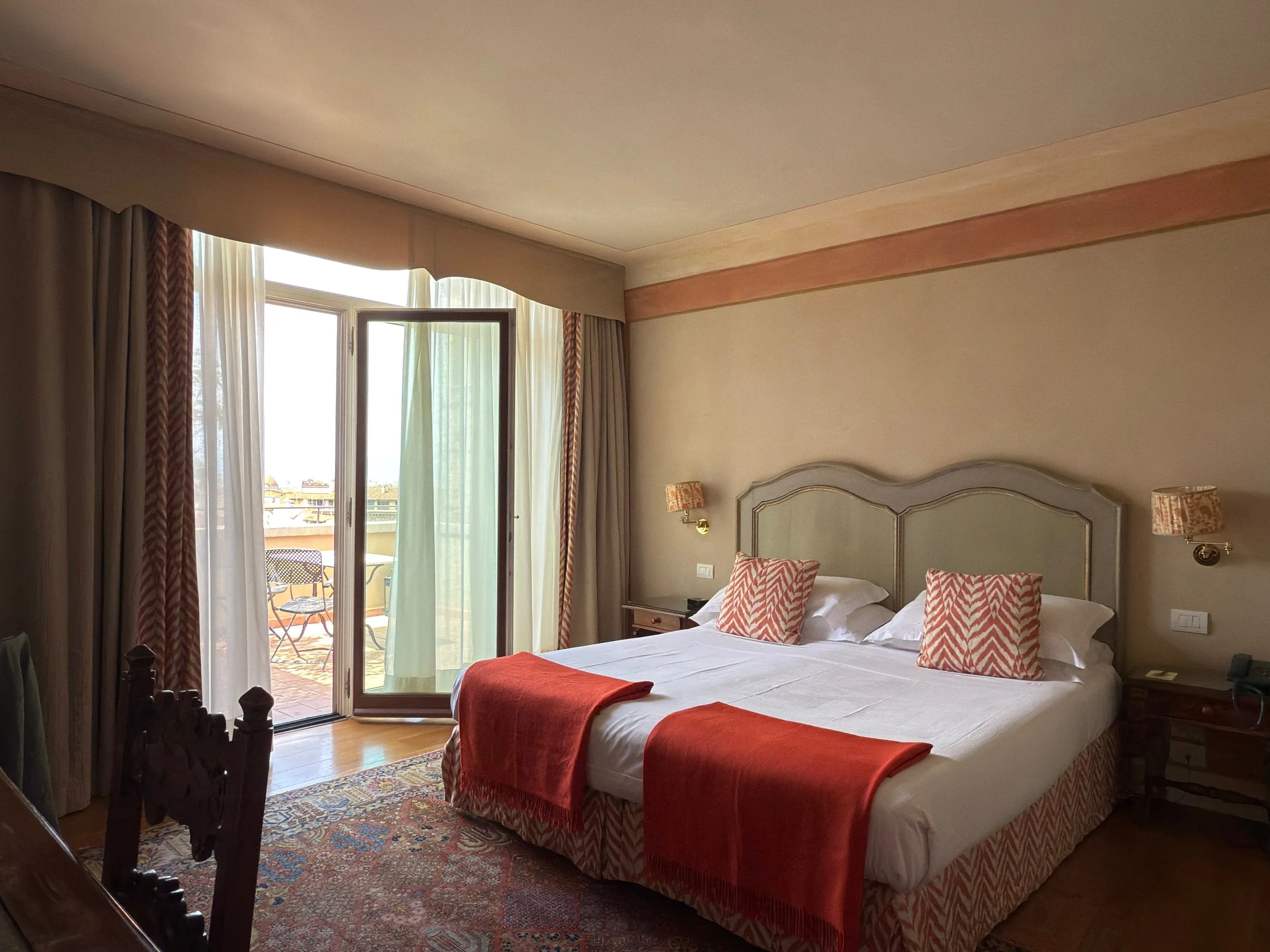
The bed in Room 503 lay dressed in white linen, its printed cushions and matching throws lending a curious mix of retro bravado and Florentine elegance. The room reflected Renaissance sensibilities, with wooden floors and period furnishings. Modest yet intimate, it comfortably accommodated two and featured a bathroom in honey-toned, veined marble, dimly illuminated and stocked with products by Antica Officina Profumo di Santa Maria Novella, the historic Florentine perfumery and apothecary celebrated since 1612 for its artisanal fragrances and skincare.
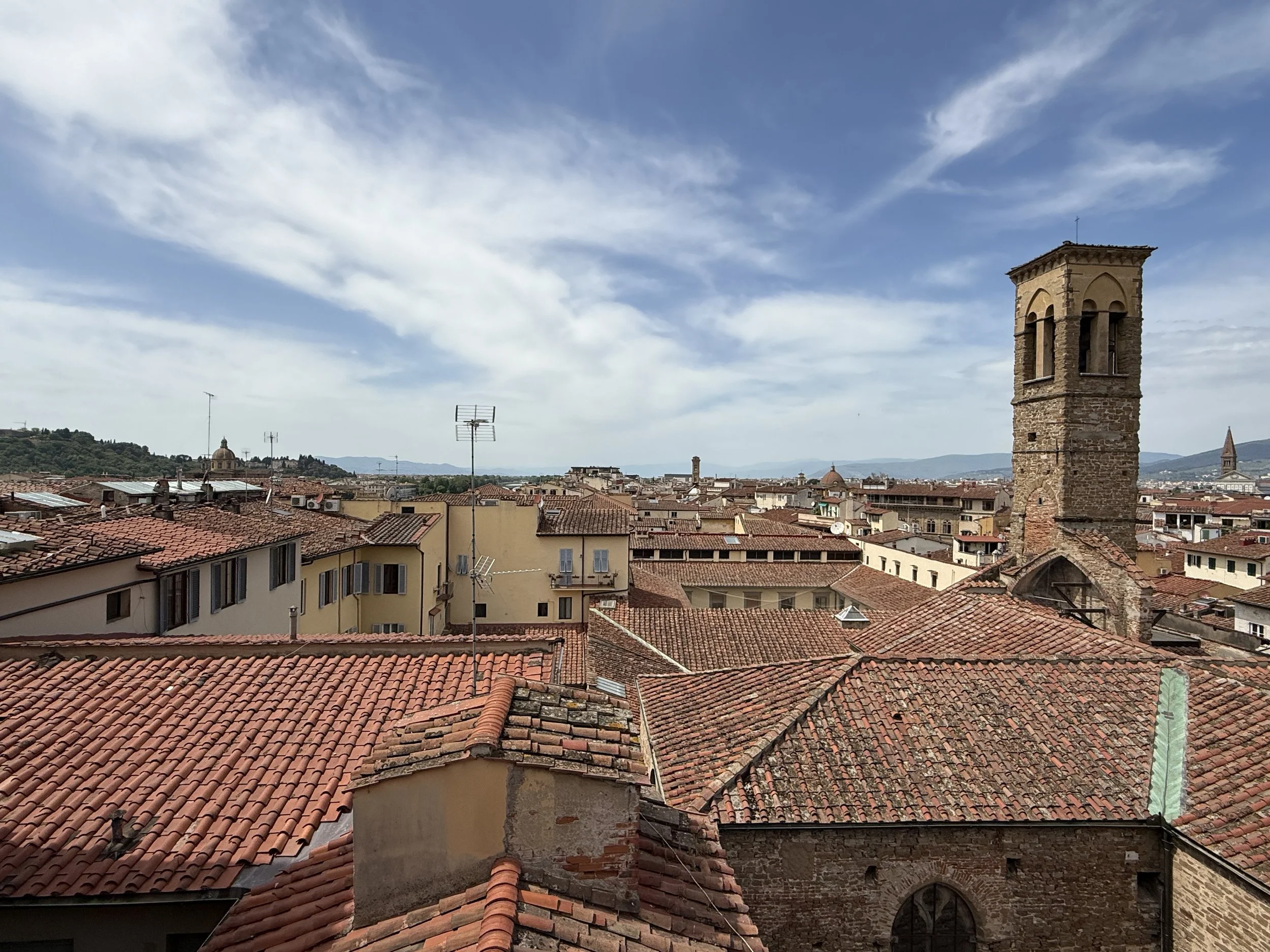
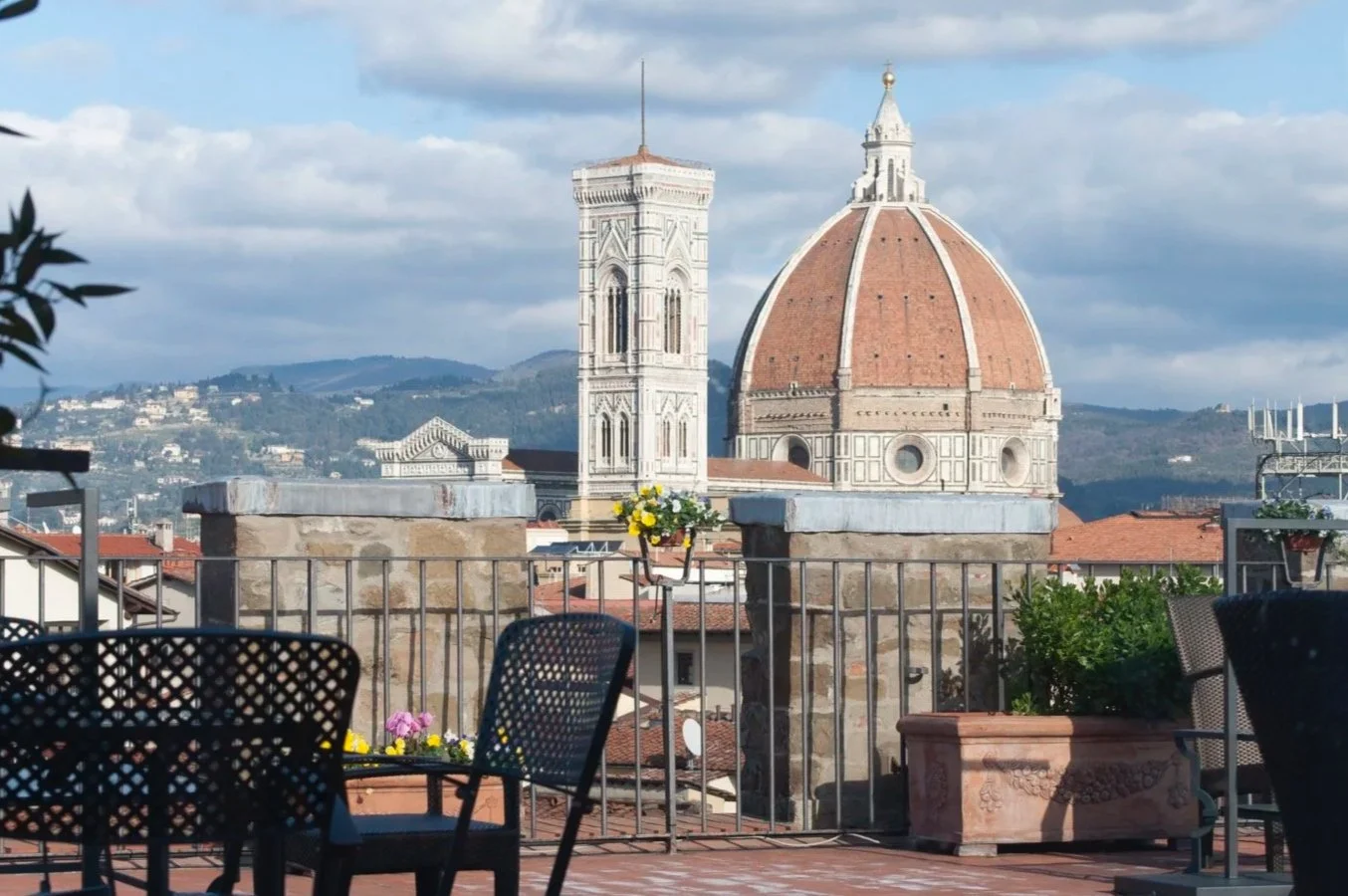
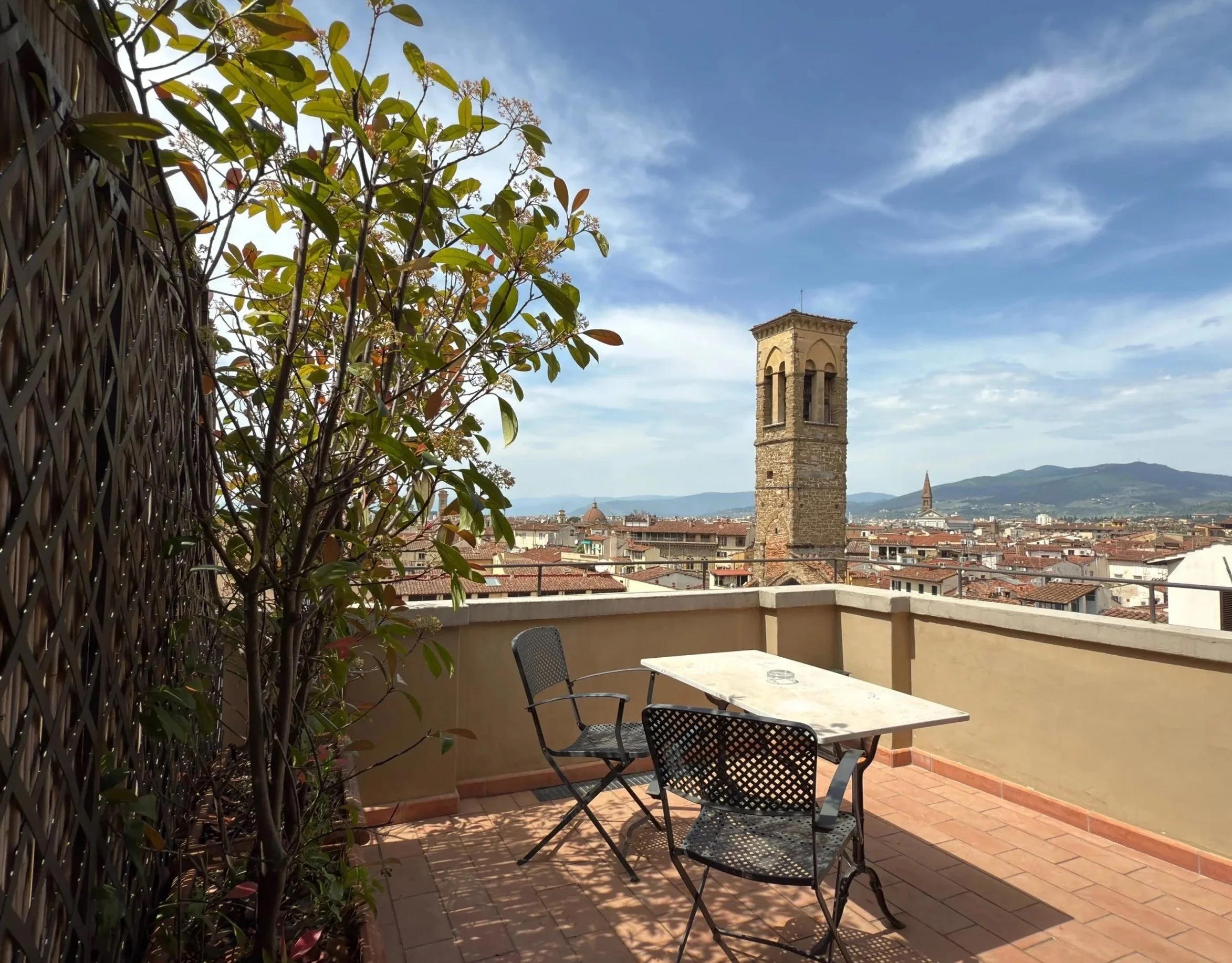
The balcony spilled into the sun pouring light across the city’s rooftops. A private refuge paved in terracotta, and cradled by a trellis of greenery, it hovered like a secret perch above the city’s crowds. From this vantage point, Florence unfurled like a Renaissance painting: rooftops rippled in sienna and amber, punctuated by bell towers that had witnessed centuries—the Torre di Arnolfo and the indomitable Duomo—while the distant Apennines melted into the horizon, blurring city into countryside beneath a sky that drifted from brilliant blue to dusky rose. This was no mere balcony; it was a front-row seat to history, a stage set for languid mornings and enchanted evenings. Over a second espresso or Aperol Spritz, one might watch the hills stretch like a Botticelli daydream, surrendering to the city’s spell.
It was our last day in Florence, a day put together by shopping bags, suitcases, and the unrelenting task of fitting a week’s worth of acquisitions into the confines of airline regulations. Packing, in ordinary circumstances a chore. Ours stretched into a five-hour ritual, carrying us deep into the wee hours, a ballet of clothing, shoes, and carefully stacked souvenirs migrating from one bag to another, then back again, as if rehearsing some complex choreography. And yet, there was a peculiar pleasure in the obsessive adjustments required to keep everything within the strict limits of luggage. Outside, the Florentine breeze drifted in through the balcony doors, as if the city itself stayed awake with us, lending its own grace to our labour, turning a simple act of packing into an enjoyable ceremony.